







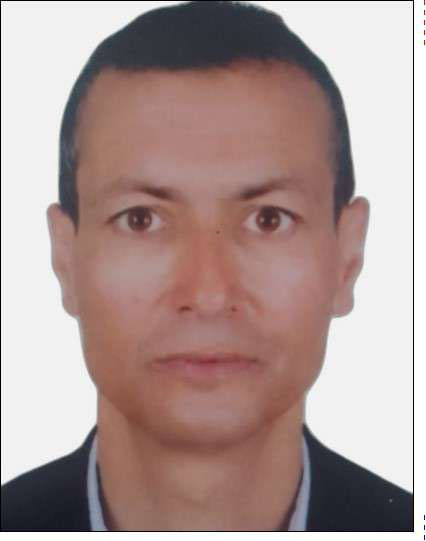
By Deepak Joshi Pokhrel
There is an English saying: “Making a mountain out of a molehill.” It literally means exaggerating a small problem or issue and treating it as if it were very important. Considering the recent political developments that unfolded in our Parliament, this saying aptly applies to Nepal. In plain words, our politicians in opposition make unnecessary noise over minor issues but remain silent on matters of national importance when they are in power.
Just recently, during his address to Parliament, the Prime Minister uttered some words that sparked unnecessary debate among the opposition parties. Opposition leaders are now reaching out to one another, holding talks and questioning how Balen could have made such remarks. A vocal critic of Balen, Harka Sampang, even demanded his resignation—a demand that is difficult to justify on its face.
“After becoming Prime Minister, I came to know that not only has India encroached on Nepal’s land, but Nepal has also encroached on India’s land in multiple places,” Prime Minister Balen said in response to a question from Aaren Rai of the Shram Shakti Party in Parliament. He was referring to the land encroachment issues that resurfaced after India and China unilaterally agreed to resume cross-border travel and trade through Lipulekh without Nepal’s consent. His remarks were misinterpreted by opposition leaders, who claimed that Balen was acting under the instructions of external forces pursuing a sinister agenda.
It should be mentioned here that Nepal has never encroached upon Indian territory, nor has it altered international borders. However, at certain locations, there are instances of cross-holding occupation (cross-border cultivation and possession) on actively cultivated agricultural land. Indeed, there has long been a practice of cross-border cultivation and possession. Nevertheless, it is an established fact that Nepal has never encroached upon India’s territory, unlike Indian authorities, who have occupied and asserted control over lands belonging to Nepali farmers.
The border disputes between Nepal and India dates back to the early nineteenth century, particularly following the Anglo-Nepalese War and the Treaty of Sugauli in 1816. Take the example of the Sisriya River in the Birgunj Metropolitan City area. When the Treaty of Sugauli was signed, the Sisriya River followed a relatively straight course. Over time, however, the river altered its path and assumed a serpentine shape. This resulted in the transfer of plots amounting to a many bighaj of land, previously cultivated by Nepalis, into Indian possession. At the same time, Nepali farmers began cultivating portions of land that originally belonged to them. This eventually evolved into what is known as cross-holding occupation. However, it must be understood that Nepal has not engaged in territorial encroachment at any border point in the manner that India has in Limpiyadhura, Kalapani, and Susta.
In response to Balen’s remarks, critics argue that he will surrender Nepal’s sovereignty to our southern neighbour. This view is neither valid nor reasonable and is deplorable as well. Someone needs to tell Balen’s vocal critics that he was referring to cross-holding occupation.
On the other hand, given his academic credentials, Balen is highly unlikely to make such remarks without proper evidence and supporting documentation. While speaking in Parliament, the Prime Minister raised the issue of Indian encroachment in Limpiyadhura and Kalapani. At the same time, he stated that geopolitical encroachment cannot be equated with minor cross-holding occupations.
However, this message was distorted by the opposition, which proceeded to generate unnecessary debate across the country. The opposition parties—primarily the CPN-UML, Maoist Centre, and Nepali Congress—which often remain poles apart on issues of national interest, have come together under a common banner. Their modus operandi is to criticise the government simply for the sake of criticism rather than for any genuine cause. Logically speaking, even they are aware that Balen was referring to cross-holding occupations.
This is not the first time Balen’s remarks have drawn widespread criticism. Earlier, while serving as Mayor of Kathmandu Metropolitan City, Balen was publicly criticised by his deputy, Sunita Dangol. Responding to Balen’s growing popularity at the time, the deputy mayor stated that he was limited to publicity stunts and lacked the vision necessary to transform the Kathmandu Valley. Balen’s supporters, in turn, criticised Sunita Dangol for her inflammatory remarks.
Across the globe, the opposition plays a central role in shaping and scrutinising public policy and ensuring that government programmes remain citizen-centric. Furthermore, it serves as a watchdog, holding those in power accountable while constructively contributing to national development. In Nepal, however, the opposition often acts differently. Rather than engaging in constructive criticism and policy-based debate, it frequently focuses on attacking and criticising the government over trivial issues.
After decades of political instability resulting from the political musical chairs played by three individuals—Deuba, Oli, and Prachanda—the country is now endowed with a government enjoying an almost full majority. The people heaved a sigh of relief, and this development infused a sense of optimism among citizens who hoped that better days would soon arrive. In addition, the nearly two-thirds majority government led by the RSP appears committed to working in the true spirit of public service by improving governance and service delivery. No doubt, it is too early to conclude that they are different from their predecessors. Nevertheless, the early indications suggest that the present government is moving in the right direction.
Through this piece, this pen-pusher neither advocates for Balen nor is affiliated with the RSP, nor does he subscribe to its ideology. My argument is that Balen’s remarks—that Nepal has also encroached upon India’s land—are neither anti-national nor contrary to national sovereignty. This is what we need to understand and acknowledge.

Login to add a comment