







By Our Reporter
The government’s decision to recommend Dr. Manoj Kumar Sharma as Chief Justice (CJ) of the Supreme Court has reopened an old but unresolved tension in Nepal’s constitutional practice: should seniority decide the top judicial post, or should merit and discretion take priority when the Constitution itself is flexible?
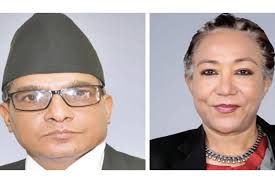
At the centre of the debate is Dr. Sharma, currently fourth in seniority among six eligible Supreme Court justices. His name, forwarded by the Constitutional Council to the parliamentary hearing committee, breaks with the long-standing tradition of appointing the most senior judge as Chief Justice. That shift has triggered a familiar constitutional argument, but this time with sharper political edges and louder institutional pushback.
On paper, Article 129 of the Constitution keeps things open. It requires at least three years of Supreme Court experience for eligibility but does not legally bind the Council to seniority. That gap has always been the quiet fault line. In practice, however, Nepal has leaned heavily on seniority as a stabilising norm, reinforced through past judicial interpretations, including landmark rulings that warned against bypassing it without clear and objective justification.
That is where the current controversy begins. Supporters of the Council’s decision argue that tradition should not be confused with law. They say seniority is a convention, not a constitutional command. Prime Minister Balendra Shah, who backed Dr. Sharma’s name, reportedly described him as an independent jurist with strong legal grounding and no overt political alignment. From this perspective, the judiciary benefits more from intellectual capability and integrity than from automatic elevation based on tenure.
This camp also leans on a broader reformist argument. Seniority-based appointments, they say, often reward longevity over performance and discourage institutional renewal. In their view, the judiciary needs occasional disruption to prevent stagnation. They argue that the Constitution deliberately left room for discretion precisely to avoid mechanical succession.
Within the Council meeting, this logic appeared to hold sway for the majority. Even though dissent notes were filed, Sharma’s name moved forward.
Acting Chief Justice Sapana Pradhan Malla, along with other senior justices who were in contention, is understood to have supported the principle of seniority as a safeguard for judicial independence. The concern is not about Dr. Sharma personally, but about precedent. If seniority can be bypassed without a publicly reasoned justification, they argue, then future appointments risk becoming subject to shifting political preferences rather than institutional continuity.
The Supreme Court itself has repeatedly leaned in this direction. Past interpretations, especially in cases like the Achyut Prasad Kharel matter, stressed that while merit matters, seniority cannot be ignored arbitrarily. The underlying warning has always been the same: discretion without discipline weakens institutional trust.
The opposition Nepali Congress has taken an even harder line, calling the move undemocratic and procedurally troubling. It argues that recent changes to the Constitutional Council framework have already tilted the balance toward executive dominance by reducing quorum thresholds. From this view, the appointment process is less about merit selection and more about concentrated decision-making power.
RSP leader Rabi Lamichhane has also entered the conversation in a different tone, framing the issue as a test of institutional independence versus entrenched hierarchy. His argument, broadly speaking, reflects a populist reform lens: systems should not be protected simply because they are old, especially if they do not always serve efficiency or accountability. At the same time, critics note that such arguments risk oversimplifying the judiciary into a performance-based selection system, ignoring the delicate need for predictability in constitutional bodies.
Then comes another layer: the parliamentary hearing process itself. With a politically mixed committee now tasked with reviewing the recommendation, the debate shifts from legal principle to political negotiation. That adds yet another variable to an already sensitive process.
So where does this leave the system?
The truth is both sides are partially right and partially incomplete. Seniority alone can become rigid and unresponsive. But discretion without transparent reasoning can appear arbitrary, even if legally permissible. The Constitution gives space for both, but it expects justification, not assumption.
A more balanced path forward would not be to abolish seniority nor to make it absolute. Instead, the Constitutional Council should be required to publicly record clear, structured reasons whenever it deviates from seniority. Those reasons should be reviewable in parliamentary hearings and, if needed, judicial scrutiny. That would preserve flexibility without sacrificing transparency.
Nepal’s judiciary does not just need a Chief Justice. It needs a process that people can trust even when they disagree with the outcome. Right now, that process still feels like it is negotiating its own identity.

Login to add a comment