







By Our Reporter
Every few years, Nepal and India stumble into the same old pattern. Nepal raises concerns about sovereignty, border disputes, or economic dependence. India responds with technical restrictions, administrative hurdles, or slower movement at the border. Officials rarely call it pressure. They never need to. South Asian diplomacy often works through paperwork, fuel tankers, customs offices, and delays long enough to hurt but short enough to deny intent. Human civilization, built satellites and AI, then decided the best way to fight neighbors was still “missing documents” at customs checkpoints. Remarkable species.
India’s latest restrictions on Nepali tea exports fit this familiar pattern. On paper, the new Standard Operating Procedure issued by the Indian Tea Board concerns quality control and food safety. In practice, it has nearly frozen exports. Mandatory testing for every truck, long waiting periods, costly laboratory fees, and storage problems at border points have made the trade commercially risky for both Nepali exporters and Indian buyers.
For Nepal’s tea sector, this is not a minor inconvenience. Tea exports support thousands of farmers and workers, particularly in eastern Nepal. Much of Nepal’s orthodox and CTC tea passes through India, either for direct sale or re-export to third countries. When every truck must wait up to two weeks for clearance while paying repeated testing costs, the business slows to the point where traders stop loading shipments altogether.
Technically, India has not banned Nepali tea. Functionally, exporters say the system has become unworkable. That distinction matters because modern economic pressure rarely arrives through open declarations anymore. It comes through regulations, compliance burdens, and procedural tightening. A blockade without the word “blockade.”
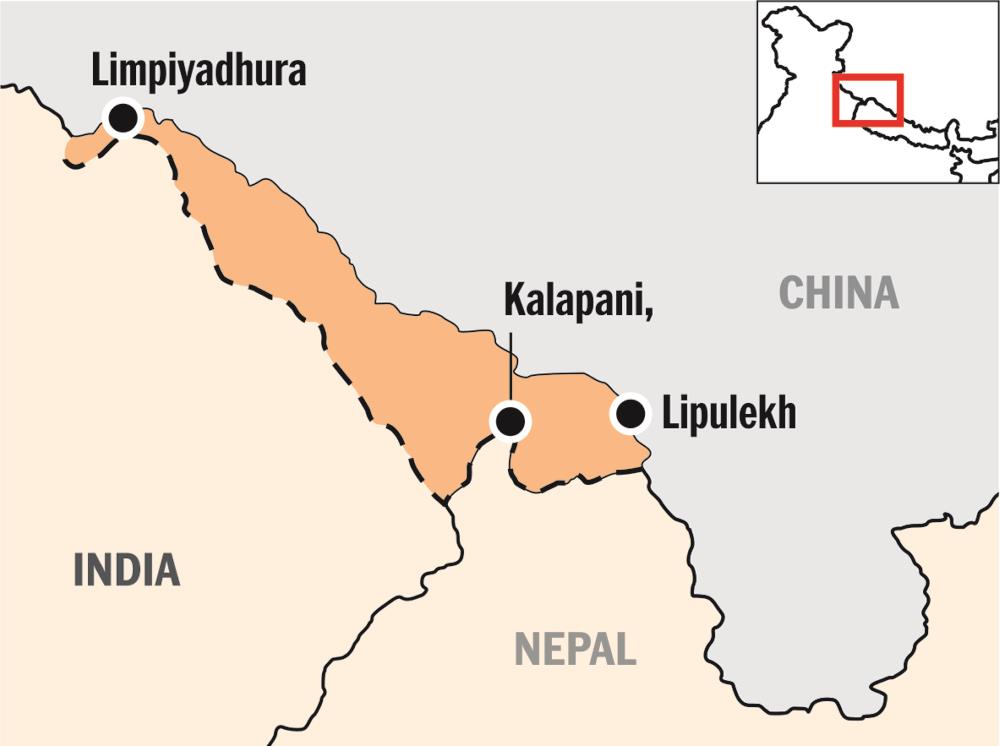
The timing has also fueled suspicion in Nepal. Relations between Kathmandu and New Delhi have remained uneasy since Nepal raised issues surrounding Lipulekh, Kalapani, and Limpiyadhura. Nepal’s updated political map and repeated public assertions over disputed territories irritated India deeply. Delhi may not openly link trade restrictions to political disagreements, but many in Nepal see a broader pattern where economic leverage appears whenever bilateral tensions rise.
At the same time, Nepal’s own recent border measures have added fresh friction.
The Nepali government tightened rules on imports from across the Indian border to control smuggling and revenue leakage. Authorities restricted people from bringing in goods above Rs 100 from Indian markets without customs procedures. The move hit border-town economies immediately. Indian traders who depend heavily on Nepali customers suddenly saw foot traffic collapse. Markets that once thrived on daily Nepali shoppers became quieter almost overnight.
Nepal’s concerns are not imaginary. Cross-border smuggling has long damaged domestic businesses and deprived the state of customs revenue. Cheap goods entering informally through the open border distort markets and weaken Nepal’s already fragile industries. Successive governments largely ignored the problem because strict enforcement risks public backlash in border communities where informal trade has become routine.
But timing matters in diplomacy. Tightening border imports while political tensions with India remain sensitive creates another layer of irritation. Many Indian businessmen along the border interpreted Nepal’s move not simply as customs enforcement but as hostility toward cross-border commerce.
Now rumors are circulating that India could tighten supplies of fuel and cooking gas if tensions deepen further. Nepal remembers the trauma of the 2015 unofficial blockade, when fuel shortages crippled transport, hospitals, schools, and daily life. The memory still shapes public anxiety. Even whispers of supply disruption trigger concern because Nepal remains heavily dependent on India for petroleum imports and transit access.
Still, Nepal cannot afford to respond emotionally. Small countries trapped between geography and politics rarely win shouting matches with larger neighbors. Nepal’s response must be strategic, calm, and long-term.
First, Kathmandu should immediately pursue diplomatic engagement instead of turning every trade dispute into a nationalist spectacle. Public outrage may generate headlines, but it rarely clears stranded tea trucks. Nepal needs sustained government-to-government negotiation focused on practical outcomes. Quiet diplomacy often works better than chest-thumping press conferences designed for evening television debates.
Second, Nepal must diversify trade routes and energy sources more seriously than it has in the past. Every crisis revives the same discussion, then fades once supplies normalize. Dependence remains unchanged. Nepal cannot eliminate reliance on India entirely. Geography will not relocate itself out of courtesy. But Nepal can reduce vulnerability through larger fuel reserves, alternative transit arrangements with China, and stronger domestic production where possible.
Third, Nepal must strengthen the quality standards of its own exports. India may be using technical rules strategically, but Nepali producers also need internationally credible testing systems and certification mechanisms. Stronger standards reduce opportunities for external pressure disguised as compliance concerns.
Finally, Nepal should avoid turning legitimate anti-smuggling measures into economic punishment that alienates ordinary border communities. Enforcement matters, but abrupt restrictions without coordination create resentment on both sides. Border economies are deeply interconnected. Policies designed in Kathmandu offices often collide with the messy realities of daily survival in Birgunj, Jogbani, Nepalgunj, and other frontier towns.
India and Nepal share an open border, deep cultural ties, and intertwined economies. Yet the relationship repeatedly swings between closeness and suspicion because both sides struggle to separate economics from politics. Tea today, fuel tomorrow, customs next month. The script barely changes. Only the paperwork does.

Login to add a comment