







By Our Reporter
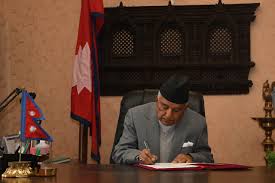
President Ramchandra Paudel’s decision to send back the Constitutional Council ordinance didn’t come out of nowhere. Versions of the same proposal have been returned before, under different governments. This time is no different. The President has again held back, clearly uneasy about what the amendment could mean for the balance of power.
The government, though, doesn’t look ready to budge. In Monday’s Cabinet meeting, it decided to resend the ordinance without changing a word. That sets up an awkward situation. Once the ordinance comes back unchanged, the Constitution leaves the President with little room to maneuver. He has to sign it. In effect, the executive is pushing this toward a point where disagreement turns into compulsion.
This ordinance is part of a wider package of legal changes the government has been working on, covering everything from public procurement to anti money laundering. Most of those passed without much fuss. This one stands out because it directly affects how key constitutional appointments are made.
At the heart of it is a simple question that refuses to stay simple: should the Constitutional Council make decisions by consensus, or can a majority call the shots? The current law leans toward consensus. If members don’t agree, the process stalls. Governments have long complained that this leads to deadlock, leaving important positions vacant for too long.
The proposed amendment tries to fix that by allowing decisions through majority voting. From the government’s side, the argument is straightforward. Without some flexibility, appointments to bodies like commissions and even parts of the judiciary get delayed, and that slows everything down.
The President sees it differently. His concern isn’t just about efficiency. It’s about balance. Allowing a simple majority to decide these appointments, he fears, could tilt the system toward whoever holds power at the time. He has instead pushed for a higher threshold, where at least four out of six members must agree. In his view, that keeps decision making more collective and less political.
What stands out is the consistency. Three different governments have brought similar proposals. Each time, the President has sent them back. That tells you this isn’t about personalities or party lines. It’s about how the system should work.
Legally, returning an ordinance isn’t the same as rejecting it. The government can send it back. And if it does so without changes, the President is bound to approve it. That’s where things get delicate. The Constitution draws a line between the President’s right to advise and his duty to comply.
Seen in that light, the President’s repeated pushback looks less like obstruction and more like a warning. He’s not blocking the process. He’s asking the government to take a second look at something he believes could shift the balance of power in the wrong direction.
Some legal experts back that view. They argue that returning the same proposal across different administrations shows a concern rooted in constitutional principles, not politics. It strengthens the President’s position as someone trying to protect the system, not interfere with it.
The Constitutional Council itself sits at the center of this debate for a reason. It recommends appointments to some of the most important bodies in the country. Its members include the Prime Minister, Chief Justice, Speaker, National Assembly Chair, Leader of the Opposition, and Deputy Speaker. With that mix, politics is never far from the table.
Right now, the numbers inside the Council don’t clearly favor the ruling side. That makes consensus harder to reach. It also explains why governments have been pushing for a switch to majority decisions.
From the government’s point of view, the frustration is understandable. Delays in appointments can drag down governance. But from a constitutional standpoint, speed isn’t everything. The way decisions are made matters just as much as how quickly they are made.
So when the President sends the ordinance back, it doesn’t really look like he’s trying to block reform. It looks more like he’s trying to slow down a change that could concentrate too much power in too few hands.
This also says something about the role of the presidency. By repeatedly returning the ordinance, the office is quietly asserting itself as more than a rubber stamp. At the same time, it’s testing how far the government is willing to push its authority.
The current standoff reflects that tension. The government keeps bringing the same proposal. The President keeps sending it back. Neither side is stepping off its position.
Legally, the process is still moving. Nothing has hit a dead end yet. But politically, the gap is widening. On one side, there’s pressure to make governance more efficient. On the other, there’s a push to protect institutional balance.
Strip it down, and this is a familiar story. Governments want room to act. The President wants guardrails in place. The back and forth over this ordinance isn’t just about procedure. It’s about how much power any one side should be able to exercise, and who gets to decide where that line is drawn.

Login to add a comment