







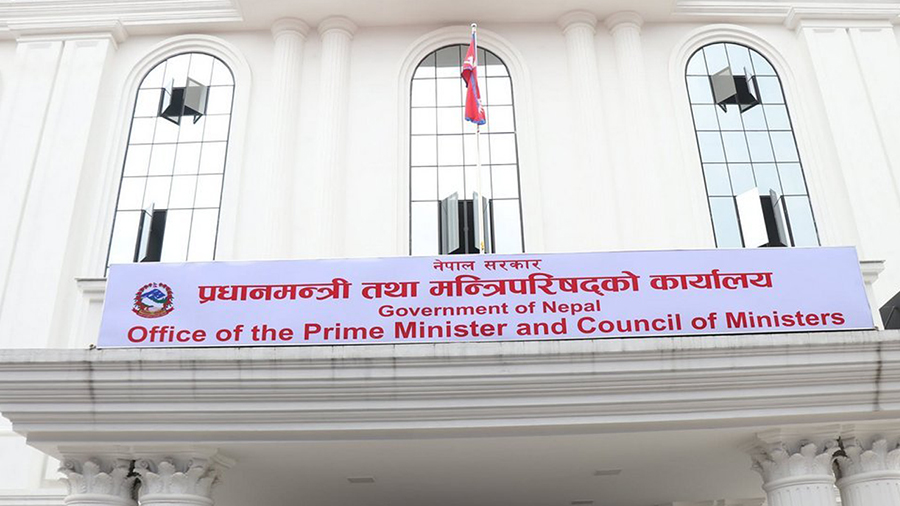
Kathmandu, May 4: The government is preparing to shift the Department of Money Laundering Investigation back under the Prime Minister’s Office (PMO), a move that goes against recommendations of the Financial Action Task Force (FATF), the global anti–money laundering watchdog.
The department was earlier placed under the PMO by then Prime Minister KP Sharma Oli, but after the Gen Z movement and a change of government, it was moved under the Ministry of Finance on the proposal of Finance Minister Rameshwar Khanal in the Sushila Karki-led administration. Now, the Balendra Shah (Balen) government is planning to return it to the PMO, drawing comparisons with Oli’s earlier centralisation approach.
Critics say the decision reflects a growing trend of concentrating power in the executive under the argument of making the Prime Minister’s Office “stronger.” The government has already been pushing administrative restructuring, including reducing federal ministries to 17 to cut costs and improve efficiency. Under the proposed structure, nearly 50 departments and agencies would come under the PMO.
The plan also places federal administration, civil service reform, organisational restructuring, IT and data governance, and the Money Laundering Investigation Department under the PMO.
Officials argue the restructuring aims to streamline decision-making and strengthen coordination. However, concerns are rising that it weakens institutional independence, especially in sensitive regulatory areas like financial crime investigation.
Nepal had earlier faced similar debates when KP Sharma Oli shifted several key bodies, including this department, under the PMO after his party secured a two-thirds majority in 2017. At the time, opposition parties, including the Nepali Congress, strongly criticised the move, calling it excessive centralisation of power.
Despite changes in government later, the structure largely remained untouched, with successive administrations choosing not to reverse the placement of the department.
Observers note that FATF guidelines generally encourage functional independence of financial intelligence units to ensure impartial investigation and reduce political influence. The proposed reversal is therefore being seen as a potential deviation from international best practice.
While the government defends the move as part of broader administrative reform, critics argue it risks repeating past patterns of executive overreach under different political leaderships, regardless of party or prime minister.
People’s News Monitoring Service

Login to add a comment