








By Narayan Prasad Mishra
In memory of the seventh anniversary of her sad demise
Foreigners who visit Nepal are often captivated by its natural beauty, warm hospitality, and rich cultural heritage. Yet beneath this enchanting landscape lies a long-standing truth: Nepal is a nation where deep-rooted inequality continues to shape the lives of half its population—its women. Despite centuries of reverence for goddesses like Durga, Laxmi, and Saraswati, real women—our daughters, sisters, wives, and mothers—have not been granted the same respect or opportunity.
Inequality of Women in Everyday Life
For generations, Nepal’s social norms reflected an unmistakable imbalance. Sons were viewed as future providers, while daughters were seen as dependents. Boys received better food, more care, and greater educational support, while girls were taught obedience, sacrifice, and silence. These attitudes were reinforced not only by fathers but often by mothers who had themselves grown up within the same restrictive culture. Even today, many Nepalese boys grow up believing that household work is beneath them, while women carry both the visible and invisible burdens of family life. In many households, sons still receive preference in food, education, and care. Boys are often discouraged from helping with cooking or cleaning, reinforcing the idea that domestic work is “women’s responsibility.” These small lessons shape generations.
In rural areas, the imbalance is especially visible: women work from dawn to dusk—cooking, tending fields, caring for livestock, raising children—while men may spend hours in conversation or leisure. Even educated, professionally accomplished women face the double burden of career and household duties. Many men adopt surface-level modernity while clinging to old attitudes, showing affection in public abroad but refusing to share responsibilities at home.
Furthermore, harmful customs such as dowry continue in some regions. According to the published news a few months ago, the heartbreaking case of a newborn baby girl abandoned by her own family in Birgunj—simply because she was not a boy—shows that the problem is not only cultural but deeply emotional and psychological.
International Women’s Year, 1975
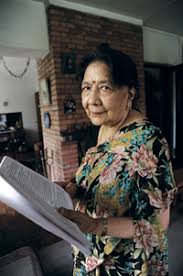
Yet global movements had already begun challenging this deep-rooted inequality. A major turning point came when the United Nations declared 1975 as the International Women’s Year (IWY), aiming to advance the status of women worldwide. In response to this global call, Nepal established the International Women’s Year Committee in November 1974 under the patronage of Queen Aishwarya.
This committee was tasked with designing and implementing nationwide programs to uplift women. The responsibility for planning and executing this historic initiative was assigned to Shanti Mishra—Chief Librarian of Tribhuvan University Central Library—whose integrity, independence, and competence made her the ideal choice. An “Iron Lady” in her own right, she demonstrated exceptional leadership at a premier academic institution, serving as both a professor and the head of the Learning Resources Center, in both roles setting exemplary standards.
Shanti Mishra’s Leadership and Service
Shanti’s appointment as Member Secretary of the IWY Committee was both remarkable and challenging. She had no political affiliation, no factional backing, and no organizational network. Instead, she relied on her discipline, intelligence, and absolute honesty. The committee, chaired by Punya Prabha Devi Dhungana, was expected to develop programs across Nepal’s five development zones, covering education, health, agriculture, social services, culture, and legal awareness. Coordinating such an extensive national effort required collaboration with the palace, government ministries, and local organizations throughout Nepal.
The IWY initiatives became a foundation for future progress. They made it possible for women to inherit their parents’ property in the absence of a son with the sixth amendment of the national law (Muluki Ain), encouraged women’s education, expanded professional training in agriculture and health, created hostels and scholarships, strengthened social services, and promoted cultural programs celebrating women’s contributions. These achievements were later documented in Shanti’s book Voice of Truth: The Challenges and Struggles of a Nepalese Woman, as well as in the official IWY 1975 Report.
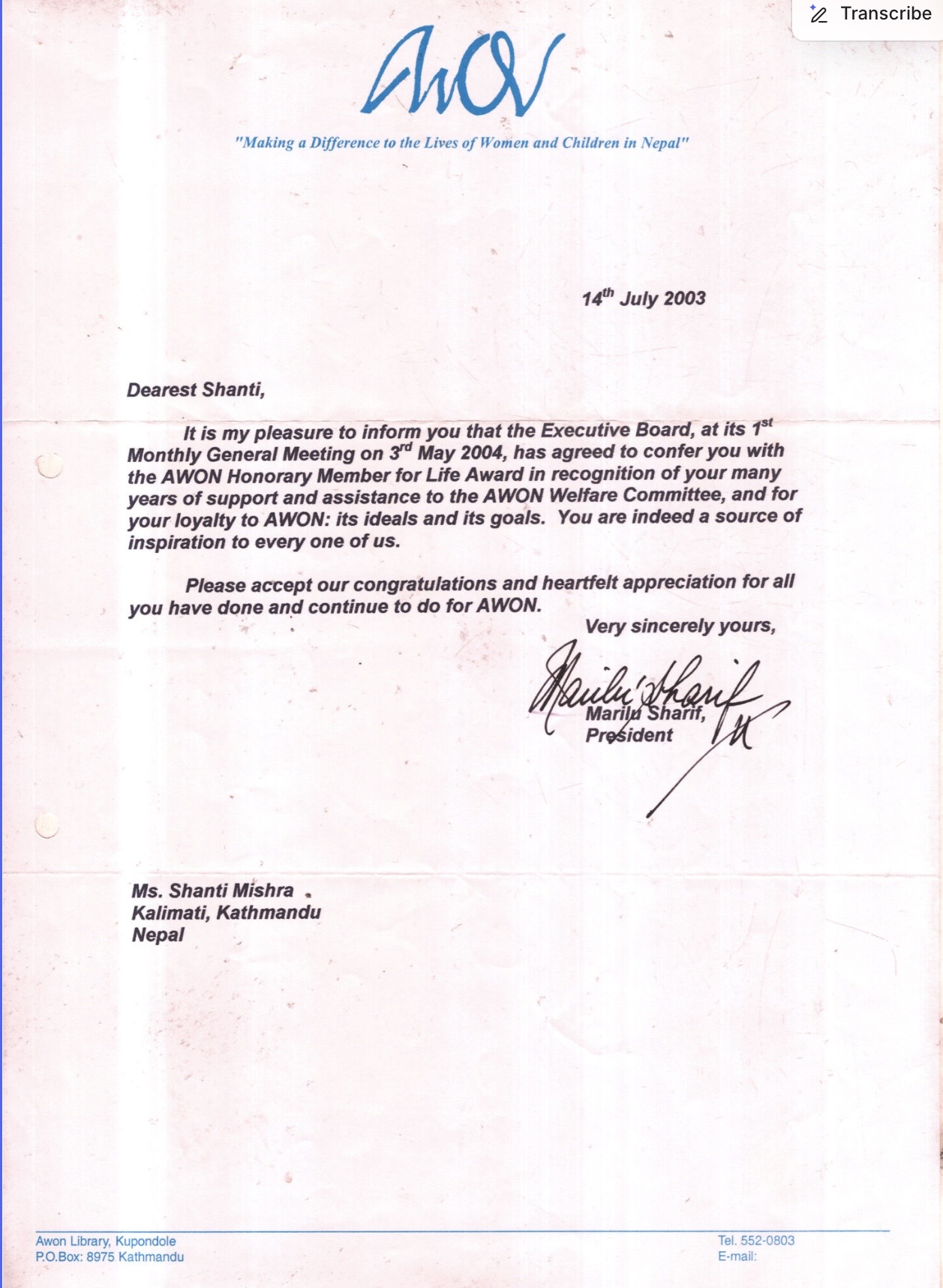
In 1977, Shanti served as Nepal’s delegate to the United Nations General Assembly, where her articulate and principled participation earned international respect—especially at a time when many appointments were influenced by favoritism rather than merit. She, as a country’s delegate, delivered an impressive presentation on the development of women in the developing world. Her work with The Mirror Magazine, published by the UN Women’s Organization in Nepal, strengthened women’s journalism and advocacy across the country. In recognition of her contributions to the cause of women, Active Women of Nepal (AWON), an organization affiliated with the diplomatic mission in Nepal, awarded her the Honorary Membership certificate.
Empowering women is not merely an issue of justice; it is essential for national progress.
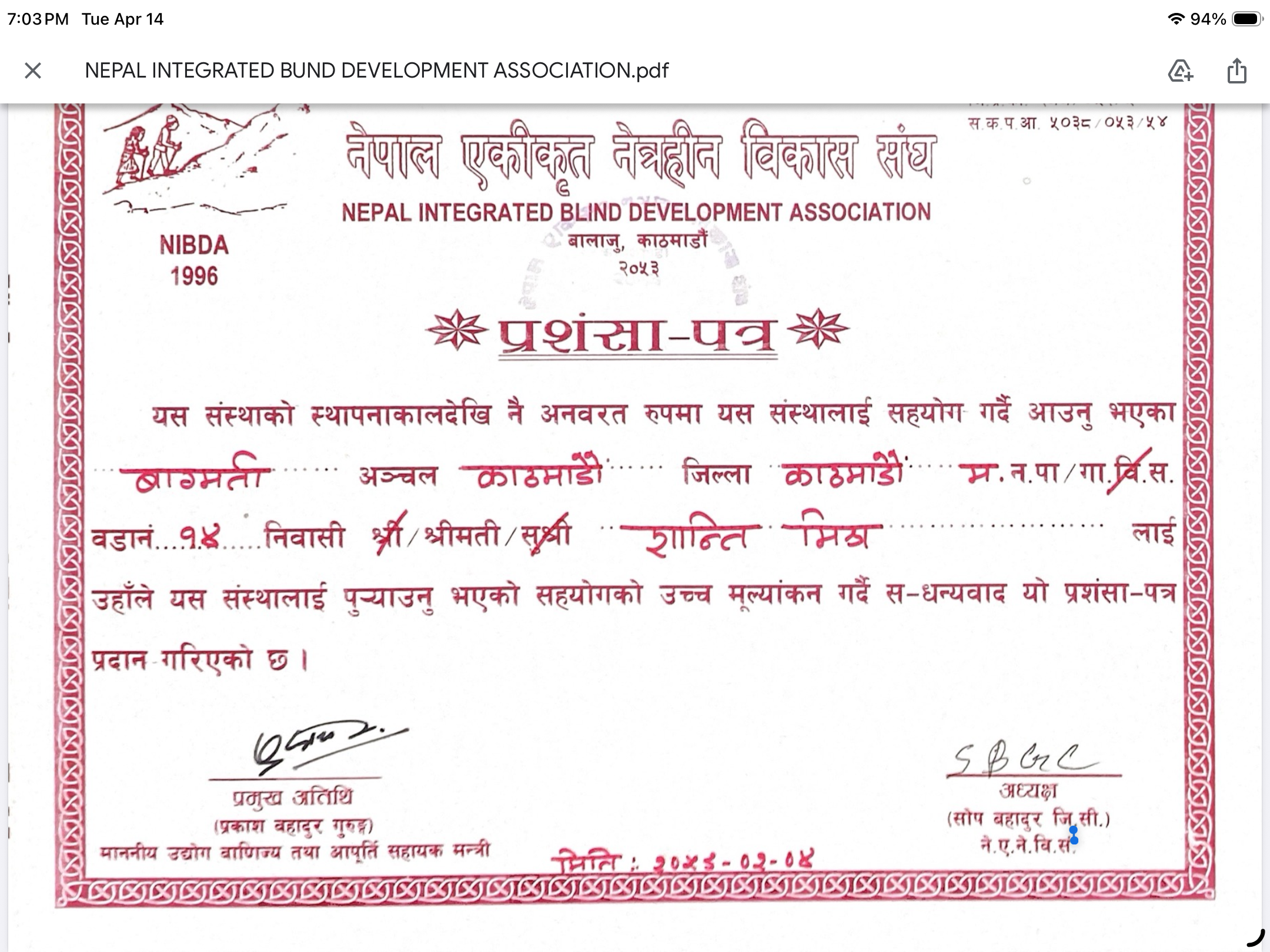
Equally, Shanti Mishra rendered her valuable service to the cause of people with disabilities, as well as the deaf and blind, in whatever way she could. In this context, I am happy to recall that she was also honored with the following appreciation letter from the Nepal Integrated Blind Development Association.
A Life Remembered
Shanti Mishra began her career as the Chief Librarian of Tribhuvan University Central Library on May 1, 1963, and retired on August 17, 1992. She passed away on May 15, 2019 (Mohini Ekadashi). Nevertheless, she continues to live on—not only through her praiseworthy contributions to the development of modern libraries in the country, but also through her remarkable role in empowering women and serving people with disabilities in this nation.
Mohini Ekadashi falls this year on April 27, 2026. On the seventh anniversary of her passing, I, as her husband, offer a flower of my profound love and pray for her eternal peace, with the hope that one day, beyond this life, we will meet again.

Login to add a comment