








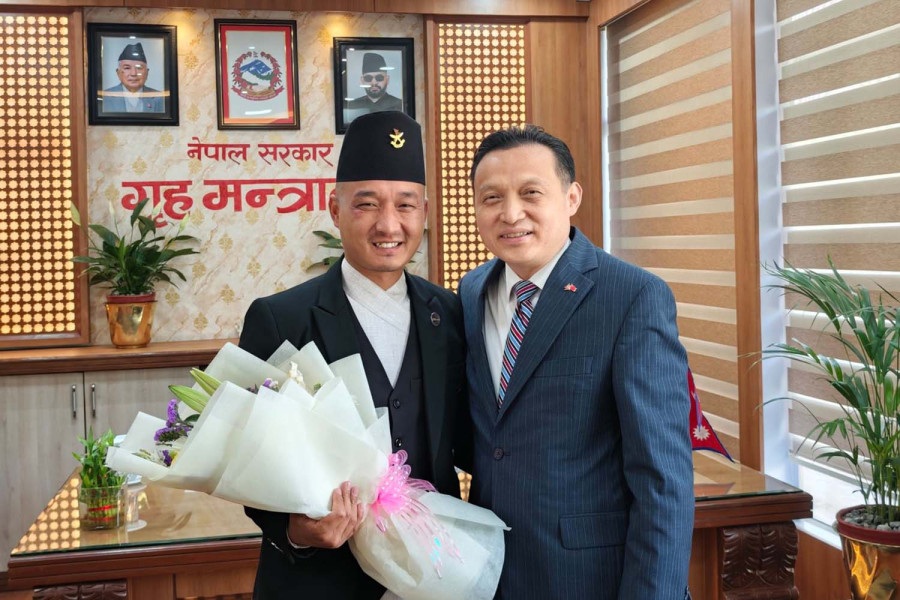
Kathmandu, April 15: Chinese Ambassador Zhang Maoming held direct talks with Home Minister Sudan Gurung on Monday, raising concerns about Tibetan and Taiwan-related activities in Nepal and seeking firm assurances that Nepali territory would not be used against Beijing’s interests.
Minister Gurung responded by reaffirming that Nepal would not allow its territory to be used against any neighbour, maintaining a careful diplomatic balance as external pressures grow.
Officials present at the meeting said the ambassador questioned the legal status of Tibetan refugees and pointed to what he called ongoing “separatist” actions. He also referred to a recent cultural event in Kathmandu where a Taiwanese flag briefly appeared before being removed after protest.
The discussion came with a clear diplomatic signal. Zhang cautioned Nepal against any official participation in the upcoming swearing-in of Penpa Tsering, head of the Central Tibetan Administration, scheduled for May 27 in Dharamshala, India. He warned that even symbolic engagement could be viewed unfavourably by Beijing.
Gurung, recently appointed as home minister, reiterated Nepal’s long-standing stance. He confirmed that Kathmandu remains committed to the one-China policy and will not allow its soil to be used for activities targeting China. Government spokesperson Anand Kafle backed this position, stating that Nepal would continue to contain such actions.
The meeting also touched on lingering political sensitivities. Gurung has previously rejected accusations linking him to pro-Tibet activism during last year’s Gen Z protests. Those protests had drawn attention after viral images showed youths wearing jackets marked “TOB,” leading to arrests and ongoing legal scrutiny.
Beijing’s concerns appear to extend beyond isolated incidents. Chinese officials have reportedly expressed unease over recent visits by Tibetan religious figures, including Jhonang Gyaltsab Rinpoche, and messages of congratulations sent by Tibetan leaders to Nepali political figures. Some in Chinese policy circles interpret these developments, along with frequent leadership changes in Kathmandu, as signs of a possible geopolitical shift.
China views these patterns with suspicion, particularly gestures seen as legitimizing Tibetan leadership. He noted that such signals, even if symbolic, have strained perceptions in Beijing, according to a former Nepali ambassador to China.
People’s News Monitoring Service

Login to add a comment