







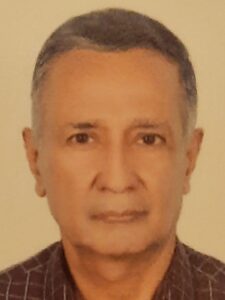
By Upendra Gautam
His arrogance; his confused arrogance with national pride; for him, the territory called India thrived after only he became prime minister!
He runs India the way he ran the State of Gujrat single-handedly. Modi was a self-proclaimed Ramanist who claimed he had the divine mandate to run India ignoring and disrespecting its history, geographic, cultural, ethnic, and religious diversity; serious economic ethnic and regional inequality, and extreme poverty.
During his chief minister days in Gujrat, Modi enjoyed good ties with China, the only major power he could approach and intensify contacts. After he became prime minister he seemed to continue his good links with China. This was well reflected in the warm reception President Xi was given in Gujarat in September 2014. Then two countries signed three MoUs making Guangzhou city in China and Ahmedabad a sister city, setting up industrial parks in this state and an agreement between Guangdong province and the Gujarat government for the development of cultural and social ties between the two provinces.
(In many cases Modi was wrong, cruel, and ugly when he tried to learn lessons from China. He read Chinese history only in terms of power and failed to understand China’s basic practical philosophy and wisdom that guide China’s whole-nation egalitarian governance. He is jealous of China’s heartland indivisible unity and its intrinsic and geo-economic integration with peripherals. To have such unity in India, he unsuccessfully tried to play the “majority Hindu card” for his partisan politics without correctly understanding that in India Shiva unites more. In India, each Hindu family may have its own deity to worship).
Modi’s Gujarat days experience encouraged Chinese officials to think of a Trans-Himalayan Economic Silk corridor between China and South Asia. After Modi became prime minister, a vice-minister with considerable South Asian political and diplomatic experience was excited to tell us that China was in dialogue with Gujarat, Bihar chief minister Nitis Kumar and New Delhi for a hydro-power development corridor starting from Nepal. The resources for the corridor will come from Nepal’s water resources, Bihar’s market, Gujarat’s wealth and China’s construction and grid capability. My candid response to his excitement was a request to cool down a bit as Nepali people know India deeper than China’s officialdom.
Modi played the China card nicely till before his summit days in Wuhan where Xi listened to him carefully allowing him to talk more and more. From the informal talk summit, President Xi might have discerned that Prime Minister Modi can talk a lot more and deliver less. According to an Indian source, “Prime Minister of India, Narendra Modi and President of People’s Republic of China, Xi Jinping held their first Informal Summit in Wuhan on April 27-28, 2018, to exchange views on overarching issues of bilateral and global importance, and to elaborate their respective visions and priorities for national development in the context of the current and future international situation.”
After the Wuhan summit, and perhaps even before, it seems Modi seemed to use India’s China ties for more a geo-political purpose than for peace, security and development in the neighbourhood. He seemed more attracted to coupling with outside geo-political forces for India’s “balanced” ties with China–meaning Modi was not talking or cooperating or competing with China on its own. Modi’s apparatus has preferred to call such ‘balanced” ties that enjoy “strategic autonomy.”
In the post-election moments, let us wish Prime Minister Modi in the third term of the high office a genuine strategic autonomy in India’s governance.
The views expressed in this article are the author’s own and do not necessarily reflect People’s Review’s editorial stance.

Login to add a comment