







INTERVIEW
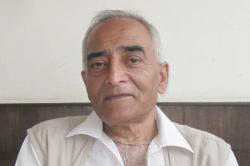 As we are witnessing a political mess in the country, we chose to interview senior journalist and political analyst Shrish Shumsher Rana on contemporary developments. Excerpts are as given below:
Q. Within five years of its promulgation, the constitution has fallen into a serious crisis. What could be the reason?
A. Faulty constitutional premises that scrapped the constitution of 1990 have been the bane of the current constitution. It is now an open secret that the Delhi 12-point programme and other foreign instigation propelled the unconstitutional measures in the interim constitution after king Gyanendra reinstated a duly dissolved parliament acceding to street demands that falsely accused the king of grabbing power beyond the constitution. The interim constitution and events that followed including elections to two constituent assemblies, the appointment of the chief justice as head of government and the using of the whip to ramrod a curiously secretive constitution on the basis of which elections to the center and local levels to take place have all contributed to the redundancy of a constitutional process designed to render the politician above the constitution. It was at that time suitable to the collective interests of parties who forgot perhaps that democracy is competitive. Unfortunately, the competition has merely been for self-aggrandizement as has been made public by the current consternation. Parochial interpretations of the constitution have been re-begun paralyzing institutions of government from the head of state downwards. It is the elections again that are the bone of contention as is the constitution. History has just repeated itself since the fault was not corrected behaviorally a decade and a half ago but, instead, promoted in the current constitution. It is not for nothing that I say we must for back to the 1990 constitution and agree to make corrections there. The current malaise stems from the indulgence fostered by political impudence beyond the reach of constitutionalism.
Q. There is a hue and cry after Prime Minister KP Sharma Oli dissolved the Parliament. Now the issue is under consideration of the Supreme Court, even though, legal experts and political leaders in PM Oli’s rival camps are defining the constitution publicly saying that Oli has initiated a coup. Can’t an executive chief dissolve the House of Representatives in a democracy?
A. This is precisely the sort of aberrations that have been repeated over and over again in our democratic practice. It is not the constitution first but partisan suitability that defines political behaviour. The judiciary is awkwardly propelled repeatedly into making political decisions when it should be the politicians who should avoid it in a democracy for the very sanctity of the judiciary and the constitution. Whatever the judicial decision, it will have instigated challenges on the constitution. Forget the judiciary, it has already marred the sanctity of the head of state. This is what happened to the monarchy repeatedly until that sacred institution was set aside unconstitutional. This is what is happening to the presidency. As a consequence, even such other independent constitutional organs as the election commission are bound to be dragged into the essentially partisan fray. How can constitutionalism prevail amidst such impudence?
Q. Aren’t the recent developments a failure of the political system?
A. A system designed to share the spoils of power was designed to fail from the very outset once the sharing is inhibited. Democracy is hardly that. Emphasis on the spoils prompted the naked corruption that is the outstanding trait of the system. Systems that welcome foreign intervention and not abet it is sure to fail when intervention is impeded by competitors. Constitutions do not correct impudence on their own. Especially when encouraged by outside powers a weakened state can hardly counter these pressures and impose no hindrance on their own. The past decades of unaccountability and impudence have now focused attention on foreign designs and that of our homegrown masters.
Q. You might have noticed that in the recent days, almost daily, in all over the country, people, especially youths, are seen in the streets demanding restoration of the institute of monarchy and re-declaring the nation as a Hindu state. Is there any chance of reinstatement of the institution which has already been removed?
A. There is much sabotage in the movement being a coherent one. The current system on free-fall, long-latent demands for the restoration of the monarchy and the Hindu Kingdom have taken their time to expose their presence on the streets. Failures of our political leaders should not alone be the reason for their replacement since the problem is constitutional. The replacement of the current constitution must begin back where the 1990 constitution was tampered with since the tampering itself is the source of the impudence. Unless this is recognized properly the movement will remain directionless. The strength of the movement is also its weakness. It is leader-less and not united. This means leadership design among the many on the streets gives it a sense of competition to outdo each other. This perhaps fuels the continuity at the affordable grassroots level. A directional attempt to set the various aspirants towards the restoration of the 1990 constitution would perhaps give the movement its necessary focus. That this is yet to emerge is a bane where various interests can play.
As it is this movement is not bereft of nefarious content. The conclusion that the current malaise can be corrected through amendments and injunctions in the current system smells suspicious. There is one line that says that the directly elected president or prime minister will resolve the issue. This is humbug since the problem is political behaviour which cannot be tempered under a constitution that encourages impudence and constitutional access. India’s Shyam Sharan theorists would surely welcome such a state and so Sharan sees an impeccable individual getting the country out of the current rut just as his prescription of a chief justice being appointed to the executive role executed the successful conclusion of the second constituent assembly. Former Indian ambassador Manjeev Puri decided that inclusion od the monarchy and the Hindu state in the current constitution would ameliorate the current streets. This would only endorse the Delhi designs and not correct the constitutional excess which would mean that the excess can be repeated again. A rainbow of such demands take to the streets in advocacy but they will need a constitutional perspective to do undo the wrong that was done to a sovereign constitution and sovereign institutions of a sovereign country.
Q. Is the present strength enough for reinstatement of the institution of monarchy?
A. No. But the lure lies in its capacity to propel and attract to itself in larger numbers and give it continuity. I would be safe in concluding that this will happen. The system is on its way out. This popular conclusion should drive the movement even further. The current free-fall should end when the movement can cushion increasing public disenchantment and frustrations.

Login to add a comment