








By Narayan Prasad Mishra
After the revolution and the political change in 1951, there was a new wave for educational wave in Nepal. Many new schools were established. Same way, many new colleges also came into existence. Then, the need for a University also came to debate. As a result, Tribhuvan University, the first university in the country was established in 1959. Some small houses known as government guest houses located at Tripureshwor, Kathmandu were given to the university by the government to begin its work. The university started its master’s degree courses in several educational departments at those houses. That was a landmark in the history of higher education in Nepal.
The most essential things to run an institution were now available—physical buildings along with some teachers and students. However, there were many other needs for an institution to run. The need for the library also was one of them. Some books were acquired and kept in a cabinet that was called the library and named Tribhuvan University Library. The meaning and concept of a library in Nepal was just the collection of some books rather than dissemination of services. Even now it is so.
Some so-called book racks were made of some bricks without any mortar and some wooden planks, and books were kept there. There were about 1000-1200 books. It was lucky no unfortunate accident or incident occur there because of the unstable wooden and brick bookrack.
Even then, there were some educationalists in Nepal, who could think that the library is the heart of the university and the university library should be well equipped with the best collection of well-chosen books and journals. Besides this, the library should be well organized and should be an intellectual workshop rather than just a storehouse of reading materials. For achieving this purpose, the chief of the library should be well qualified, dynamic, energetic, and devoted to the library with a high professional degree in librarianship. This view was shared by Ranadhir Subba, then Vice-Chancellor of the University and John L Hafenrichter, a representative from the USOM (the United States Operations Mission) library advisor — the library expert involved in the organization and management of the Central Library. They thought to look after a probable candidate for the post of a chief librarian.
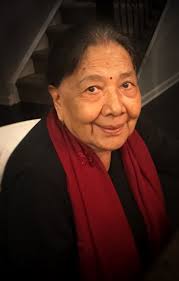
Late Shanti Mishra
At that time Nepal had six individuals possessing various certificates in library science. One of them had a master’s degree from the USA. All of them were working in different libraries. Since there was no change in those libraries from their traditional role of storing books to the service of disseminating services, there was no trust in them that any of these people could be used for the establishment and development of the University library as a modern library according to the modern concepts of the time. So the university administration under the leadership of its Vice-Chancellor Subba along with Hafenrichter, an American library expert decided to send someone from among the professors of the faculties to be educated in library science in the USA. After screening many possible candidates Ms Shanti Shrestha, a professor in the Department of History was proposed for this purpose.
That was the time when the library profession had not been recognized as other professions. No modern library existed in the country. The Nepali society was not acquainted with modern library services and they did not know the valuable role of a library in supporting the study, teaching, and research of educational institutions. Library profession had no status and therefore no attraction for anyone to peruse it. In these circumstances, there would not be any surprise that Ms Shrestha also was not interested in it. None of her well-wishers wanted her to leave the professor position and be a librarian.
Hafenrichter, who served as library advisor in different countries including Nepal, Egypt, Niger, Viet-Nam, with the U. S. Agency for International Development (USAID), and who was the Chief Librarian of the University of Eastern Michigan, USA, was not just an ordinary library expert, he was a library saint, fully devoted to the library profession like someone devoted to the God. He knew the core value of the library. He loved Nepal. He wished Nepal had a very well organized, well equipped, well-served modern library with a good leader. He wanted Ms Shrestha to go for a library degree from the bottom of his heart and tried his best to persuade her for this purpose convincing her how her service and contribution could be more useful and important than being a professor for the country. By his rosy picture of the library profession and the inspiring tales, Ms Shrestha was ready to go to the US and became the student of George Peabody Library School in Nashville, Tennessee in 1962.
Hafenrichter was still in Nepal. He continued to write professional letters to Ms Shrestha to acquaint her with the challenges of Nepal library problems and make her able to face them strongly and efficiently. He wrote so many letters to her, giving them numbers – No 1, No 2, so on and the title Nepal Library Problems. If we compile and publish, it would be a big book! By each other’s correspondence, he was happy to make the conviction that Ms Shrestha would be the competitive, imaginative, and noted librarian of the country. He wrote the following inspiring words in his letter to Ms Shrestha on August 8, 1963.
“ You have my most sincere good wishes for success. I continue to be convinced that your selection and your training remaining the single hope for the success of the library development activity in Nepal…”
“I wish you a tremendous success in your library career; hoping above all else, that in some manner or other you will be allowed to serve long and totally in our profession. I will except to hear of the competent, imaginative, and noted librarian, Miss Shanti Shrestha, in the not too distant future.”
Ms Shrestha returned to Nepal in 1963 with a Master’s Degree in library science from the USA. She became the first Nepali woman who possessed that degree. She had now two M. A. Degrees, – one in library science and another one in history. She was appointed as a Chief Librarian of Tribhuvan University Library on May 1, 1963. She was the first lady professor of the University in Nepal and now she became the first woman librarian of the country. By the time, Hafenrichter had left Nepal.
There were three small rooms assigned to the library at Tripureshwor. Everything had to be started from scratch. The university was not rich and there was a meagre fund for the library. The needs of books, journals, library supplies, furniture, etc were unlimited. Even the rooms needed to be renovated and decorated. There was a need to even fixing the lights. There was not much manpower to be trusted for the job. Despite all these difficulties and problems, Ms Shrestha had a dream, determination, and hope to create a beautiful, attractive, well-organized library for the University. She gave her life to the library. She even wanted her boyfriend to be a librarian and join her mission to face the challenge, which she achieved by her love, and which was known to all. She worked hard and spent most of her time in the library, not sticking to the office hours. Within a very short period, she created a beautiful library — though it was small it was neat, organized, attractive and inviting. She was admired by the then Vice-chancellors and high dignitaries of the country. Sardar Rudra Raj Pandey, a well-known writer and well-known educational, the then Vice-Chancellor was one of them.
In the course of its development and growth, the University moved to Kirtipur in 1967 and the library followed it. The library had a new building now, suitable for its services and activities. She could now easily spread her wings to fly to the speed of her wish to develop it. She now had more trust and support from inside and outside of the country because of her efficiency, dedication and hard work. During this time the service provided by Dorothy Miller and Nancy W. Hatch, Peace Corps volunteers and Helen E. Honey (self volunteer from the USA) for cataloguing and classification of books when it was most needed, would always be remembered. Moreover, she now had a strong helping hand from her husband, who was the first Nepali man to possess a Master in library science from India. By utilizing all the available resources she worked on the interior design of the library to make it organized and attractive. Circulation Desk, many sections and collections – Browsing, Reference, Periodical, Documentation, Microfilm, Manuscript, Nepal, United Nations, etc. now existed. The orientation programme was introduced in the library to acquaint its readers to its services and activities. New addition lists, bibliographies including Nepal National Bibliography were published and distributed by the library. Based on all these facts, by realizing the important role of the library and library profession in education, the university raised the status of the chief librarian to the status of the full professor from the status of the lecturer, which was equivalent to the status of the secretary of the ministry. She became the first woman to hold that position in the country.
After hearing and knowing the magical growth and development of the university library as a modern library of the country, Dr E.W. Erickson, Library Advisor, USOM and the Founder of Central Library, Lal Durbar who was in Nepal around the year 1957 before Hafenrichter, wrote a letter to Shanti, who then married to Narayan Mishra, on August 13, 1970, expressing his happiness with the following words.
“I talked to Mr James Green the other evening and he tells me that he visited you last year when he was in Nepal briefly. I was pleased but not surprised to hear the many nice things he had to say about you and your work there. It is gratifying to know that my ” baby” has been so well taken care of. History will be able to say that Erickson was the midwife to the Tribhuvan Library but its growth and development due to the devoted and expert care of Shanti Shrestha.“
There was a visit by British educationalists in the library. They were highly impressed by it and expressed that it was ”almost unique in Southeast Asia” which was announced by BBC in 1969. Due to this reputation, the library was a place of pride for the country and a place where foreign dignitaries were taken to visit during their state visit. The library was visited by many distinguished visitors which included King Manendra and Queen Ratna, King Birendra and Queen Aishwarya, Emperor of Japan Akihito (then Crown Prince) and Empress Michiko, President of India Zakir Hussian, etc. The visitor’s book of the library contained their signature and valuable comments. There were many encouraging and inspiring comments in its visitor’s book by many national and international dignitaries and scholars. Among them, the following comments made by a scholar on 16/5/1972 always give pleasure and inspiration to all who take pride in the development of this library.
“This library is almost like the jewel in the lotus…..it is difficult to say which is the most attractive and appealing, the exterior or the interior.”
“Hope and pray the library will grow with the same pride and prestige in the days to come.”
The year 1963 which was 57 years ago the well-known library expert of the USA Hafenrichter, who inspired Shanti Mishra to study library science, and who was highly impressed by her study and knowledge of library education, wished for her long service to the library profession. Shanti dedicated her life to the library. She was highly respected for her professionalism nationally and internationally. She was even decorated with the highly prestigious ”International Library Movement Award ” from India. She was the mother of the modern library in Nepal. But it was such a sad truth that Shanti Mishra had to be retired from the library nine years before her retirement age in 1993 due to the anti-academic, anti-professionalism, anti-honesty, anti-integrity anti-national, wrongful political decision of Kedar Bhakta Mathema, then Vice-Chancellor of the university, who was regarded as top educational by the Nepali Congress, the oldest political party of the country. That was an extraordinary injustice which needed condemnation.
We are in a country where professionalism has almost been destroyed by the political epidemic. We are in a country where honesty and sincerity have no place to be recognized. We are in a country where truth and integrity have no place to exist. We are in a country where dedication and contribution have no chance to grow. So, we still need to fight and we must fight for that. Hopefully, someday, honesty, sincerity, truth, and integrity will be recognized and honoured in our country too. One day justice will be done to the memory of my Shanti and our Shanti Mishra.
Editor’s Note: Nepal’s first female postgraduate librarian Shanti Mishra, who had developed and modernised the TU Central Library, passed away on May 15, 2019, in Indiana, USA, while undergoing treatment. Her spouse, Narayan Mishra, also a postgraduate librarian, worked together with Shanti for a long time. Narayan Mishra has recalled his late wife’s struggle in advancing the Library.
The writer can be reached at: narayanshanti70@gmail.com
People’s Review Print Edition

Login to add a comment