






By M.R. Josse
KATHMANDU: Although some nominal disengagement between Indian and Chinese PLA forces in Ladakh has apparently begun, no one is under any illusions that Sino-Indian relations will ever return to its pre-15-16 June 2020 temper, at least, not any time soon.
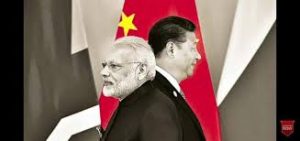 While the shrill, chauvinist Indian media – taking its cue from the BJP government skippered by Prime Minister Narendra Modi – continues to flog the myth that India gave China a ‘bloody nose’, there is a fairly solid consensus among sober-minded, well-informed or mature observers, in India and abroad, that it was basically India that was on the ropes in that dust-up on the heights of Ladakh.
In fact, China has allowed India to ‘save face’ by not trumpeting her military gains. That gives India more wiggle room for future Sino-Indian accommodation; perhaps, it may even help in slowing the pace of the ongoing Indo-U.S. tango.
THE MORNING AFTER
If one ignores the chest-thumping nationalistic rhetoric of the BJP and its acolytes, one discerns many interesting – nay, even revealing – dimensions of the Sino-Indian relations saga.
As much, surely, emerges the morning after from commentaries/analyses by thoughtful, worldly-wise and sophisticated Indians.
For example, Swaminathan Aiyar, a reputed economist, writing in the Economic Times (7 July 2020), rejects the popular notion that the ‘China story’ could be over for India. Specifically, he underscores the dangers of plunging headlong into an import ban. China must be sent a ‘stern message’ he avers, but not in such a manner.
“There is a need to draw a clear line between goals that can be backed and the ones that can’t be…But if India goes and bans stuff like Chinese machinery or immediate goods, it will hurt the Indian economy deeply because no other nation can provide us with the same stuff at the cost China does.
“The bottom line of the argument is that while banning apps or toys won’t turn India into a high-cost economy, a ban on machinery or immediate goods will, to the detriment of India’s interest.”
Similarly, Manoj Joshi, a ‘think-tanker’, in a recent write-up in Tribune India, argues: “It is in our own interest to terminate the crisis which is exacting a huge price in terms of resources and effort, at a time when we are fighting the Covid-19 pandemic…Though we have built up a force of nearly four divisions in the area, well balanced with armor and artillery and air assets, we cannot consider a military riposte militarily casually…
“What has encouraged the Chinese is the growing gap between the capabilities of the PLA and the Indian military arising from the resource crunch we are suffering from. This has emerged over two decades…Our goal is not to fight a war but, by our deterrence capacity, force China to back off…The steps we take must be carefully calculated and not impose greater cost on us, than for China…Recovery will take years. India will need more trade, more investment, less restrictions and a stable and peaceful periphery. In dealing with the crisis in Ladakh, we should not miss the wood for the trees.”
Despite the above, Dave Makichuk, quoting Defense News, recently reported that India’s Defence Acquisition Council had approved “a collection of arms procurement worth US $ 5.55 billion, including domestic efforts worth US $ 4.44 billion.” Makichuck went on to comment: “While both nations are extolling peaceful negotiation on the overall border issue, make no mistake, India is not taking chances – they are arming themselves to the teeth.”
XI IS NOT TOJO
While the prospect of a two-front war for India continues to hover in the public imagination, the spectre of U.S.-led ‘Indo-Pacific Strategy’ is also increasingly looming on the Sino-Indian relations horizon.
Vijay Gokhale, a former Indian foreign secretary and ex-envoy to China, writing recently in the Indian Express, for example, plays down the legitimacy of China’s presence or interest in the Indian Ocean, arguing: “China is not a littoral state in the Indian Ocean.” This he does by, among other things, minimizing the fifteenth century naval exploits of Admiral Zhang He, including in the waters subsequently named by Western colonialists as the ‘Indian Ocean’.
While he does not claim that China has no locus standi vis-à-vis the Pacific Ocean, Gokhale nevertheless emphasizes that in the past “Chinese naval activity was limited to the East China Sea, the Bohai Sea, the Yellow Sea and the South China Sea” – without letting on that that expanse of contiguous water is part and parcel of the Pacific Ocean!
He does however provide these useful markers: That in January 2020, the PLA Navy conducted tripartite naval exercises with Russia and Iran in the Arabian Sea [a component of the Indian Ocean], which have the “largest warship building programme in the world”; also that in September 2019, Chinese Vice Foreign Minister Le Yuchung declared: “We are firmly against attempts to use the Indo-Pacific Strategy as a tool to counter the BRI (Belt and Road Initiative) or even ‘contain’ China”.
At this point the reader may ask: what has all this to do with the recent clashes between Indian and Chinese forces in Ladakh? That nexus is made explicit in a think piece in the Indian Express, 7 July 2020, by C. Raja Mohan, the crux of which is this: “China’s hegemonic ambitions” means that Beijing’s focus is now the building of a Chinese – as distinct from an Asian – century, characterized by China seeking “more territory from its neighbours” to dominate them.
Staggeringly, as per Raja Mohan, China’s claims and naval maneuvers in the South China Sea, in particular, are “much the same” as what Japan did “between the two world wars.” He goes on to allege that “Imperial Japan’s attempt at folding the rest of Asia into its ‘co-prosperity sphere’ is seen by many as the precursor to China’s current effort to tie its neighours into the BRI.”
Implied is this egregious assertion: that the Indo-Pacific Strategy – driven by the U.S. with Japan, India and Australia as eager-beaver apostles – is a most timely instrument of deterrence to contain China, especially in the Indo-Pacific Region.
Without further ado, allow me puncture the myth that China’s rise or BRI is “much the same” as Japan’s transparently expansionist moves between the two World Wars via its grandiose “Greater East Asia Co-prosperity Sphere” scheme.
Years before her expansionist policies in the Far East and the Pacific took effect Tokyo had already waged a successful war against Tsarist Russia, occupied Manchuria and Korea, as well as a wide swath of territory in eastern China.
Furthermore, in implementing such a brazenly adventurist policy, militarist Japan under General Hideki Tojo – a staunch ally of Nazi Germany’s Adolf Hitler and Fascist Italy’s Benito Mussolini – not only attacked the United States’ naval base in Pearl Harbour, Hawaii, without a declaration of war, but by spring of 1942 had also invaded and occupied the major colonial possessions of the Western powers in Asia, including the Philippines, Malaya, Borneo, most of the Dutch East Indies and Burma. Japan overran Singapore, took over Indochina and Taiwan, not to mention its armed incursion into Manipur in India, as well.
Besides, as Patrick French recalls, (‘Liberty or Death’, HarperCollins, London, 1997, pp. 206): “The Japanese had captured the Andaman and Nicobar Islands, so they were put into his (Subash Chandra Bose’s) theoretical control and named ‘Saheed’ (martyr) and ‘Swaraj’ (self-rule).”
In short, Mohan’s attempt to demonize Xi’s China by equating it with Tojo’s Japan is both futile as well as ludicrous.
LADAKH AND INDO-PACIFIC
Coming back to the mainstream of this essay, recall that during the recent Ladakh crisis, one heard Indian media pundits constantly expounding on how the United States, with her formidable Pacific armada, would ‘fix’ China in the South China Seas – thereby assisting New Delhi in her Himalayan/Karakorum battle against Beijing.
No wonder, then, that Harsha V. Pant, writing in the Deccan Herald (9 July 2020) on the theme ‘global pushback against China’, dutifully links “the maritime frontiers of the South China Seas to the Himalayan frontiers” of India before concluding: “The world most certainly must brace for China’s rise, but China should also brace itself for a world that will not easily acquiesce to Beijing’s revisionism.”
Not surprisingly, the perspective from Pakistan is rather different. Senator R. Malik, for instance, categorically claims in The Nation (10 July 2020) that: “India initiated provoking China to make the U.S. happy” – with Australia as partner.
Malik says “Modi was emboldened to provoke China in its recent standoff to engage it on the borders while U.S. warships illegally trespassed into the disputed South China Sea.” He also claims that India has a joint venture agreement with Australia, wherein India’s Andaman and Nicobar Islands and Australia’s Cocos Islands can be used by a “third party” to store heavy ammunition and fighter planes.
While the future will surely shed further illumination on the linkage – if any – between India’s recent military actions in Ladakh and the concurrent activities of the U.S. Pacific Fleet in the South China Sea, to my mind, it seems quite possible that such coordination was cobbled together during American President Trump’s recent visit to India, mere weeks before the recent Sino-India flare-up on the LAC that climaxed in mid-June.
As far as Nepal is concerned, geopolitical logic and common sense suggest she adopt a hands-off policy vis-à-vis the ‘Indo-Pacific Strategy’ which so obviously is directed against China.
The writer can be reached at:
People’s Review Print Edition

Login to add a comment