







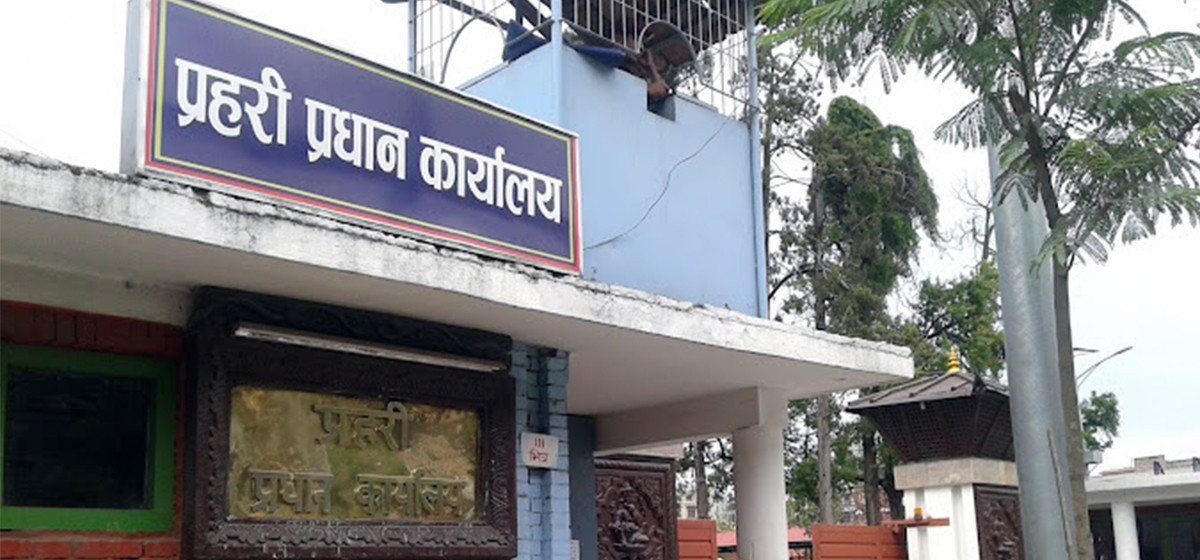
Kathmandu, Aug 9: Nepal Police has expanded its crackdown on suspected money laundering, opening more financial investigations into assets believed to have been acquired through crime as the government races to meet international standards for removal from the Financial Action Task Force (FATF) grey list.
The latest case involves Abhisek Giri, who was taken to Morang on Thursday for investigation under money laundering laws. Police had first arrested him on June 27 on allegations of fraud and criminal breach of trust linked to the alleged embezzlement of summer allowance funds distributed to prisoners at Morang Prison.
Investigators suspect that some of Giri’s assets may have been acquired through illegal means. A court on Friday allowed police to hold him for 4 days in connection with the money-laundering investigation.
Giri is also facing a separate fraud case in which authorities are seeking to recover Rs 213.27 million. The case, filed on July 30, relates to allegations that he defrauded the amount during the purchase of a petrol pump. He was released on Rs 500,000 bail before police took him to Morang for investigation in the separate case.
The investigation reflects a wider shift in Nepal’s approach to financial crime. The Cabinet gave Nepal Police authority to investigate money laundering offences on March 25, 2024, significantly expanding the police force’s role in tracing criminal proceeds and unexplained wealth.
Since then, police have begun pursuing financial investigations alongside the original criminal cases. Deputy Inspector General Avi Narayan Kafle, Nepal Police’s central spokesperson, said police are currently investigating 25 money laundering cases linked to offences recorded in fiscal year 2025/26. A total of 64 suspects have been arrested in those cases.
Police units across all districts are now authorised to investigate and prosecute money laundering offences. Investigations can target undisclosed or unexplained assets connected to illicit transactions, cooperative fraud, cryptocurrency dealings, human trafficking and other criminal activities.
The number of cases is also rising. Police filed 15 money laundering cases in fiscal year 2025/26, up from 13 in the previous fiscal year. In earlier cases, 78 people had been named as defendants in 28 money laundering prosecutions.
The stronger enforcement push is closely linked to Nepal’s effort to leave the FATF grey list. The international watchdog placed Nepal under increased monitoring at its Paris meeting on February 21, 2025, citing weaknesses in the country’s systems to combat money laundering and terrorist financing.
Nepal must now demonstrate that its laws are not merely on paper. It needs stronger investigations, prosecutions and enforcement, particularly in high-risk crimes that generate illicit funds.
Police have identified human trafficking, drug trafficking, hundi transactions, tax evasion, corruption, banking offences, cybercrime and cryptocurrency transactions as major predicate offences linked to money laundering. Kafle said these areas have been given priority as police work to support Nepal’s removal from enhanced monitoring.
The deadline is January 2027. By then, Nepal must complete key legal reforms and show that its agencies can effectively investigate and prosecute money laundering and terrorist financing cases. For the police, the challenge now is not simply to register more cases, but to trace illicit money, establish the criminal origin of suspicious assets and secure successful prosecutions.
People’s News Monitoring Service

Login to add a comment