







By Our Reporter
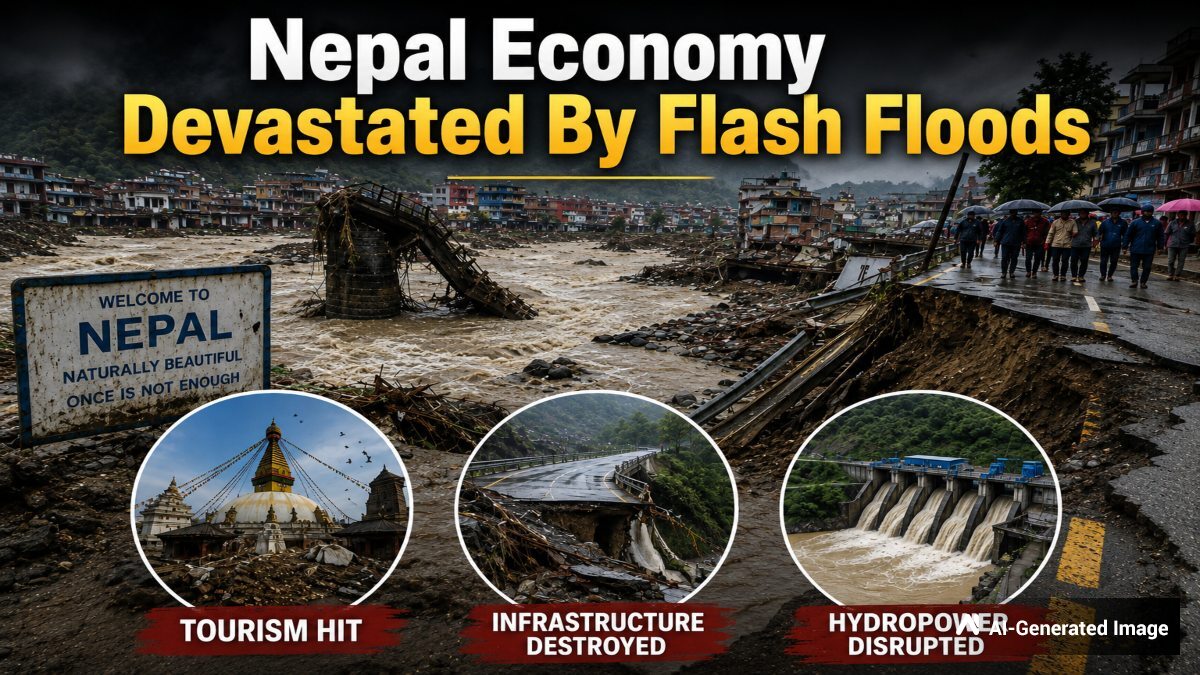
The Bhotekoshi flood has turned a natural disaster into a serious economic setback for Nepal. The destruction stretches across Rasuwa, Nuwakot, Dhading and other districts, affecting homes, businesses, roads, bridges, hydropower plants, transmission lines and tourism infrastructure. Preliminary estimates put the physical damage at more than Rs 200 billion. The indirect losses could be even greater.
For a country already struggling to finance development, that figure is hard to absorb. Rebuilding infrastructure worth Rs 200 billion will put heavy pressure on public finances. Before reconstruction can even begin, the government must spend heavily on rescue, relief and rehabilitation.
The money will have to come from somewhere. If reconstruction takes a large share of the development budget, projects in other parts of the country could be delayed or dropped. Roads, irrigation schemes, schools, hospitals and other planned projects may find themselves competing with emergency rebuilding. Nepal could end up facing an uncomfortable choice: repair what the flood destroyed or keep funding the development plans already on the books.
And the damage goes well beyond public infrastructure. Entire settlements and riverside markets have been hit. In Rasuwa, places including Timure, Syafrubesi, Hakubesi and Mailung suffered major destruction. Customs, immigration and security facilities around Rasuwagadhi and Timure were also damaged. In Nuwakot, markets and settlements along the Trishuli were swept away or badly affected. Around 60 houses were reportedly destroyed in Trishuli Bazaar alone.
The loss of more than 200 trucks carrying goods near Rasuwagadhi shows another side of the economic shock. These were not simply vehicles parked along a road. They represented imported goods, private investment and the livelihoods of drivers, traders and freight operators.
Disruption along the China trade route could have effects far beyond Rasuwa. When a major road link is damaged, goods take longer to reach markets. Transport costs rise, deliveries are delayed and businesses have to work around an unreliable supply chain. Eventually, some of those extra costs can reach consumers through higher prices.
Energy is another major concern. The flood has affected projects representing around 901 MW of generation capacity. Twelve operating power plants with a combined capacity of 431.1 MW have been forced to shut down, while 15 projects under construction, with a combined capacity of about 470 MW, have suffered damage.
For Nepal, which has increasingly looked to hydropower as a driver of economic growth and a source of export earnings, that is a significant setback. The immediate task is to repair damaged plants and transmission infrastructure. But the bigger question is whether future projects are being designed with enough attention to the flood, landslide and debris flow risks that come with building in the Himalayas.
Tourism has taken a hit as well. Rasuwa is more than a border district. It is a gateway to trekking and mountain tourism, supporting hotels, restaurants, transport operators, shops and other businesses. When roads disappear and basic infrastructure is damaged, the economic impact does not end when the floodwater goes down. Visitors stay away, businesses lose income and recovery can take months.
Small businesses may face the toughest road back. The government can allocate money to rebuild a bridge or repair a road. A shopkeeper who loses a building, stock and equipment has no comparable safety net. For many families, the loss means losing both their income and the assets they need to earn it.
That is why the Rs 200 billion damage estimate should not become the only number used to describe the disaster. Physical destruction can be counted. Lost wages, closed businesses, lower tourist arrivals, lost electricity generation and disrupted trade are harder to calculate, but they carry a real economic cost.
Nepal also faces a basic structural problem. As a mountainous country, it cannot eliminate the risks posed by glaciers, glacial lakes, unstable slopes and rivers. Trying to prevent every natural hazard would be unrealistic. The more practical goal is to reduce exposure and limit the economic damage when disaster strikes.
That requires a different way of thinking about development. Major infrastructure should undergo detailed disaster risk assessments before construction begins. Roads, bridges and hydropower plants cannot be planned only around engineering feasibility and construction costs. Flood paths, landslide zones and historical river behaviour need to be part of the calculation from the start.
Nepal also needs stronger early warning systems. The sooner authorities detect dangerous changes in glaciers, glacial lakes, rainfall and river levels, the more time they have to protect people, vehicles, equipment and valuable goods.
Critical infrastructure also needs alternatives. A single road or bridge should not be the only link to an important border point or economic centre. Building alternative routes can look expensive when budgets are tight, but their value becomes obvious when the main corridor is destroyed.
The government should also consider a dedicated disaster financing mechanism. Repeatedly taking money away from development projects after every major disaster undermines long term planning. A dedicated fund, combined with insurance and other risk financing tools, could provide faster support without forcing the government to reshuffle the entire development budget each time.
Reconstruction, meanwhile, should not mean putting the same vulnerabilities back in place. If a market, road or power facility stood directly in a high-risk flood corridor, rebuilding it in exactly the same location makes little sense.
The Bhotekoshi flood has shown how quickly a disaster in a remote mountain valley can become a national economic problem. Nepal cannot stop glaciers from changing or prevent every river from rising. It can decide where it builds, what it protects, how quickly it receives warnings and how much risk it is willing to accept.
That is the real economic lesson of Bhotekoshi. Nepal cannot afford to treat disaster preparedness as an expense that competes with development. For a mountainous country, it is part of development itself.

Login to add a comment