








Kathmandu, July 31: Human trafficking in Nepal is rapidly shifting from traditional cross-border networks to digital platforms, with traffickers increasingly using social media, online scams and visit visas to exploit victims. Experts say the changing nature of the crime demands stronger laws and more effective enforcement.
According to reports, around 35,000 Nepalis fell victim to human trafficking last year as traffickers utilised the internet and various online platforms to entrap people.
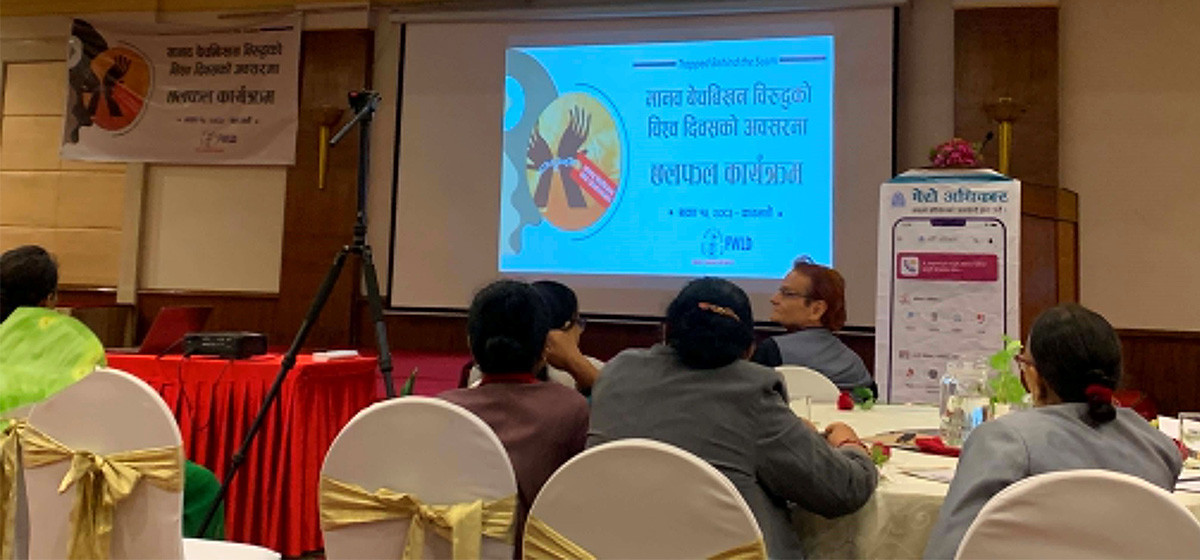
Speaking at a discussion organised by the Forum for Women, Law and Development (FWLD) on Thursday to mark the World Day Against Trafficking in Persons, government officials and rights advocates urged Parliament to pass the proposed amendment to the Human Trafficking and Transportation Act.
Presenting a paper on trafficking trends, Joint Attorney General Som Kanta Bhandari said technology has transformed the way trafficking networks operate, creating new challenges for investigators and prosecutors.
Citing a study by the National Human Rights Commission, participants said around 35,000 people fall victim to human trafficking and smuggling each year. They warned that organized criminal groups are increasingly luring Nepalis through social media and digital platforms into forced labour, fraud and other forms of exploitation.
FWLD Executive Director Sabin Shrestha said the amendment is timely as the government prepares to register nine bills in Parliament, including changes to the anti-trafficking law. He said the revised legislation should better address technology-driven crimes and organised trafficking.
Social activist Anil Ranghuvanshi said online fraud has become a major concern, with about 35,000 Nepalis affected last year. He noted that although such crimes originate from dozens of countries, nearly three-quarters are linked to Southeast Asia. He also pointed to a sharp rise in Nepalis travelling to Cambodia, from just 101 in 2021 to 9,676 in 2025, saying many victims were information technology professionals.
Officials said the proposed amendment will introduce clearer legal definitions, strengthen measures against cross-border crimes and establish a one-door legal assistance system for victims.
Superintendent of Police Rewati Raman Pokharel of the Anti-Human Trafficking Bureau said the existing law is inadequate for investigating technology-based crimes and called for stronger legal tools.
Participants also urged the government to recognise emerging forms of trafficking, including egg and skin trafficking, and to introduce anti-trafficking education in schools to improve public awareness.
People’s News Monitoring Service

Login to add a comment