







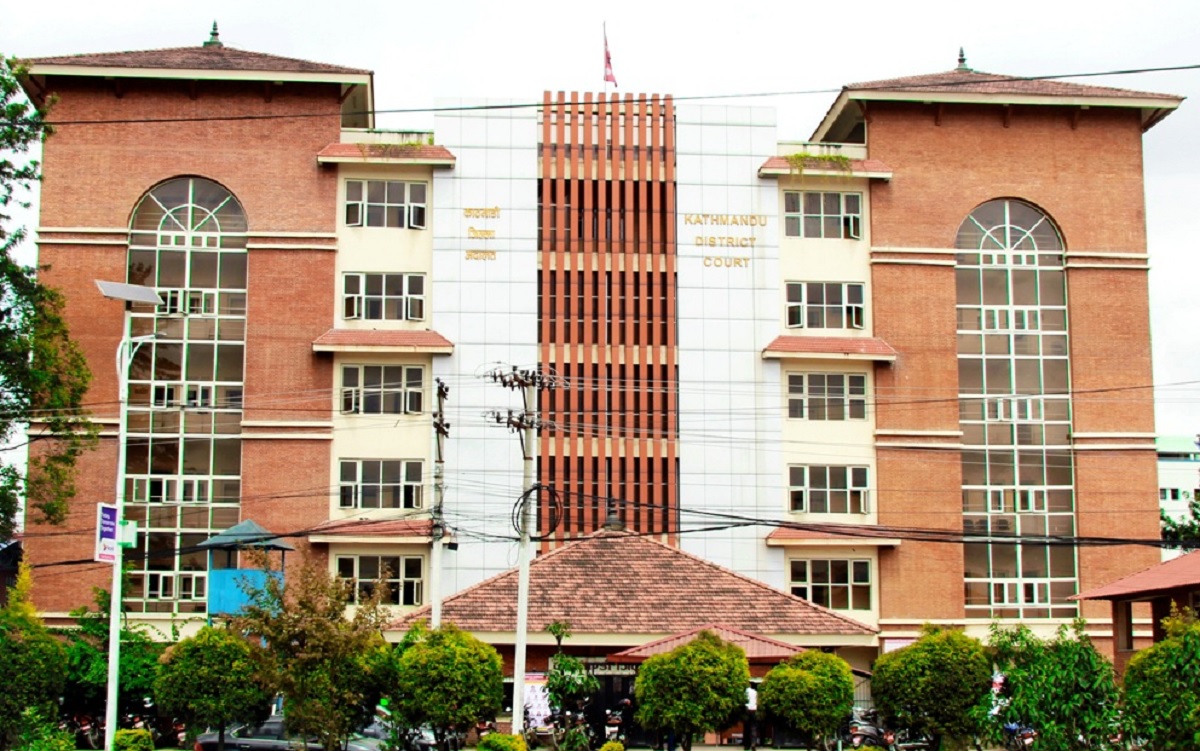
KATHMANDU, July 7: The Kathmandu District Court on Tuesday convicted 23 people, including former Deputy Prime Minister Top Bahadur Rayamajhi, former Home Minister Bal Krishna Khand, and former Home Secretary Tek Narayan Pandey, in the high-profile fake Bhutanese refugee scam.
A bench led by Judge Tej Bahadur Khadka found them guilty on multiple charges linked to fraud, forgery, organised crime, and offenses against the state. The court has ordered the convicted individuals to appear for a separate sentencing hearing. Seven of the 30 defendants were acquitted.
The case stems from a chargesheet filed on May 24, 2023, accusing 30 people of operating a network that promised to send Nepali citizens to the United States by falsely identifying them as Bhutanese refugees. Prosecutors alleged the group collected Rs 288.1 million from victims.
Among those acquitted are Ram Sharan KC, Tanka Kumar Gurung, Sanjiv Rayamajhi, Pratik Thapa, Laxmi Maharjan, Keshav Tuladhar, and Ashish Budhathoki.
The Charges
Prosecutors accused the defendants of fraud, forging government documents, organised crime, and committing acts against national interest.
According to the indictment, Rayamajhi, Khand, Pandey, Bhutanese refugee leader Tek Nath Rizal, Sanu Bhandari, Keshav Dulal, and others fraudulently collected Rs 288.1 million by promising to secure refugee status and US resettlement for Nepali citizens.
The government sought prison terms of up to seven years and fines of up to Rs 70,000 for fraud and document forgery. It also demanded compensation for victims.
The prosecution further argued that the accused manipulated an official report prepared by a task force led by former Home Ministry official Balkrishna Panthi. The task force had identified 429 Bhutanese refugees who had reportedly missed earlier registration for third-country resettlement. Investigators alleged that forged copies of the report were used to insert fake names.
Authorities also charged the defendants with acting against national interest, arguing that the scheme damaged Nepal’s international reputation and sought to generate illegal wealth through abuse of public office.
Because several accused, including Rayamajhi, Khand, Pandey, Rizal, Indrajit Rai, and Shamsher Miyan, held public office, prosecutors requested additional punishment under laws governing crimes against national interest.
The indictment described Sanu Bhandari, Keshav Dulal, Indrajit Rai, Sandeep Rayamajhi, and Pratik Thapa as key operators of the organised criminal network, with 25 others allegedly playing supporting roles.
Under Nepal’s integrated sentencing provisions, defendants convicted of multiple offenses can receive the maximum sentence for the most serious crime, plus half the penalty for the next most serious offense. In this case, fraud and forgery each carry up to seven years in prison, while organised crime and offenses against national interest carry up to five years.
How the Scam Worked
The case traces its roots to Nepal’s long-running Bhutanese refugee issue.
Following the expulsion of Nepali-speaking Bhutanese from Bhutan in the early 1990s, more than 100,000 refugees lived in camps in eastern Nepal before most were resettled in countries including the United States, Canada, Australia, New Zealand, the United Kingdom, Norway, Denmark, and the Netherlands.
After large-scale resettlement ended, the government formed a task force in 2019 to examine the status of the remaining refugees. Investigators later alleged that the task force report was manipulated to include hundreds of Nepali citizens as fake Bhutanese refugees in exchange for large payments.
Police said the racket became active in 2019, charging victims between Rs 1.5 million and Rs 2 million each with false promises of US resettlement. Initial complaints came from 81 victims who alleged they had lost more than Rs 136.3 million. As the investigation expanded, the number of complainants rose to 106, exposing one of Nepal’s biggest political corruption scandals in recent years.
People’s News Monitoring Service

Login to add a comment