







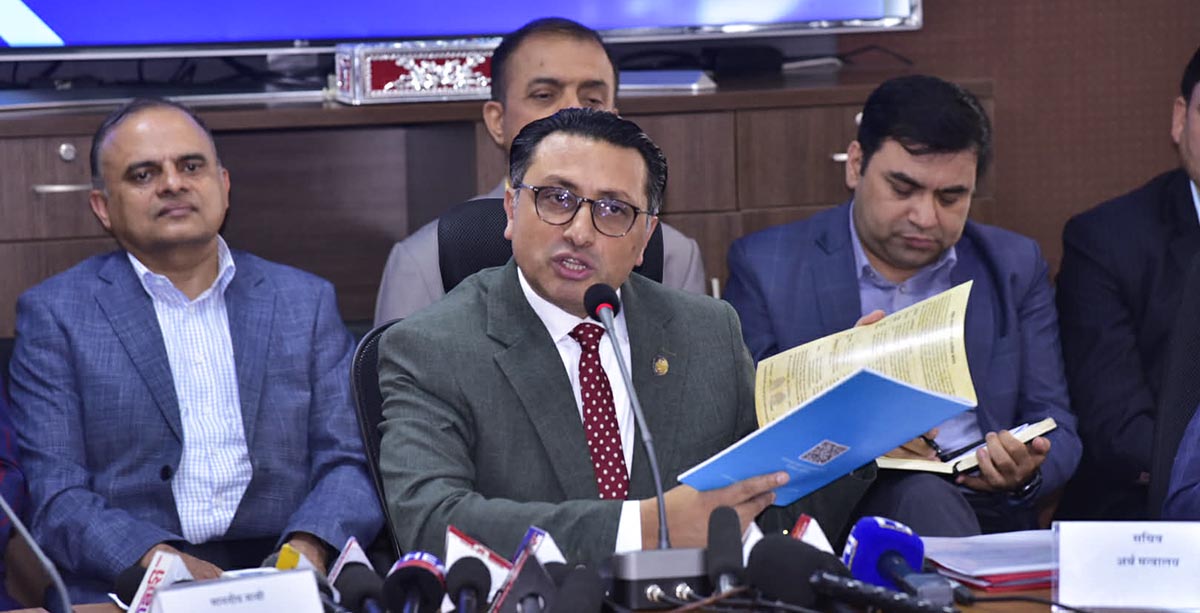
Kathmandu, July 6: A long-running dispute between Nepal’s tax administration and the private sector has resurfaced after Finance Minister Dr Swarnim Waglé directed tax offices to clear pending full tax audit files that had been put on hold by the previous government.
Former finance minister Rameshwor Khanal had suspended the traditional full audit system, replacing it with a risk-based approach to address complaints of harassment, delays and corruption in tax administration. Business leaders had welcomed the move, saying it improved the investment climate.
The latest directive, followed by a circular from the Inland Revenue Department to complete pending audits, has raised fears among businesses that the government is reviving “tax terror” and the culture of commission seeking.
A senior official at the Federation of Nepalese Chambers of Commerce and Industry said the private sector had accepted risk-based audits but viewed the latest move as a sign of distrust that could discourage investment.
Why were the audits revived?
Tax officials insist the government has not restored the old full audit system. They say the department is simply clearing files already selected for audit before they exceed the legal deadline.
Under previous law, selected tax audits had to be completed within four years. The new Finance Act has reduced the deadline to three years, forcing tax offices to finish pending cases a year earlier.
“The instruction is only to complete files that are about to expire under the new legal deadline,” an Inland Revenue Department official said. “But it has been interpreted as the return of the old full audit system.”
Officials say files already selected for audit cannot be abandoned because the law requires them to be completed. They also claim taxpayers have become reluctant to cooperate after hearing that full audits had been suspended, making it harder for tax officers to collect documents.
Why were full audits suspended?
During his tenure, Khanal introduced risk-based and faceless online audits to replace traditional inspections. His decision followed years of complaints from businesses.
Entrepreneurs argued that tax offices often ignored files for years before reopening them just before the legal deadline. Even minor accounting errors then attracted years of accumulated interest, penalties and fines.
Business groups also alleged that some tax officials and auditors used delayed audits to bargain for commissions in exchange for reducing tax liabilities. Khanal hoped online reviews based on submitted documents would reduce direct contact and curb corruption.
Experts say both decisions are flawed
Former senior tax administrators say abolishing full audits altogether was a mistake, but reviving them without broader reforms is equally problematic.
“Stopping the system overnight without proper study was wrong,” said a former director general of the Inland Revenue Department. “Bringing it back without fixing its weaknesses is also not the right solution.”
According to tax experts, the real problem lies in weak implementation rather than the audit system itself.
The challenge of self-assessment
Nepal’s tax system is based on self-assessment, meaning taxpayers are expected to report their income honestly. About 98 to 99 percent of tax returns are accepted without further scrutiny.
To maintain checks and balances, however, around one to two percent of taxpayers are selected for detailed audits.
Tax officials argue that suspending full audits weakened compliance.
“When businesses believe the government will never inspect them, some stop issuing bills or reporting accurate transactions,” one official said. “That increases tax evasion and reduces government revenue.”
Officials argue that eliminating the entire system because of corruption by a few employees is like “cutting off the head to cure a headache.”
How are taxpayers selected?
Contrary to the belief that tax officers can target anyone, officials say most audit selections are automated.
The process starts with taxpayers hiring chartered accountants or registered auditors to prepare tax returns. The Inland Revenue Department then reviews the submissions, accepting nearly all of them.
A risk indicator software screens returns for unusual transactions, abnormal purchases or sales, repeated losses and other warning signs. Around 70 percent of audit cases come from these system-generated red flags, while tax offices select the remaining 30 percent based on their own investigations.
Overall, only about one to 1.5 percent of taxpayers undergo detailed audits each year.
Officials say the objective is not to harass businesses but to create a deterrent effect.
“When taxpayers see that violations are detected and punished, they are more likely to comply voluntarily,” an official said. “That is how tax systems operate around the world.”

Login to add a comment