







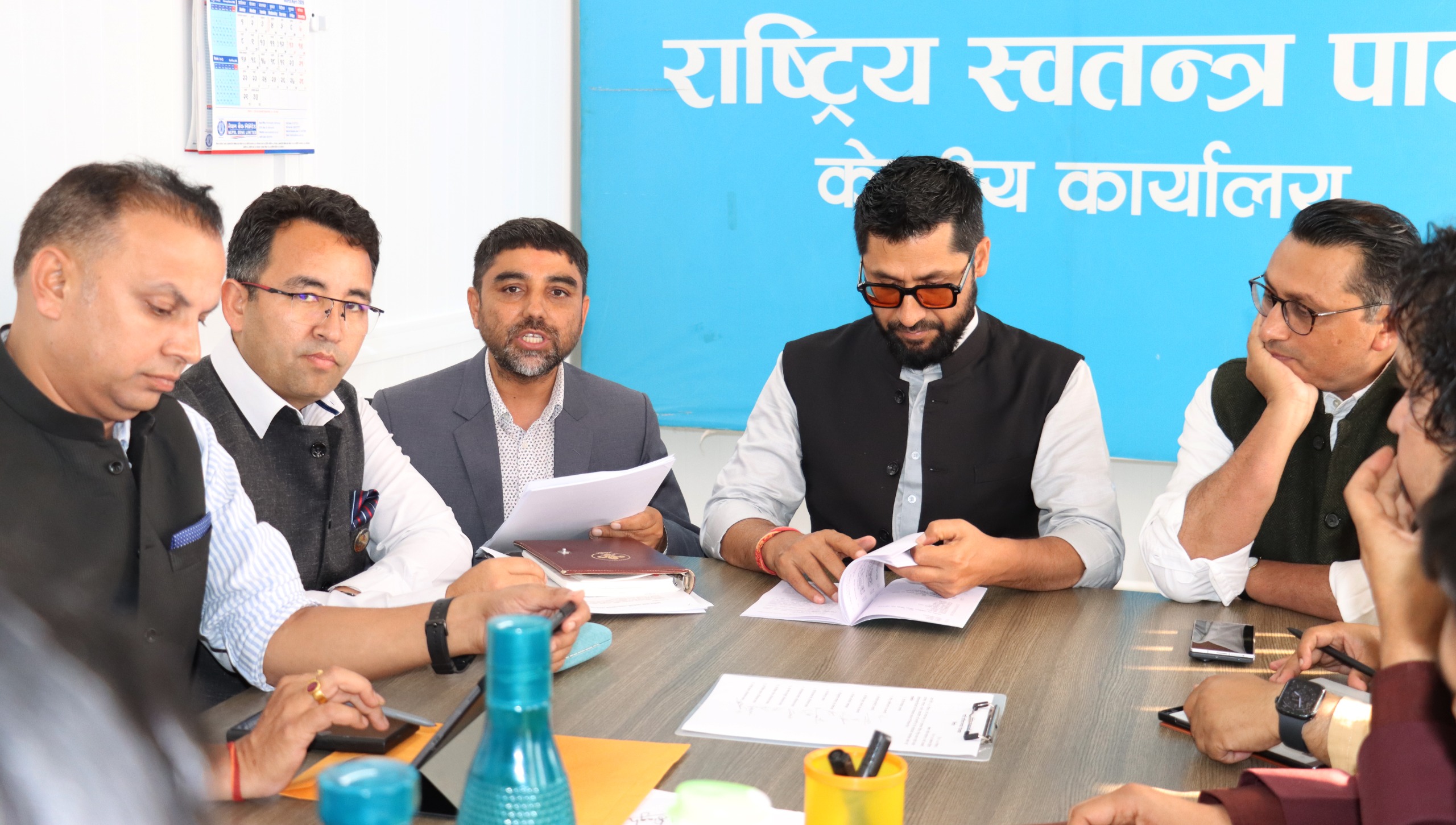
Kathmandu, June 29: Nepal’s ruling Rastriya Swatantra Party (RSP) is facing growing pressure after its own organisational report revealed that 35,257 party members are below the age of 18, raising questions over possible violations of the Constitution and existing laws.
The figure emerged during the party’s first general convention on June 23, when former general secretary and current chief whip Kabindra Burlakoti presented a report showing 523,465 total members, including 35,257 minors, about 6.7 percent of the party’s membership. Bagmati recorded the highest number of underage members at 13,001, while Karnali had the fewest with 1,414.
The disclosure prompted criticism from opposition leaders and child rights advocates, who demanded a formal investigation. They argued that Nepal’s Constitution, the Political Parties Act and the Act Relating to Children clearly prohibit political parties from granting membership to anyone under 18.
Speaking in the House of Representatives on Sunday, Nepali Congress lawmaker Renuka Kauchha questioned how a governing party could admit thousands of minors despite the legal ban. She asked whether the RSP considered itself above the Constitution and existing laws.
Former National Child Rights Council Executive Director Milan Dharel said the reported memberships violated child protection laws. While children are free to learn about politics, democratic values and governance, he said they cannot legally become members of political parties. He added that using children for political purposes is prohibited under the Act Relating to Children and could attract fines, imprisonment, or both.
Child rights organisation Children as Zones of Peace National Campaign also condemned the issue, saying formal party membership for minors violates both child rights principles and the law. The group urged the RSP to immediately cancel all underage memberships and called on the Election Commission, National Human Rights Commission, National Child Rights Council and other agencies to investigate.
Nepal is also bound by the UN Convention on the Rights of the Child, which requires protection of children from political exploitation.
Election Commission spokesperson Narayan Prasad Bhattarai said the commission has only learned about the issue through media reports. No formal complaint has been filed, but he said the commission would investigate if one is received.
The controversy has also reignited debate over student politics. Kauchha accused the RSP of sending mixed signals by advocating limits on political activity in educational institutions while reporting thousands of underage party members.
The RSP has denied deliberately enrolling children. Burlakoti said the figure largely resulted from applicants entering their birth year in the AD calendar instead of the BS calendar used in Nepal, causing the system to identify many adults as minors.
According to him, the report contained raw data that had not been manually verified, and the discrepancy was corrected the same day. He also acknowledged that some 16 and 17-year-olds occasionally apply for membership because many young people actively support the party.
Burlakoti maintained that the RSP does not accept applications from minors. If any underage applicants were mistakenly approved, he said, their memberships would be cancelled immediately. They would be eligible only after turning 18.
Dharel said concerned constitutional bodies could launch suo moto investigations even without a formal complaint, arguing that the matter warrants legal scrutiny because it concerns the rights of children and compliance with political party laws.
People’s News Monitoring Service

Login to add a comment