







By Our Reporter
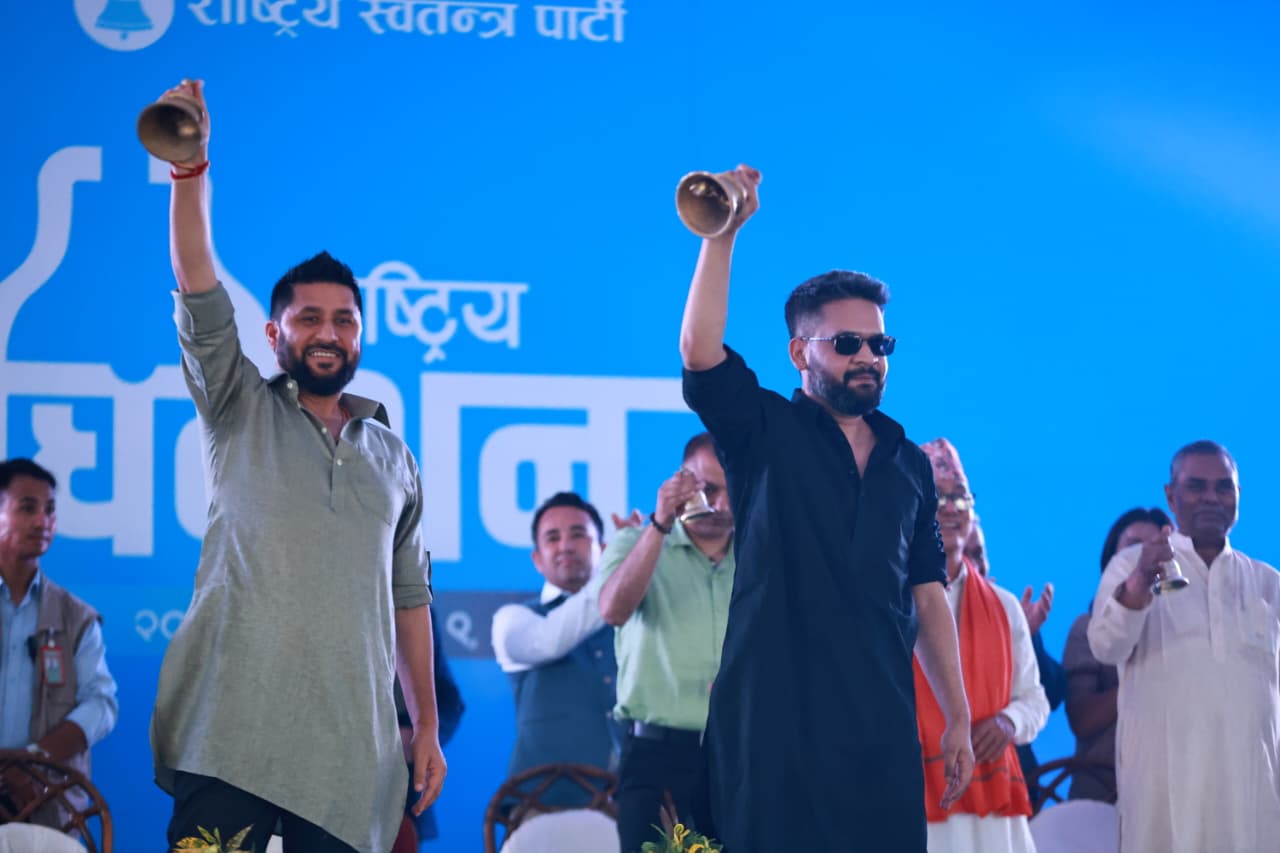
The first national convention of the National Independent Party (RSP) is more than a routine organizational gathering. It is a defining moment for a party that moved from political outsider to governing force in just four years. For party chair Rabi Lamichhane, the convention is expected to formally cement his authority. For the party, it is a test of whether it can transform a movement built around popular personalities into a durable political institution.
Few parties in Nepal have expanded as rapidly as RSP. When Lamichhane launched the party in 2022, many dismissed it as a short-lived experiment driven by celebrity appeal. Today, RSP leads the government and commands one of the strongest mandates in recent political history. That transformation has elevated Rabi from television presenter to one of the country’s most influential political figures.
But Rabi’s rise can be understood by examining another central figure in RSP’s success: Prime Minister Balen Shah.
The relationship between Rabi and Balen has been one of the most important political partnerships in contemporary Nepal. Both emerged as symbols of public frustration with traditional parties. Both cultivated anti-establishment images. Both appealed strongly to younger voters who felt disconnected from the country’s old political leadership.
The partnership became especially important when Rabi faced mounting legal and political challenges. At a time when cooperative fraud allegations, citizenship controversies and other cases threatened to weaken his political standing, Balen’s popularity provided a crucial shield for RSP. The alliance reassured supporters that the broader movement for political change remained intact even if Rabi came under pressure.
In many ways, Balen supplied what Rabi lacked. Rabi brought organizational reach, media skills and a nationwide political network. Balen brought an image of decisive leadership and administrative action. Together, they created a political formula that proved highly attractive to voters seeking an alternative to the traditional parties.
Can Rabi challenge Balen?
That raises an important question: Can Rabi challenge Balen within the broader political space?
At present, such a contest appears unlikely. The two leaders depend heavily on each other. Rabi remains the dominant figure within the party structure, but Balen commands a level of public popularity that extends well beyond party lines. His appeal is rooted not only in politics but also in a personal brand built around action and confrontation with established interests.
For Rabi, directly competing with Balen would be politically risky. Much of RSP’s support base sees the two leaders as partners rather than rivals. Any visible split could fracture the coalition of voters that helped propel the party to power.
However, political realities can change quickly. As RSP evolves from a protest movement into a governing party, competing ambitions may emerge. Leadership struggles are common in parties built around charismatic figures. If disagreements arise over government performance, policy direction or candidate selection, tensions could surface between different power centers.
The convention itself may provide early clues about these dynamics. Behind the public celebrations lies a growing competition for influence. Thousands of delegates have arrived in Chitwan, and many view the convention as an opportunity to secure positions within the party’s expanding structure. The election of a large central committee and office bearers will determine who shapes RSP’s future.
Unlike the party’s early years, when survival was the main challenge, the current struggle is over access to power. As RSP has grown, different groups have emerged within the organization. Some leaders come from the party’s founding generation. Others joined after its electoral success. Some have backgrounds in activism, while others are former bureaucrats, professionals or politicians from rival parties.
The amended statute gives the chairperson authority to nominate 51 central committee members. Supporters argue this will help maintain organizational balance and ensure representation. Critics may see it as a mechanism that further strengthens Rabi’s control over the party.
The challenge for RSP is familiar. Many parties begin by promising internal democracy but gradually become concentrated around a single leader. If the convention becomes merely a process for endorsing decisions already made at the top, questions about internal accountability will grow.
At the same time, Rabi enters the convention from a position of strength. Recent legal developments have provided temporary relief from some of the pressures that dominated his political career over the past two years. More importantly, electoral success has strengthened his legitimacy within the party.
The first national convention therefore represents both an achievement and a test. It confirms how far RSP has come in a short period. It also marks the beginning of a more difficult phase. Winning elections is one challenge. Governing effectively, managing internal ambitions and preserving unity between powerful figures like Rabi and Balen may prove far more demanding. The convention is likely to make Rabi stronger. Whether it also makes RSP stronger as an institution remains the more important question.

Login to add a comment