







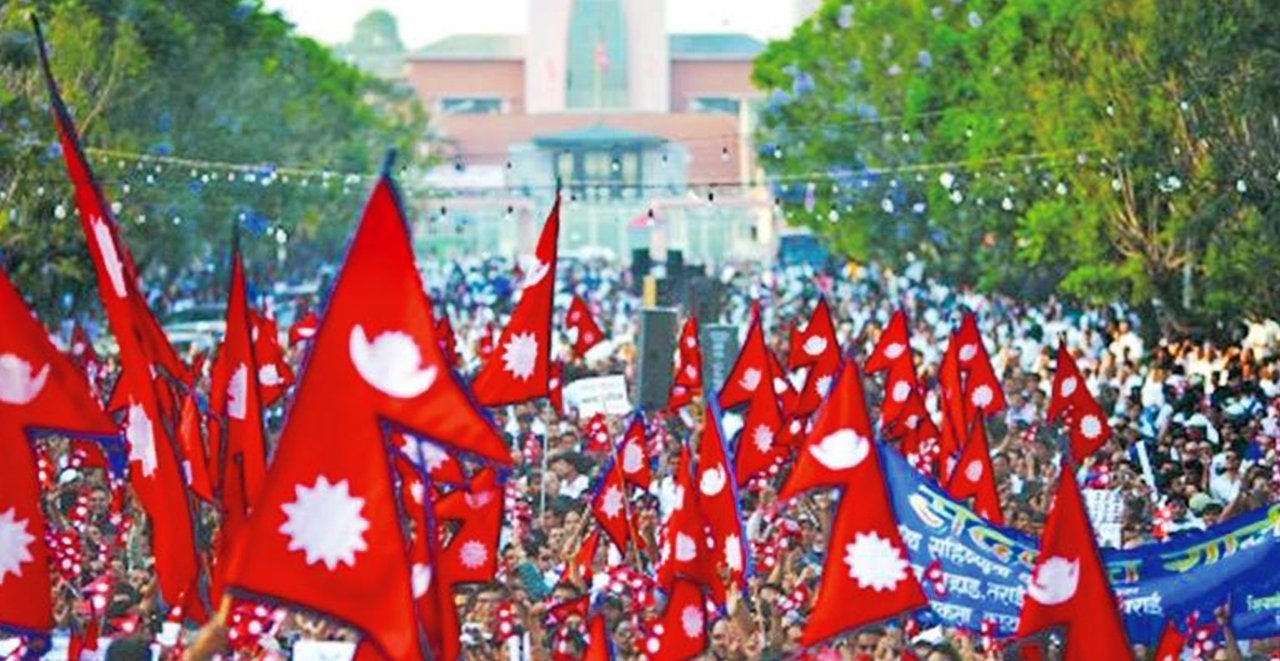
Kathmandu, May 29: Republic Day is being celebrated across the country today with various programs. The government has declared a public holiday on the occasion.
On Jestha 15, 2065 B.S. (May 28, 2008), Nepal officially abolished the autocratic monarchy through the first constituent assembly elected by the people, thereby ushering in a federal democratic republic system of governance.
Every year, Republic Day is celebrated on Jestha 15 to commemorate the declaration of the republic based on the People’s Movement of 2062/63 (2006).
The day marks the establishment of a federal democratic republican system in which all state power is vested in the people. It is observed as the day when the country formally ended the autocratic unitary monarchy and began a federal democratic republican system.
On Baisakh 11, 2063 B.S. (April 24, 2006), then-King Gyanendra Shah reinstated the parliament that had been dissolved on Jestha 8, 2059 B.S. (May 22, 2002), following the roadmap of the protesting political parties. That movement became the foundation for the establishment of the republic.
Meanwhile, Republic Day will be celebrated grandly this morning at the Army Pavilion in Tundikhel, Kathmandu, in the presence of President Ram Chandra Paudel, through a special ceremony organized by the Republic Main Celebration Committee.
On the occasion, the President, Vice President, Speaker of the House, National Assembly Chairperson, and leaders of various political parties have extended heartfelt congratulations and best wishes to all Nepali brothers and sisters at home and abroad. They also paid tribute to the martyrs who sacrificed their lives during the movement for the establishment of the republic.
However, Prime Minister Balendra (Balen) Shah will not address today’s program. He has already sent a letter to President Ram Chandra Paudel requesting that the President deliver the address during the Republic Day ceremony.
Previously, it had been customary for the Prime Minister to give the address. This time, however, a letter was sent in accordance with Article 66(2) of the Constitution, requesting the President to address the event instead.
Earlier as well, during the parliamentary session in which the government’s policies and programs were presented, Prime Minister Balen did not speak on the proposal to thank the President and instead submitted it directly to the Speaker.
Similarly, when the Prime Minister did not attend Parliament to answer questions raised during discussions on the government’s policies and programs, opposition parties obstructed the parliamentary session. Finance Minister Dr Swarnim Wagle responded on behalf of the government. Despite obstruction by the main opposition and boycotts by other opposition parties, the policies and programs were passed by the House of Representatives.
Since being elected, Prime Minister Balen has also not delivered any formal address to the nation. While top leaders from the main opposition and other parties have given public addresses, Prime Minister Balen has not formally spoken anywhere.
People’s News Monitoring Service

Login to add a comment