







By Our Reporter
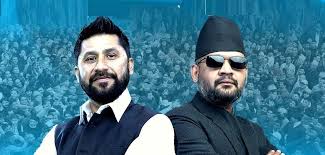
The sudden recall of Labour Minister Deepak Kumar Sah has placed Nepal’s ruling Rastriya Swatantra Party in an uneasy spot. The party’s disciplinary body found Sah guilty of misusing his position to secure a role for his wife in the Health Insurance Board. Acting on that finding, party chair Rabi Lamichhane recommended his removal, and Prime Minister Balen Shah carried it out. The party also advised the prime minister to caution Health Minister Nisha Mehta.
The decision, however, has raised concerns about process. Lamichhane moved ahead without convening a full party meeting, reinforcing complaints from leaders who already feel sidelined. Sah’s rise and fall have both drawn scrutiny. Many within the party admit they knew little about him before his appointment. His selection, like his dismissal, appears driven more by top-level decisions than by a clear institutional process.
Taken together, these events point to a broader issue. The controversy is not just about one minister’s conduct. It reflects how decisions are made inside a party that built its reputation on transparency, merit, and clean governance. That promise now faces a practical test.
Lamichhane stands at the center of this moment. As party chair, he has tried to enforce discipline and protect the party’s image. Removing Sah signals a firm stance against misconduct. Yet process matters. By bypassing wider consultation, he risks weakening the internal systems he aims to strengthen. Institutional credibility depends on both outcomes and procedures.
Shah, meanwhile, carries the responsibility of running the government. His compliance with the party’s recommendation suggests formal alignment. Still, the political reading is more layered. Sah was widely viewed as close to the prime minister. His removal has therefore fueled speculation about how influence is shared between party leadership and the government. Even if overstated, that perception has gained traction.
Ministerial appointments add another layer to the story. The party had promised a merit-based approach. In practice, insiders describe a balancing act between leaders aligned with Lamichhane and those closer to Shah. Cabinet positions appear divided along these lines. Disagreements over key portfolios were resolved through compromise rather than clear criteria. That approach may maintain short-term stability but raises questions about coherence.
Recent appointments follow a similar pattern. One minister is seen as close to Lamichhane, another to Shah. The arrangement begins to resemble coalition management within a single party. While not unusual in politics, it sits uneasily with the party’s claim of offering a new model.
Parliamentary decisions tell a similar story. The debate over the Deputy Speaker exposed differing preferences at the top. Lamichhane and Shah initially backed different candidates before settling on a common position. Leaders describe this as normal internal discussion. Yet repeated differences on visible issues create a perception that coordination remains a work in progress.
The party’s “right to recall” mechanism also deserves attention. In principle, it strengthens accountability by allowing action against wrongdoing. In practice, it concentrates authority in the hands of those who initiate it. Without clear checks, such tools can appear selective, even when used with good intent.
None of this suggests an immediate crisis. The government continues to function. Decisions are implemented, and leaders present a unified stance when required. Political systems rarely collapse overnight. They tend to weaken through small, repeated signals that internal alignment is fragile.
Nepal’s political history offers clear reminders. Internal rivalries have often undermined governments with strong mandates. Tensions involving B. P. Koirala weakened early democratic governments. More recently, divisions between K. P. Sharma Oli and Pushpa Kamal Dahal led to the breakup of a powerful alliance. These patterns continue to shape public expectations.
The RSP rose by promising a departure from that cycle. It drew support from voters seeking accountability and clarity in decision-making. That expectation now frames every internal decision. Each appointment, disciplinary action, and policy stance feeds into a broader question about whether the party can deliver on its promise.
So, is a power struggle emerging between Lamichhane and Shah? The situation does not point to an open confrontation. However, signs of quiet competition over influence and process are visible. Such dynamics do not always lead to immediate conflict, but they can shape decisions over time.
The party’s challenge lies in managing these differences without undermining its core principles. Greater transparency in appointments and stronger internal consultation could help reduce friction. Relying on informal balancing and centralised decisions risks blurring the line between reform and repetition.
Power in Nepali politics rarely remains neatly contained. The key test for the RSP is whether it can prevent internal tensions from turning into deeper divisions. For now, the situation reflects friction rather than fracture. Whether it stays that way will depend on how the party aligns its internal practices with the standards it has set for itself.

Login to add a comment