







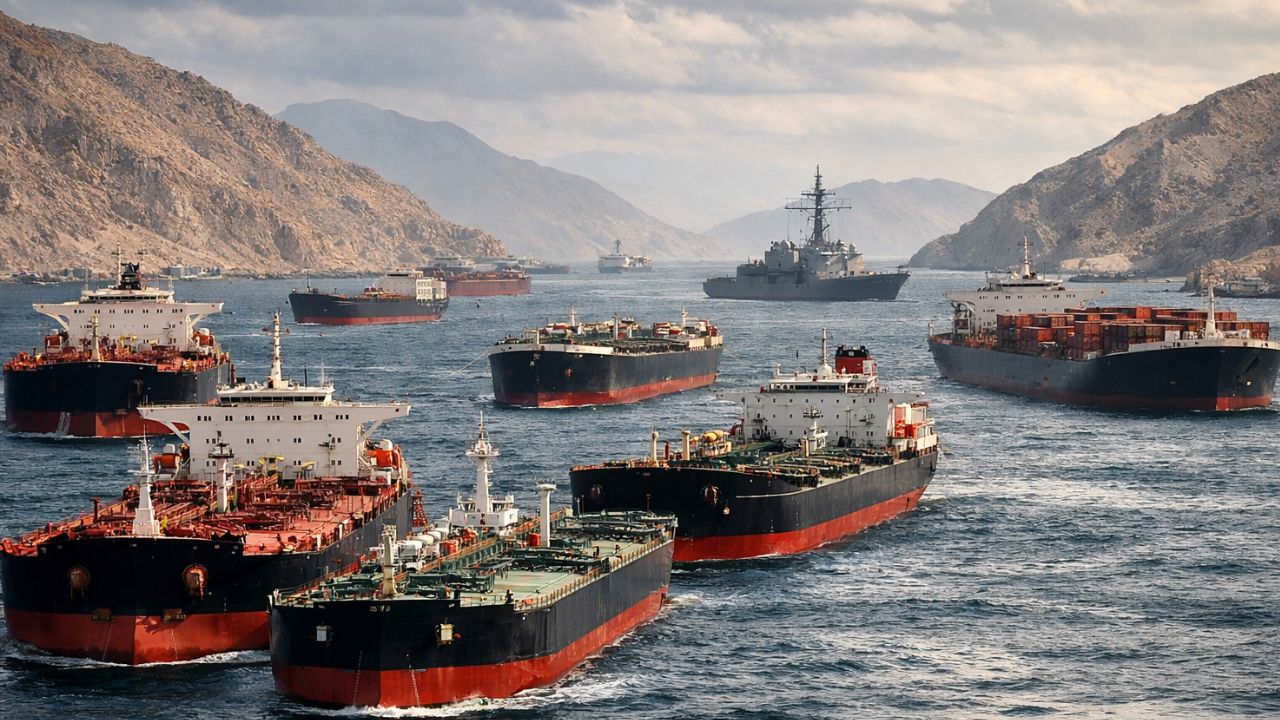
Washington, April 13: Soon after the talks in Islamabad collapsed, Donald Trump ordered the US Navy to move in and restrict access to the Strait of Hormuz, reacting sharply after Iran refused to abandon its nuclear program.
From Washington, Trump announced that naval forces would begin blocking ships entering or leaving the vital Gulf passage, a key route for global shipments of oil, gas, and fertiliser. He said the long-term goal is to clear mines and reopen the waterway, but for now, Iran must not be allowed to benefit from controlling it.
Iran responded with a warning. The Islamic Revolutionary Guard Corps said it has full command over traffic in the strait and cautioned that any challenge would be met with force, claiming adversaries could be trapped in a “deadly vortex.”
In a lengthy post on social media, Trump declared:“Effective immediately, the United States Navy, the Finest in the World, will begin the process of BLOCKADING any and all Ships trying to enter, or leave, the Strait of Hormuz. Any Iranian who fires at us, or at peaceful vessels, will be BLOWN TO HELL!”
Tensions in the waterway have already escalated. Iran has been limiting access while allowing ships linked to friendly countries, such as China, to pass. Reports, still unconfirmed, suggest Tehran may introduce toll charges for transit, a move Trump labeled as extortion.
“THIS IS WORLD EXTORTION,” Trump said. “I have also instructed our Navy to seek and interdict every vessel in International Waters that has paid a toll to Iran. No one who pays an illegal toll will have safe passage on the high seas. We will also begin destroying the mines the Iranians laid in the Straits.”
In a later interview, Trump raised pressure on China, warning of tariffs if Beijing supports Iran militarily. He also claimed the US could dismantle Iran’s energy infrastructure within a day.
The escalation follows failed negotiations in Islamabad, where senior US officials, including Vice President JD Vance, sought an agreement with Tehran to end a six-week conflict. That war began after US and Israeli strikes targeted Iran and reportedly killed Ali Khamenei.
Talks collapsed after Iran refused to give up its nuclear program. Tehran maintains it is for peaceful civilian use, while Washington insists it hides weapons ambitions.
Trump also emphasized that the blockade could involve other countries, though he did not name them, even as several governments continue urging restraint to avoid further escalation in the Gulf.
So now the world watches a high-stakes standoff centered on one of the most critical energy routes on the planet, because apparently global stability was feeling a bit too comfortable.
Iran’s parliamentary speaker Mohammad Bagher Ghalibaf, the head of his country’s negotiating team, had “put forward constructive initiatives but ultimately the other side was unable to gain the trust of the Iranian delegation in this round of negotiations”.
People’s News Monitoring Service

Login to add a comment