







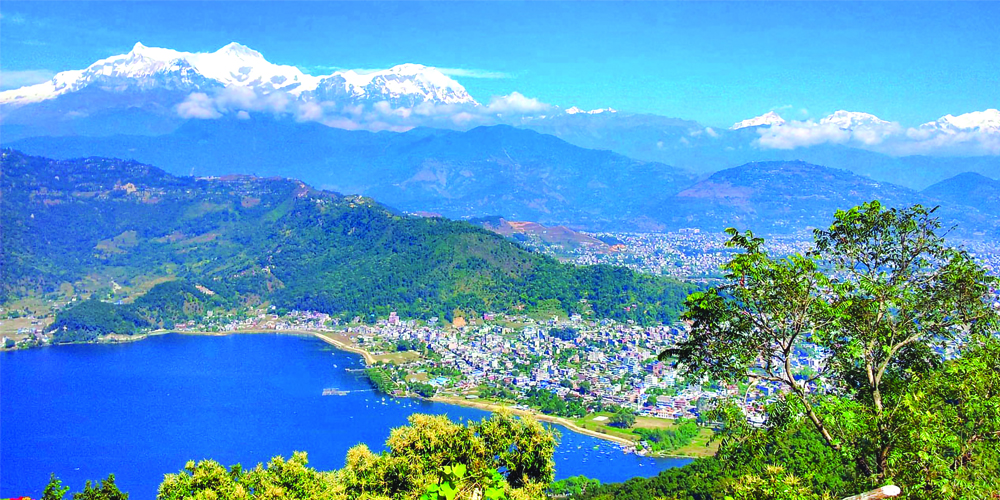
Kathmandu, March 24: Tourist arrivals in Pokhara, widely known as Nepal’s tourism capital, have declined during the peak travel season as tensions in the Middle East disrupt international air travel.
Flights linking Europe and the United States with South Asia often pass through transit hubs such as Dubai, Qatar, and Saudi Arabia. With the conflict affecting these routes, the flow of visitors to Nepal has slowed.
Gopi Bhattarai, coordinator of Pokhara Visit Year, said many tourists who had planned to visit the city are canceling hotel, travel, and trekking reservations. He said the ongoing tensions in the Middle East have made it difficult for tourists from Europe and the United States to reach Nepal.
According to him, most international visitors traveling to Nepal use transit routes through Qatar, Dubai, and nearby hubs. Disruptions in those areas have created problems for travelers. He also said the conflict has led to shortages of gas and fuel, which has further complicated travel.
Hotel Association Pokhara President Laxman Subedi said the number of visitors has remained lower than expected even during the second busiest season for the Annapurna trekking region.
“March, April, and May are usually the second biggest months for the Annapurna trekking season. But due to the current situation in the Middle East, many European trekkers who normally come to Nepal are unable to travel,” he said.
Subedi added that the United States has issued a travel advisory warning its citizens about security concerns in Nepal. As a result, the number of American visitors has dropped sharply, while European arrivals have also fallen short of expectations.
He said Indian tourists and domestic visitors are still arriving in good numbers, similar to previous years.
Tourism entrepreneur Netra Paudel said the ongoing conflict involving Israel, the United States, and Iran has triggered widespread cancellations of advance bookings in Pokhara.
“In recent days, bookings for trekking and other tourism activities in Pokhara have been canceled one after another due to the conflict involving Israel, the United States, and Iran,” Paudel said. “Hotels, travel agencies, and trekking operators are all seeing cancellations rise. Overall, the number of tourists is far below what we normally expect during this period.”
People’s News Monitoring Service

Login to add a comment