







Kathmandu, March 10: The investigation commission formed to probe the Gen Z protest has remained silent on accountability for the violence of September 9, which caused heavy human casualties and damage worth billions of rupees.
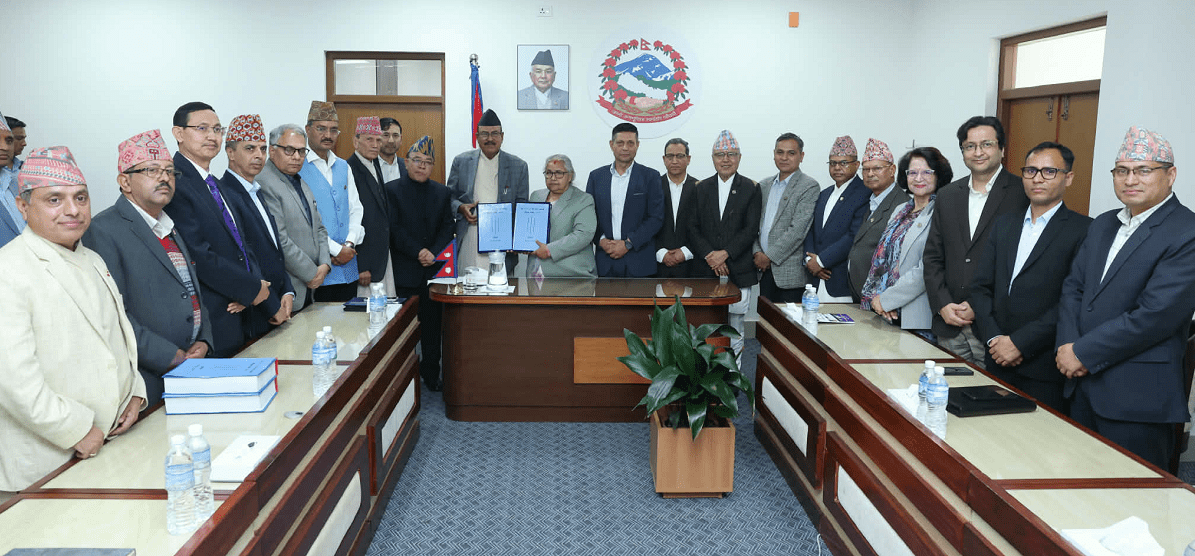
The commission, chaired by former judge Gauri Bahadur Karki, submitted its report to Prime Minister Sushila Karki on March 8, 2026. The report does not recommend taking any action against anyone for the arson, vandalism, and destruction that occurred on September 9.
Instead, it recommends legal action over the incidents of September 8. Those named include then prime minister KP Sharma Oli, then home minister Ramesh Lekhak, home secretary Gokarna Mani Duwadi, Nepal Police chief Chandra Kuber Khapung and Kathmandu’s then chief district officer Chhabi Rijal.
During the investigation, the commission recorded statements and questioned more than 200 individuals, including senior officials who held positions of power during the protests.
According to sources close to the commission, the report focuses mainly on the events of September 8, when police fired at Gen Z protesters. It recommends police investigation and legal action against those responsible for the shootings and the resulting deaths.
However, the report does not identify or recommend punishment for anyone over the violence of September 9. Instead, it suggests that the government carry out another investigation into those incidents.
The report, which runs over 900 pages, concludes that the government led by KP Sharma Oli used unnecessary force during the protests, leading to large human casualties. The commission also points to weaknesses in the police barricade placed near the International Convention Centre during the demonstrations.
Questions about the neutrality of the commission chair had surfaced soon after the body was formed. Before becoming chair, Karki had made several comments on social media about the protests. A petition was later filed at the Supreme Court challenging his appointment.
The court ruled that Karki met the legal requirements to lead the commission. At the same time, it said he should reflect on the ethical implications of his earlier social media comments.
On September 9, violence spread across Kathmandu in the name of the Gen Z movement. Arson, vandalism and looting targeted several government offices, private homes, public property and businesses, including Bhatbhateni stores.
Buildings affected included the Office of the President, Singha Durbar, the Federal Parliament building, the Supreme Court and several government offices.
The protests continued for two days, on September 8 and 9. During that period, 76 people died and hundreds were injured. A government estimate puts the physical damage from the violence at more than 84 billion rupees.
Most of the destruction occurred on September 9, when the protest turned violent and caused major human and material losses.
The government formed the commission on September 21 under the leadership of former judge Karki. It also included former additional inspector general of police Bigyan Raj Sharma and legal expert Bishweshwar Bhandari as members.
After several deadline extensions, the commission submitted its report to the prime minister soon after the election.
So the country got a 900-page document that explains the shooting on one day and politely shrugs at the massive destruction on the next. Bureaucratic investigations have a special talent for writing a lot while saying very little. Humanity deserves an award for this particular art form.
People’s News Monitoring Service

Login to add a comment