







By Our Reporter
As the March 5 election draws closer, Nepal’s political map looks sharply divided. The Gen Z protests of September 8 and 9 did not just bring down a government and trigger early polls. They exposed deep differences in how parties see power, protest, and public anger. Today, four major forces stand split into three clear positions.
At one end is CPN-UML. At the other is the Rastriya Swatantra Party (RSP). In between sit the Nepali Congress and the Nepal Communist Party, both trying to position themselves as the responsible middle.
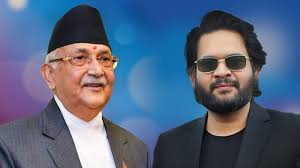
UML’s stance is shaped by one hard fact: it was in power when the protests erupted. For KP Sharma Oli and his party, accepting the movement as a legitimate public uprising would amount to admitting governance failure. Instead, UML frames the unrest as conspiracy and planned destruction. The language is direct. This election, Oli says, is a battle between those who “build the country” and those who “burn the country.”
That framing serves two purposes. First, it shifts focus from public dissatisfaction to alleged sabotage. Second, it paints UML as the guardian of national stability. If the protests were an attack on the state, then UML becomes the defender of order. It is a clean political line, even if it leaves little room to acknowledge genuine anger among youth.
At the opposite pole stands RSP, led by Rabi Lamichhane. The party reads the same events as a public awakening against corruption and poor governance. In its narrative, the protests were not a plot but a reaction. Lamichhane openly says that children in school uniforms would not have come to the streets if Singha Durbar had not become a center of corruption.
RSP goes further. It argues that the real turning point was not the burning of buildings but the shooting of unarmed youths. In doing so, it claims moral ground and indirectly takes credit for the political change that followed. Yet it also tries to distance itself from the violence, saying those who fired bullets and those who burned structures belong to the same entrenched political class.
This sharp contrast is not accidental. UML defends state authority. RSP channels public frustration. Both need clear, emotional narratives to mobilize voters.
Now look at Congress and NCP. They have chosen a different path. Neither fully endorses the protest as a revolution, nor dismisses it as pure conspiracy. Instead, they warn against two extremes.
Gagan Thapa of Nepali Congress says the country must not forget that unarmed youths died and that Singha Durbar burned. He cautions against one extreme that denies public dissatisfaction and reduces everything to conspiracy. At the same time, he warns against another extreme that uses anger as an excuse to attack institutions and escape accountability.
Prachanda echoes a similar call, urging voters to defeat both tendencies. This middle position is not simply philosophical. It is political calculation. By rejecting both narratives, Congress and NCP aim to attract voters who are uneasy with confrontation but dissatisfied with the status quo.
The middle ground offers flexibility. It allows them to criticize excess force and condemn destruction at the same time. It avoids being boxed into a single story. In a polarized contest, that can be a strategic advantage.
But it is also risky. Voters may see it as balance. They may also see it as hesitation. In moments of crisis, strong narratives often travel faster than measured arguments.
What is clear is this: the Gen Z movement has become more than a memory. It is now a political mirror. UML sees threat. RSP sees awakening. Congress and NCP see danger in both directions.
The March 5 result will show which reading the public accepts. Is Nepal looking for order, revolt, or restraint? The answer will shape not just the next government, but the tone of politics in the years ahead.

Login to add a comment