







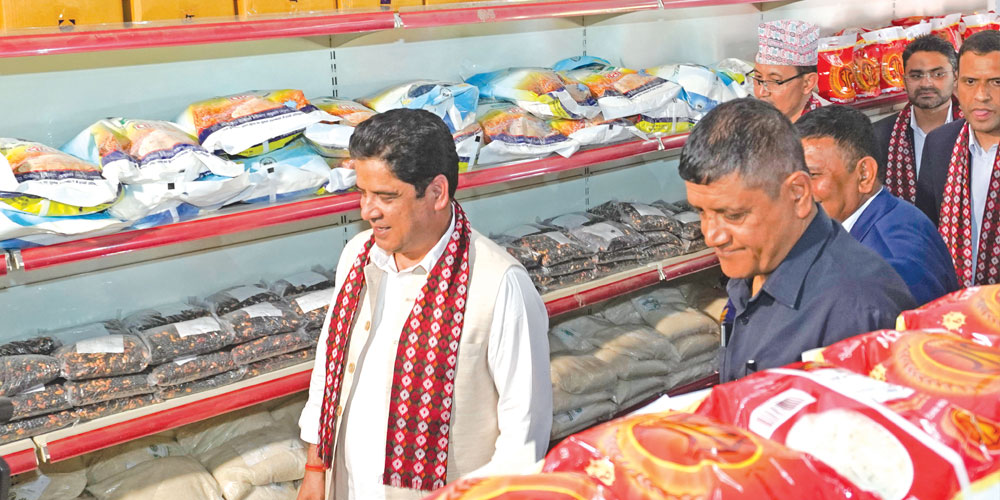
September 10, Kathmandu — As major Nepali festivals Dashain, Tihar, and Chhath approach, households are feeling the pressure of rising prices. With this in mind, the government has stepped up preparations to provide relief to consumers, continuing its annual effort.
This year’s initiative goes beyond running traditional subsidy stores. The government has introduced an ambitious plan to deliver essential festival items, including goats and sheep, directly to households through an online platform.
The Food Management and Trading Company Limited, fully owned by the government, will operate subsidy stores nationwide from September 30 to curb price spikes and supply daily essentials at affordable rates. The program, launched last year on September 19, is starting earlier this year. CEO Ramesh Acharya said all internal preparations are complete, and only a ministerial decision remains.
Unlike previous years, when subsidy stores were mostly limited to district headquarters, this year the program will expand to 111 locations across 45 districts, reaching village households. To reduce crowds and hassle during goat, sheep, and buffalo purchases, the company has prepared a pre-booking system through an online platform for the first time.
Although the budget for discounts has been slightly reduced from last year, the company plans to expand its services and enhance the program’s effectiveness using technology and collaboration with local authorities.
Strategy Shift: From Cities to Villages
Bhim Bahadur Thapa, head of the company’s sales branch, said this year’s subsidy stores will primarily focus on remote areas and will operate from September 30. He noted that a detailed discussion on festival-specific preparations took place at a meeting chaired by Minister of Industry, Commerce, and Supplies Damodar Bhandari on September 8.
During the meeting, the company presented its proposals and preparations, and the minister advised prioritizing remote areas instead of focusing mainly on cities. In response, company representatives assured that this year’s program is village- and remote-centered. Final decisions on discount rates and other matters are still pending from the ministry.
Thapa said, “Our program’s focus has shifted. We are now targeting villages and remote centers rather than cities. Last year we operated in 63 locations across 42 districts. This year we are expanding to 111 locations, aiming to reach local levels, especially remote municipalities.”
The impact will be most noticeable in provinces like Karnali and Sudurpaschim, where the company plans to run 42 sales centers across nine districts in Karnali and 28 centers in Sudurpaschim. Previously, operations were limited to Dolpa headquarters, but now they will extend to remote municipalities such as Dolpobuddha and Chharka Tangsong.
No Shortage Concerns, Adequate Stocks
Amid fears of artificial scarcity and price hikes during festivals, Thapa reassured consumers that the company has sufficient food stocks. Currently, the company holds over 309,000 quintals of rice. Stocks include 98,458 quintals in Lumbini Province, 59,383 in Madhesh, and around 50,000 in Karnali. Other provinces also have ample supplies.
Rice, lentils, and sugar will see a discount of 5 NPR per kilogram, while cooking oil will have a 7 NPR per liter reduction. Locally grown nutritious items such as beans, buckwheat, and barley from Karnali will get a 10 NPR per kilogram discount.
The company will also provide festival meat relief, selling around 2,000 goats, sheep, and buffaloes with a budget of approximately 55 million NPR. About 1,500 goats and sheep will be sourced from Terai districts and 300–500 buffaloes from Mustang. The biggest innovation this year is the online pre-booking system.
Anant Raj Paudel, head of the procurement department, explained, “We are collaborating with online platforms to set up pre-booking. This allows us to forecast demand and ensures consumers secure their goats or buffaloes. Once booked, they can pick up their purchase at Thapathali sales center at a convenient time.” Around 50–60 percent of the total stock can be booked online, reducing unnecessary crowds at sales centers.
Technology for Transparency
From subsidy stores to livestock sales, the company will maximize the use of technology. All 111 stores will have a computer billing system to allow direct monitoring from the central office. For areas without electricity, solar backup will be used.
The Ministry of Industry, Commerce, and Supplies has allocated a total of 386.99 million NPR for the program, including 252 million NPR for the Food Management and Trading Company, slightly less than last year’s 300 million NPR. Despite budget cuts, Thapa said local coordination and efficient management will ensure the expanded services reach their target.
People’s News Monitoring Service

Login to add a comment