








By M.R. Josse
KATHMANDU: Two weeks ago, in this space, I had drawn attention to a new development on the China-India relations front: the reckless flaunting of the ‘Tibet Card’ by India. One manifestation of that was the boastful thrusting of the Special Frontier Force (SFF) into the India-China border clashes equation – the SFF being composed of members of the Tibetan refugee community in India.
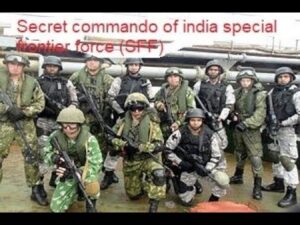
There is not a scintilla of doubt that it represented a grave provocation to China. Any lingering traces of ambiguity on that score would have evaporated browsing the angry reaction of Beijing-based English language journal, The Global Times.
UNILATERAL PROVOCATION
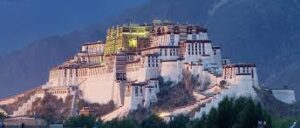 key excerpt read: “After India once again unilaterally provoked the border issue, a video has been circulating on social media depicting Indian soldiers dancing with flags adopted by the so-called ‘Tibetan government-in-exile.’ ’’
The paper then proceeded to question: “Does India dare to openly recognize ‘Tibetan secession’ and deny that Tibet is an inalienable part of China? If India is bold enough to openly oppose this fact, it is clearly aware of the consequences and shooting itself in the foot. If India openly supports ‘Tibetan secession’ on border issues does it mean that China can support insurgencies in Northeastern India?”
Last week, this analyst, commenting on the Vagaries and ambiguities of Sino-India ties, drew attention, among other things, to a revealing statement by Chinese Foreign Minister Wang Yi, following the 10 September meeting with his Indian counterpart, S. Jaishankar, in Moscow on the sidelines of an SCO conclave of foreign ministers. This was apart from observations contained in the joint India-China statement issued after the Moscow meeting.
As per an AP news report from New Delhi, Wang, in a separate statement, “outlined China’s stern position on the situation in the border areas, emphasizing that the imperative is to immediately stop provocations such as firing and other dangerous actions that violate commitments made by the two sides.”
His statement continued: “It is also important to move back all personnel and equipment that have trespassed. The frontier troops must quickly disengage so that the situation may de-escalate.” As I argued last week Wang’s reference to ‘frontier troops’ – rather than Indian troops – seemed to hint at India’s recent deployment of the SFF.
My interpretation has apparently been vindicated in a recent write-up entitled Why China should not fear India’s Tibet card by Abhijinan Rej, (People’s Review, 17-23 September 2020) which was published originally in The Diplomat, quoting excerpts from Hong Kong’s South China Morning Post.
In Rej’s piece, after the Wang-Jaishankar palavers in Moscow, 10 September 2020, the Chinese foreign minister proceeded to Tibet the following day where he “praised Tibet’s achievements under President Xi Jinping, especially in securing the border with India.”
According to Rej, Wang’s Tibet visit – hot on the heels of the India-China talks in Moscow – provided him with the opportunity to take stock of the “border infrastructure.”
It would be remiss not to refer to Indian Defence Minister Rajnath Singh’s burst of bravado at a function at the Ambala Air Force Station commemorating the induction of the advanced Rafales fighter-jets into the Indian Air Force where he claimed that the Rafales would “provide a major advantage in Tibet in case of aerial combat.” (Indian Express).
Besides the trove of clues on India’s alleged temptation to employ the ‘Tibet card’ against Beijing, there are these golden nuggets plucked from popular blogger Maila Baje’s piece last week. Therein, in the context of providing telling details of the funeral in Leh of SFF combatant, Tenzin Nyima, he disclosed not merely that ‘independent Tibet’ flags were flown but that ‘a top Bharatiya Janata Party leader attended the funeral and tweeted about it, before taking it down.’
RETROSPECTIVE VIEW
Let us now take a retrospective glance of the ‘Tibet card’ issue, beginning with a thumb-nail historical note on key Tibet-related issues.
Among its highlights is the CIA’s secret war in Tibet in the 1960s. To go by American historian, Ian Toll, in HistoryNet, the pre-eminent American clandestine organization “sponsored secret training camps and made arms equipment drops to aid horse-mounted herdsmen against the bombers and artillery of the largest standing army on the planet.”
Following a widespread revolt against China in Tibet in February 1956, contacts between the CIA and Tibetan rebels were established. By the fall of 1957, the CIA built a training camp for the rebels at Camp Hale, at 10,000 feet elevation, in the Rocky Mountains in Colorado.
Far more salient from a Nepali perspective is this: “In the summer of 1960 the Tibetan operation (against China) base was relocated to Mustang province, a moonscape scrap of Nepalese real estate jutting into Tibet…From there, the resistance planned, with CIA help, to send 2,000 in groups of 300 into occupied Tibet…By the mid-1960s things began to deteriorate for the Tibetans. Now aware of the Mustang camps, of which there were four, India and Nepal were nervous about the incursions…The Tibetans…continued their raiding till the late 1960s. The CIA made its last drop in May 1965.”
As per Toll, it was President Nixon’s rapprochement with China that rang the death knell of Tibetan resistance…The base in Mustang continued until 1974, when the Nepalese government, under tremendous Chinese pressure, sent troops to shut it down.”
Now let us take heed of some other relevant historical facts. The People’s Republic of China (PRC), after its establishment on 1 October 1949, began operations to bring Tibet back into its fold – with the British imperial sway of Tibet now being a thing of the past following Britain’s departure from the subcontinent in August 1947.
While the first clashes between China’s People’s Liberation Army (PLA) and Tibetan forces took place in Qamdo on 6 October 1950, the township was finally captured by the PLA on 19 October 1950.
In the interregnum, India had inherited the rights and privileges that had accrued to Britain by virtue of the imposed Anglo-Tibetan Treaty of 1904, secured by the Younghusband expedition. As prior to that the Dalai Lama had fled to Mongolia, and later to China, the armed British force prevailed upon Tibetan officials remaining in Lhasa to accede to the Treaty.
With Tibet firmly within China’s political orbit by 1950, the rights and privileges which India inherited from the British were done away with. On 23 May 1951, a 17-point Agreement on Tibet was formally signed in Beijing completing Tibet’s integration with the PRC.
On 17 March 1959, following violent anti-China disturbances and stringent counter-measures by the authorities, the 14th Dalai Lama fled Lhasa and made his way down to the Indian plains, boarding a train in Tejpur, Assam, for his journey to New Delhi. Subsequently, he was granted political asylum by India where he has made himself at home in the Himachal hill township of Dharamshala.
As far as India is concerned, the most significant date is 28 April 1954 when the ‘Agreement on Trade and Intercourse between the Tibet Region of China and India’, was signed in Beijing and ratified on 3 June 1954, by Indian Prime Minister Pandit Nehru and Chinese Prime Minister Zhou Enlai, in their concurrent capacities as foreign ministers. By this, India unequivocally and formally accepted Tibet is an inalienable part of the PRC.
It is that rock-solid recognized geopolitical reality that is now being sought to be undermined by advocates of the ‘Tibet Card’ in India today.
Understandably, as Nepal, under King Birendra in 1974, finally succeeded in quelling the Tibetan anti-China operation from bases on her sovereign territory, Nepal-China relations made a quantum leap forward thereafter.
As I observed in my article King Birendra’s Historic China Visit, 1976 (now republished in my book, ‘Geopolitically Speaking’, pp 95-108): “The fact that under King Birendra, Nepal finally put an end to Khampa rebels’ anti-China activities in Tibet – including by operating in safe havens in Mustang and Manang districts of Nepal – was an important factor” in China granting King Birendra the honour of being the “first foreign head of state to visit the Roof of the World in recent times.”
Among other spinoff effects, it ensured valuable worldwide publicity for King Birendra, Nepal and Tibet.
DELUSIONAL
To return to the present, I find it quite amazing that so many ‘talking heads’ on Indian TV panel discussions – including ‘military experts’ and former diplomats – proclaim, with a straight face, that the PLA is no match for the Indian military.
Quite apart from the sterling lessons of history, including India’s humiliating defeat at the hands of China in 1962, they seem not to recall that it was precisely because of the intervention of the PLA that Kim Il-Sung was able, in the 1950-53 Korean War, not merely able to stave off the UN-forces led by the United States from occupying the entire Korean peninsula, but helped Kim to fight the latter into a stand-still ceasefire which, even today, divides the peninsula into North Korea and South Korea.
One doesn’t have to be a rocket scientist to conclude that sans the PLA coming to the assistance of Kim the entire Korean peninsula would have come under the sway of South Korea/West. Does it make any sense, therefore, to minimize the capabilities of the PLA?
Without China’s help, it is also difficult to imagine a ragtag North Vietnam ‘defeating’ the mighty United States and thereby fulfilling Ho Chi Minh’s dream of a united Vietnam. China’s strength, at the ground level, has a direct and intimate relationship with the strength and high morale of the PLA.
Indians often claim that since China has not been involved in a war since 1978 – referring to the short China-Vietnam conflict – the PLA soldier lacks the wherewithal to take on the Indian jawan!
To remind all and sundry, while the PLA is synonymous with a new resurgent China, the Indian army we know of today has morphed from what was originally a colonial military force, designed to keep Indians down with its soldiers working for the King’s/Queen’s shilling! The Indian army that the British put together was divvied up into two parts before Britain departed from South Asia in August 1947.
Such would-be sages clearly seem to forget that like all modern armies, the PLA is constantly engaged in training activities in a variety of battlefield conditions, including in simulated wargaming. The same is true of the PLA’s air and naval wings.
Finally, to cut a long story short, I must confess that it has been truly edifying to see/hear Indian pundits of various stripes on TV and in print claim – again, without batting an eyelid – the PLA soldier cannot fight in high altitudes, as the Indian jawan and the SFF, can.
I would simply ask such egg-heads to go back to their geography books and confirm that apart from China being located on/along the Himalayas – indeed, Sagarmatha sits on the Nepal-China border – China is crisscrossed by mountains across a vast sweep of her territory.
They include: the Altai, the Tienshan, the Kunlun, the Karakoram, the Kangar Tesi, the Chinling, the Nanling, the Greater Khingan, and the Hengtuan mountains. The Chinese, then, are not all plainsmen; to suggest that they are incapable of tackling heights is clearly silly.
I would hence beseech these sages not to imagine that nothing has changed in Tibet since 1950. Not only have more than three generations of Tibetans being born since then, but the overwhelming majority of them have personally experienced the giant strides in all-round development that have taken place after Tibet’s re-integration with the mainland.
It would hence be extremely foolhardy to conclude that the Tibetan refugee, India-locked since 1959, and the Dharmashala group are truly representative of contemporary Tibet.
In short: if India ever makes the super blunder of ‘using’ the ‘Tibet card’ against China believing that the PLA combatant is a poor-quality warrior and that the overwhelming majority of Tibetans – in Tibet – will rise up and support the wielders of the ‘Tibet card’, she will do so at her peril.
The writer can be reached at: manajosse@gmail.com
People’s Review Print Edition

Login to add a comment