







 By Our Reporter
The new monetary policy unveiled by the Nepal Rastra Bank (NRB) has cheered the businesses affected by the COVID-19 pandemic as well as the individual citizens investing in the share market and planning to build a home.
Almost private sectors from FNCCI to the film industry have hailed the new monetary policy after Governor of the NRB Maha Prasad Adhikari laid out additional measures to support the businesses affected by the coronavirus crisis.
The loan repayment period is extended by a year for the businesses severely hit and is likely to have further time addition.
Period to repay the instalment and interest of the loans that should have been repaid before mid-July 2020 to mid-July 2021 for the businesses highly affected by the crisis, it announced in the Monetary Policy for Fiscal Year 2020/21.
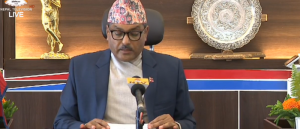
Presenting the policy, Governor Adhikari said that the loan repayment period of the businesses that were severely affected by the pandemic and would take a longer period to revive their businesses would be further extended as per the situation.
Likewise, businesses moderately affected by the pandemic will have a nine-month extension to repay the loan’s instalment and interest.
The central bank has announced a provision to restructure and reschedule the loan of the debtor active till mid-January next year if the client presented a written action plan. However, the debtor should pay at least 10 per cent interest to get the facility.
Loan to the highly affected areas can be restructured through the instruments like private equity, venture capital, debt-equity conversion and special purpose vehicle if the restructuring and rescheduling are not enough to rehabilitate the business.
To facilitate the banks and financial institutions (BFIs) in reviving the economy with additional resources, the credit to core-capital plus deposit (CCD) ratio is revised by 5 per cent to 85 per cent for the current fiscal year. It is expected to open a window for the investment of more than Rs. 183 billion.
To channelise the resources to the economic sectors, the central bank has barred the BFIs from distributing cash dividend in case they earned net profit less than 5 per cent of the paid-up capital.
Those earning higher profits can give away only 30 per cent of it in the cash dividends.
Governor Adhikari said that the provision for the commercial banks to issue the bonds equal to 25 per cent of their paid-up capital has got deadline extension to mid-July 2022 from mid-July 2020.
Through the Monetary Policy, the central bank has halted the process to issue a license to the new microfinance institutions and scrapped the process for the MFIs in the pipeline as well.
The MFIs functioning in the state-level have got a year extension in closing the branches and operations outside the respective state of their activity.
The interest rate of the microfinance loan is brought down to 15 per cent from the existing 18 per cent.
Governor Adhikari has also halted the licensing process for the payment service providers (PSPs).
The NRB has also announced to issue new guidelines to manage the payments made through Quick Response (QR) code, and publish a payment system development indicator.
Likewise, a national payment switch would be established and electronic payment would be promoted in all business activities as per the Digital Nepal Framework 2020.
The BFIs will get the special refinancing for export-oriented industry and sick enterprises at the rate of 1 per cent, for micro, cottage and small enterprise refinancing at 2 per cent and general refinancing at 3 per cent from the central bank. The BFIs can mobilise such refinancing at 3 per cent and 5/5 per cent respectively.
BFIs can have the facility of refinancing up to 5 folds of their existing fund. Likewise, 70 per cent refinancing will be mobilised by the commercial banks, development banks and finance companies, 10 per cent by the MFIs and 20 per cent by the central bank itself.
People’s Review Print Edition

Login to add a comment