







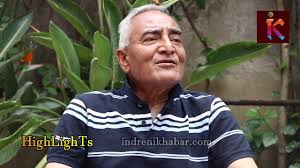
 Shrish S. Rana is a noted political analyst. We had put forward some contemporary questions for his analysis. Excerpts as given below:
Q. There is a strong, virtually a two-thirds majority government, although fragile and very weak. The general public is facing multiple crises and the government is unable to give relief to the people. In other words, the government has failed on all fronts. How do you view the political scenario? Does it mean that the system is not working?
A. A ‘system’ where the organized politician is above the constitution can only hover around the politician. Given the overwhelming numbers that the NCP has in parliament, the government will function as soundly as Prime Minister K.P. Oli will since he can bend all rules to cater to his whims. That government has not functioned reflects on Oli’s capabilities. This holds the truth of the government he forms, the administration he runs or the party he leads and, even the cronies he gathers. It is this reason that his detractors within the party give in their efforts to displace him. But the fact is that a series of governments much before Oli have been under-performing with remarkable impudence. This is why this ‘system’ cannot perform, will negatively perform. It need not perform. The politician at the helm will remain there even without performance. The whys and how need no longer be explained. They need only be endorsed by the strength of organizations, extra-national backers and elections and that is that.
It is only now, after seven decades of experimentations, that we are recognising that politics is behaviour and political behaviour within the political parties needs much more attention than constitutions as a prescription for healthy growth.
Q. What could be the reason behind such a prolonged quarrel between the two chairmen in the ruling Nepal Communist Party?
A. We have for long been weaned politically by cursing our past as a habit. This allows politicians to interpret history in accordance to their needs. Had we, instead, chose to learn from history, we would long ago have directed our politics towards correcting our political behaviour and encouraging a thriving debate on policies. Indeed, we would correctly have been analysing the behaviour of politicians and political parties and how they have impeded growth in Nepal.
We need our politicians as a matter of course. But their behaviour must be tempered by constitutionalism. It has been otherwise in Nepal. Conceding this fact would be a good beginning for analysis.
Two aberrations are consistent in our politics. The leader of a political party when assuming office as prime minister is challenged from within the party itself. ‘One man one post’ is often an opposition platform from within. When accommodated, the result is often a tussle between the government and the party leader. When not, it results in party splits. Seven decades of Nepali populism should have made this conclusion easy.
The other outstanding aberration comes in the form of demands that one must be included in governments conducting elections. Simple political savvy should allow us the comfort of concluding that being in governments conducting elections have a political advantage, not in keeping with the need for impartial elections. It is these two partisan traits that are strengthened in a system like ours where the politician is above the constitution.
Much of politics and political strategy have revolved around these two outstanding political traits of the past seven decades. These fundamental partisan traits of our democracy have facilitated the degeneration epitomised in the current set of things which suit the establishment since they can now tear up constitutions and impose new ones even at the behest of non-Nepali resources. This leaves the electorate to function merely as rubber stamps as also other branches of governments.
Although the current NCP has innovated the two chairmen concept, the fact is that one of the two is in government. How the above two traits will function to the advantage of the prime minister has become a self-evident compulsion for his opponents within the party to vie for. Similar compulsions within the then ruling Nepali Congress with the added pressure of Maoist terror crashed the constitution in 2006. To what extent the NCP tussle has paralysed Oli evidently is no concern of his party colleagues. Both Oli and his opponents need to pay no heed to the electorate. After all elections as an option, ultimately, need be merely another ‘democratic’ formality.
Q. You might have noticed that of late, people have felt the absence of the institution of monarchy in the country. How far is it possible to restore the erstwhile institution?
A. Way back in 2006, in course of the political change, I had said in an interview with this paper also that an unhealthy drama was underway that defied constitutionalism in this country. The spin at that time was that King Gyanendra had unconstitutionally usurped political power and that the monarchy should be tamed because of this. Not just national non-performance but continuing political impudence appears to have allowed saner heads to recall that the movement at that time was for a duly dissolved parliament to be revived. It was by no means for a republican, secular and federal Nepal. By what constitutional means this agenda was brought into that revived parliament through the induction of the Maoist rebels is the first of many questions that underscore the flagrant success of attempts to scuttle the very process of democratic constitutionalism in the country.
As a study on the ‘making of new Nepal’ concludes, there were no ‘neutrals’ in Nepal and any protestations at that time would have been threatened as monarchical regressive old hat. The series of unconstitutional behaviours that this augured it was bound to impact on the feudal behaviour of our new overlords under a constitution that they chartered for what is now questionable purposes under now very obvious spurious foreign instigation and design. The unraveling of the support and design and its impact on the overall impudence has had to ultimately reflect on a population who now question where they went wrong and seek solutions to the current malaise.
Such a partisan environment, one would have hoped, should have triggered a soul-searching within the establishment parties But for many who are gradually de-mystifying the political rhetoric of the past decades, thinking out of the box has been a necessity. There are still those who think that the next, if not the next, elections will steal the initiative away from the current establishment or, else, improve the establishment. However, given that political performance and myths have come under intensive microscopic review since the past decade, a highly cynical population tends to even dismiss electoral options to such seemingly cosmetic posts as an executive president or a directly elected prime minister. Such constitutional tampering, it is by now recognised, need not correct political behaviour.
Traditionalists aside, the emerging recognition that the monarchy was the only institution that could resist constitutional tampering and impudence defeats all arguments of republicans in the current environs who even have sullied that sanctity of the presidency and its ‘ceremonial’ role as constitutional guarantor.
In any case, as long as this constitution remains or any more constitutional tampering occurs, they will not have corrected the very first sin, namely, the constitutional tampering of 2006 which in the first place made tampering possible. For the sake of the sanctity and constitutional independence of Nepal, correcting that mistake would mean the only constitutional recourse. As for how this is to be done, it can only be another popular movement if not the acquiescence of the current establishment that should make this possible. For this, the people will have to break the stranglehold that the current leadership and their political parties have over them.
An antagonised people are now better aware of the excesses of their leadership. For them to take to the streets on their own remains a tall order still in the absence of a definite constitutional agenda. The country is already in an agitation mode but change will occur when recognition dawns that it is the monarchy that can be the sole catalyst for change given the political monopolies nurtured over decades of partisan excesses.
Q. Nepal and India are at no-talking relations after Nepal made public a political map by including Kalapani-Limpiyadhura territory, followed by amendment of the constitution. Can Nepal get back the India encroached territory?
A. ‘Talk, talk, talk and more talk’. There is no substitute for diplomacy for countries such as us. Just the other day Dr Bhekh Bahadur Thapa recalled an incident when some people in Delhi mentioned that they had ‘lost’ Nepal. “When did you have it”, or something like this, was his response. The process of soul searching underway in Nepal after the 2006 disaster cannot but have triggered many essential reviews among Nepal’s friends who have sought to take advantage of diminishing Nepali capabilities but have found Nepali politics untenably fluid. Indeed, the Nepali population have never been so suspicious of foreign intent in the country demanding a change that is close to sanity in foreign relations. Relations between Nepal and her friends need an equilibrium beyond the capacity of our current crop of client leaders to restore. It is not for nothing that voices are being heard outside that 2006 was a mistake. Just the other day one chanced by an Indian media that recognized that the Nepali people were thinking of the monarchy as an option. It is not that such a thought is of recent origin, it seems it is the media recognition that the thought is widespread that is recent.
Q. Regional as well as global political scenario seems troubled since India-China standoff in Ladakh, India-Pakistan tension in Kashmir, the increasing American presence in the South China Sea, the American pressure on Nepal for implementing MCC and Chinese desire for Nepal’s active participation in Belt and Road initiative. In such a crucial scenario do you see any visible foreign policy of the government?
A. As should have been expected, excesses in the domestic front will only naturally have had its impact externally. One such was found in the grossly overplayed micro-management. This encouraged other foreign partners to tango accordingly. Juggling our partners was by itself a difficult task for a Nepal with reduced capabilities but it seems that the competition also means dancing to competing tunes. That this should be timed with heightened international tensions focused also in the immediate neighbourhood gives the need for change in Nepal its urgency.
After the gross indulgences of the past three decades, events have caught up with Nepal. Restoration of trust and balance must first be initiated within the country to have it impacted in the neighbourhood and outside. As for the neighbourhood, one cannot but resort to advocating cooperation for the opening of doors to a better future. It is traditional thinking that has inhibited the concept of cooperation. It is innovative diplomacy that will bring prosperity. The bigger countries of the region must trigger this search for innovation. Traditional rhetoric and propaganda inhibit this need. After all, the fact that this is 2020 A.D. applies to all. There is no need for hubris, jingoism and chauvinism.
The contributions of the international community to the state that Nepal has been reduced to is, for one, not lost on the Nepali people. Demanding better performance from Nepal may first be a Nepali concern, but if one understands it rightly, enabling Nepal was their concern as well.

Login to add a comment