







By Rajendra Rimal
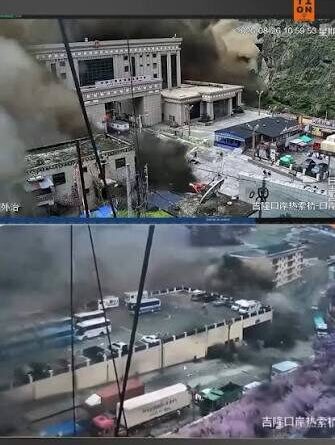
The devastating floods that struck Rasuwa, Nuwakot, and Dhading last Wednesday morning, originating from the Jilong area of China and the Rasuwagadhi area of Nepal, have caused an unimaginable loss of life and property. International researchers have begun studying the causes of these unprecedented floods, which were hardly seen, heard of, or even imagined before.
Preliminary studies and expert analyses indicate that the latest disaster is linked to rising temperatures in the Himalayan region due to climate change, the rapid melting of glaciers and snow, and related phenomena such as avalanches and landslides.
As global temperatures rise because of climate change, glaciers and snow in the region are melting rapidly. Experts have previously warned that rising temperatures could destabilize glaciers, trigger avalanches, and cause sudden increases in river levels, resulting in significant losses of life and property.
According to a study and analysis published by the International Centre for Integrated Mountain Development (ICIMOD), an organization established to study and research the Hindu Kush Himalayan region, the rate of snow and ice loss in the region has more than doubled compared with 25 years ago.
Regarding the floods, Dan McGrath, a professor of geology at Colorado State University, said that the rapid melting of snow in the Himalayan region due to global warming has seriously affected the stability of the region. Jason Gulley, a professor of geology at the University of South Florida, has also described the effects of climate change and mountain ice loss in Nepal as a “time bomb.”
In an article published in The New York Times, Gulley warned that the rapid environmental changes occurring in the Himalayan region could lead to even more deadly disasters in the future. Having conducted half a dozen studies in Nepal’s Himalayan region over the past 20 years, he has also concluded that the rate of snow and ice loss from the mountains is accelerating.
Experts have attributed the initial cause of Wednesday’s disaster to a large avalanche that fell from the northern face of 7,234-meter-high Langtang Lirung. Simon Cox, chief scientist at GNS Science in New Zealand, concluded that a large mass of snow that descended rapidly from an altitude of around 5,200 meters mixed with rocks, soil, and trees, triggering a devastating flood and landslide.
Dr. Hamish Pritchard, a glaciologist at the British Antarctic Survey, said that temperatures around the Langtang area of Rasuwa were the highest recorded in the previous two years two days before the avalanche. He speculated that the unusually high temperatures may have contributed to triggering the avalanche.
Similarly, Dr. Simon Cook, a glaciologist at the University of Dundee in Scotland, said that rising temperatures in the Himalayas and other parts of the world have contributed to an increase in avalanches. He cited the 2021 disaster in Chamoli, India, as a similar example. Around 200 people died in India in floods and related disasters triggered by a massive rock-and-ice avalanche at that time.
Iran Hood, a professor of environmental science at the University of Alaska, said that landslides and avalanches in high-altitude areas can cause unimaginable disasters because they can carry enormous amounts of water, rocks, and soil in a single event. He said, “When snow, rock, soil, and water flow rapidly downhill, the impact can be far more devastating than that of a conventional flood.”
According to a study, there are 3,624 glacial lakes in the mountainous regions of Nepal, India, and Tibet. Of these, 47 are considered to be at high risk, while 21 glacial lakes in Nepal are considered particularly risky. The Himalayan region and its glacial lakes have been identified as being at heightened risk, particularly following the 2015 earthquake.
These statements by international experts suggest that Wednesday’s flood should not be viewed merely as a local natural disaster. Rather, they point to the need to understand the disaster in the broader context of rapidly changing environmental conditions in the Himalayan region and the growing risks associated with climate change.
At a time when facts and scientific evidence are available, it is important to distinguish them from speculation, accusations, and rumors disseminating against China are baseless. A disaster of such magnitude demands serious scientific investigation, objective analysis, and cooperation rather than unsubstantiated claims and blame.
Rimal is the editor of the Janaaastha Online News Portal.

Login to add a comment