







By Our Reporter
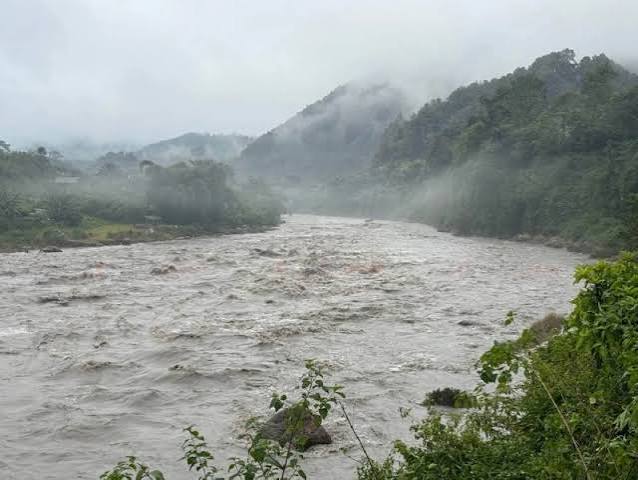
The most important lesson from Sunday’s (October 11) Budhigandaki flood came before rescuers arrived. Residents heard an unusual roar, felt their houses shake and warned communities downstream. Families moved before the flood reached them. That response helped prevent widespread casualties, although five people remain missing. Celebrating lives saved must not erase the uncertainty facing those families or the need to continue searching.
Memories of the recent Bhotekoshi disaster appear to have encouraged people to act quickly. Yet survival should not depend on whether someone wakes up, recognises danger and has enough phone signal to warn others. Local initiative worked this time. Authorities must turn it into a dependable warning system that reaches every exposed settlement, including isolated livestock shelters.
The preliminary explanation also challenges a familiar assumption: destructive floods do not always follow heavy rainfall. ICIMOD says a landslide may have temporarily blocked a river near Chumchet before the barrier collapsed, releasing water, sediment and debris downstream. The precise sequence still needs investigation. Until then, officials should describe the cause as preliminary rather than present a complete explanation they cannot yet support.
Understanding that sequence matters because different hazards need different precautions. In April 2024, an avalanche into Birendra Lake displaced water and caused a sudden surge into the Budhigandaki. Sunday’s suspected landslide blockage involves another process. Monitoring rainfall alone cannot capture every danger developing upstream. Authorities need to watch unstable slopes, river blockages, lakes and changes in water flow together.
This does not mean every recent flood can automatically be attributed to climate change. Scientists must examine the evidence behind each event. What authorities already know is enough to justify action: settlements and infrastructure along steep river corridors face hazards that can develop quickly and travel far downstream. Waiting for perfect scientific certainty would leave preventable exposure untouched.
Warnings must also survive the destruction of communications infrastructure. With towers and electricity poles damaged, dependence on mobile calls alone becomes risky. Municipalities should combine river sensors with sirens, radio networks, trained community volunteers and backup power. Agencies need agreed thresholds and clear authority to order evacuation, without waiting for several offices to approve the same message.
A warning is useful only when people know where to go. Each vulnerable settlement needs marked escape routes, accessible shelters and regular drills. Plans must account for older residents, children, people with disabilities, tourists and workers at riverside construction camps. Guides, schools, hotels and hydropower developers should practise the same procedures, rather than maintain disconnected plans on paper.
The destruction of homes, bridges and project equipment exposes another weakness: preparedness cannot stop at evacuation. Authorities must review where buildings and camps stand, how bridges cross vulnerable channels and whether reconstruction would recreate the same risks. Families asked to relocate need safe land and financial support. Telling poor households to leave without providing an alternative is not protection.
Hydropower developers should reassess upstream hazards and protect workers through safer camps, evacuation arrangements and emergency supplies. Municipalities need stocks that remain reachable when bridges disappear and helicopters cannot fly. Search, shelter and relief must continue alongside these longer planning tasks. The government should publish a joint assessment, identify responsible agencies and fund a timetable for corrective action. Communities deserve to know what changed after this flood. Residents gave authorities a powerful lesson in acting before disaster reaches the doorstep. The state must now match that urgency with sustained preparation. Rebuilding damaged property without reducing exposure would waste both public money and the warning this disaster has delivered. Lives saved through timely calls should become lives protected by a system that works even when those calls cannot get through

Login to add a comment