







Kathmandu, August 29: Following the devastating flash flood in the Bhotekoshi River on August 26, the government has mobilized the entire state machinery for search, rescue and relief operations.
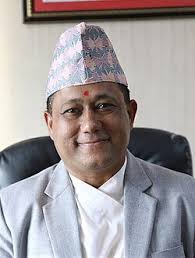
Foreign Minister Shishir Khanal formally briefed the media on Saturday about the latest situation following the disaster and the government’s efforts at a press conference held at the ministry.
Minister Khanal also drew the attention of the international community to the need to protect the Himalayan ecosystem, saying that changes in the ecosystem have posed serious risks to Nepal and other countries in the region.
A total of 4,451 people, including 187 foreign nationals, have so far been rescued alive from the flood-affected areas, Foreign Minister Khanal said. Of the foreign nationals rescued, 114 are Indian, 27 are Chinese and 20 are Korean citizens. So far, the bodies of 626 people have been recovered, while around 2,400 people are still missing.
According to Minister Khanal, 420 foreign nationals, including Japanese citizens, are among those missing. As search and identification efforts are still underway, the ministry has urged the public to rely only on official information, warning that the casualty and damage figures may change. The ministry has established a dedicated emergency control room to identify and maintain contact with foreign nationals and is coordinating with diplomatic missions.
Although Nepal contributes only 0.01 percent of global greenhouse gas emissions, the country is suffering the direct and severe impacts of climate change, Minister Khanal said. “The Nepali people have borne the brunt of climate change,” Minister Khanal said. “We have urged the international community to unite to protect the Himalayan ecosystem.” He said the natural disaster struck at a time when the process of establishing disaster-management and early-warning mechanisms was already moving forward in coordination with the Chinese government.
Security agencies, provincial and local governments, and teams of health workers have been continuously deployed in the flood-affected districts of Rasuwa, Nuwakot, Dhading and Chitwan. Rescue efforts have been extremely difficult because of the challenging terrain.
Rasuwa has been completely cut off from the road network, while narrow gorges are making it difficult to operate large helicopters. “Our security personnel are working under extremely challenging conditions,” Minister Khanal said, adding that continuous coordination with Chinese officials has been maintained since the disaster. “Some areas have turned into marshy ground, making it difficult to transport equipment and land aircraft.”
He also said that the disaster had caused significant damage on the Chinese side and that officials of both countries were regularly exchanging information about the geographical conditions and potential risks in the border areas.
Given the difficult terrain and the need to rescue people trapped inside tunnels, the government has requested specialized technology and personnel from neighboring countries. In particular, an 11-member specialized technical team from India has already arrived in Nepal and begun working on tunnel rescue operations, while a Chinese team is also on its way across the border.
Nepal has so far received more than 57 tonnes of relief materials from India. China, Japan and Australia, among other countries, have also provided essential supplies. As Nepal has limited capacity to preserve the recovered bodies, the government has requested international organizations to provide the necessary freezers. Minister Khanal said he had spoken with Indian Foreign Minister S. Jaishankar and Chinese Foreign Minister Wang Yi and expressed gratitude for their assistance and solidarity.
Minister Khanal rejected reports in some foreign media claiming that Nepal had refused international assistance. He clarified that Nepal has been inviting foreign expert teams only on the basis of its needs.
“The scale of the devastation is extremely large,” Minister Khanal said. “We will need substantial foreign assistance not only for rescue and relief but also during the reconstruction and rehabilitation phase.” Arrangements have been made for those willing to contribute to disaster management to provide assistance online or through a QR code to the Prime Minister’s Disaster Relief Fund.
Seeking to dispel misconceptions that Nepal is unsafe for travel, Minister Khanal clarified that major tourist destinations, including Kathmandu, Pokhara, Lumbini, Chitwan, Janakpur, and the Annapurna and Everest regions, remain safe and operational. He appealed to the international community to help strengthen Nepal’s economy through tourism.
The government has initiated a long-term plan to reduce the risks of floods and landslides. Minister Khanal said research into the changing nature of the Himalayan region and its impact on downstream areas would be carried out through a joint mechanism between Tribhuvan University and the Chinese Academy of Sciences.

Login to add a comment