







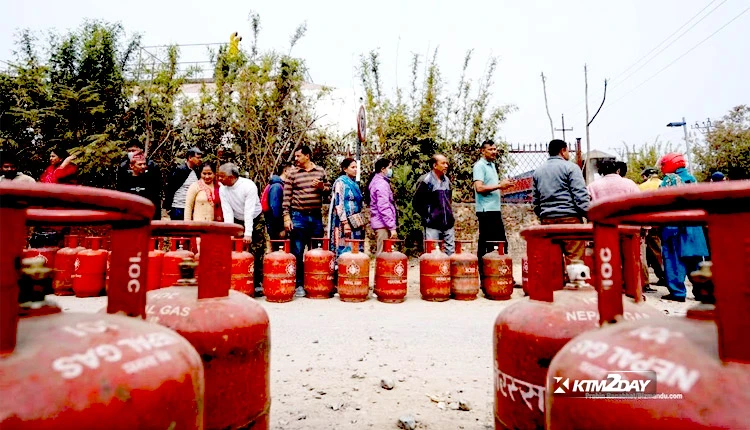
Kathmandu, July 31: Consumers across Kathmandu Valley and other major cities are struggling to obtain cooking gas despite government officials and industry representatives insisting that imports remain sufficient.
Many households have been unable to refill empty cylinders for days, forcing consumers to queue outside gas depots only to return empty-handed.
The Nepal Oil Corporation (NOC) and gas dealers have blamed different factors for the shortage, while consumers continue to face supply disruptions.
Nepal LP Gas Industry Association President Shivahari Ghimire said Nepal is importing 45,000 to 50,000 metric tonnes of LPG every month, enough to meet national demand. He argued that the shortage stems from panic buying rather than reduced imports.
According to Ghimire, many consumers are stockpiling multiple cylinders out of fear that supplies could worsen, creating an artificial surge in demand. He acknowledged that maintenance work at two refineries in India’s West Bengal had caused minor disruptions but said the impact was temporary.
He said households with only one cylinder have been hit the hardest because they must refill immediately after it is emptied, while others are storing several filled cylinders.
Gas dealers, however, blamed both the Nepal Oil Corporation and gas bottling companies for the crisis.
Nepal Gas Dealers Federation President Gyaneshwar Aryal claimed gas companies had released nearly six million additional cylinders into the market to claim VAT credits, while the NOC failed to regulate distribution. He said the growing number of cylinders in circulation has encouraged consumers to keep multiple cylinders, sharply increasing demand.
Aryal also criticised the government for failing to address the problem, warning that the shortage could persist for another six months unless immediate corrective measures are taken.
The Nepal Oil Corporation rejected claims of supply shortages, saying imports have actually increased. According to NOC spokesperson Manoj Thakur, around 110 LPG bullets are entering Nepal from India every day, compared with the normal 90 to 95.
Thakur said demand spiked after the government resumed the distribution of full 14.2 kilogram cylinders from June 15, prompting consumers who had delayed purchases during the distribution of 7.1 kilogram cylinders to seek refills at the same time.
NOC estimates Nepal consumes around 100,000 LPG cylinders daily, with Kathmandu Valley accounting for more than half of total demand. The corporation expects supply to normalize within one to two weeks and has urged consumers to check cylinder weight before accepting delivery and report any discrepancies.
Despite those assurances, consumers continue to face long queues, while complaints of black marketing and underfilled cylinders persist in parts of the country.
People’s News Monitoring Service

Login to add a comment