







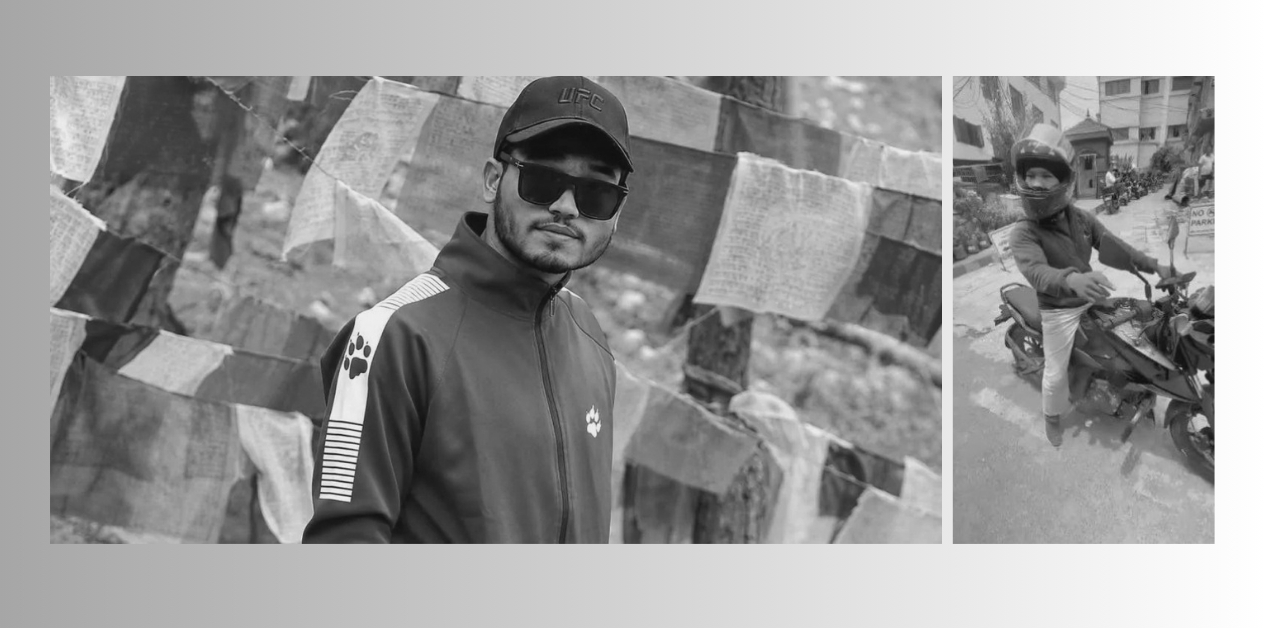
By Our Reporter
The death of 25-year-old Ganesh Nepali has shaken the country and put both the government and Kathmandu Metropolitan City under intense public scrutiny. What began as a dispute over a wheel locked motorcycle ended with a young man setting himself on fire, suffering burns over most of his body, and eventually dying despite the efforts of doctors at Bir Hospital. His death has sparked anger because many people believe the tragedy escalated from an incident that should never have reached such a devastating conclusion.
According to available information, the confrontation began when Kathmandu Metropolitan City police wheel locked Nepali’s motorcycle. A heated exchange followed. The disagreement quickly intensified and ended in an act of desperation that stunned the nation. While the investigation is still underway, the sequence of events has already exposed gaps in crisis management and public engagement.
The government’s response after Nepali’s death was relatively swift. It reached a nine-point agreement with the victim’s family and local authorities. The agreement includes the formation of an independent investigation committee led by a former judge, a commitment to submit its findings within seven days, suspension of the metropolitan police personnel involved until the investigation is completed, consideration of declaring Nepali a martyr based on the committee’s recommendations, employment for his wife according to her qualifications, educational support for his daughter through higher studies, compensation, health insurance for immediate family members, and full support for funeral and legal procedures.
These measures were necessary to calm public outrage and support the bereaved family. They also show that the government recognizes the seriousness of the incident. Yet they also raise an uncomfortable question. If authorities were capable of acting this quickly after Nepali died, why was the same urgency absent before the situation reached a fatal point?
This is where the government’s handling has drawn the strongest criticism.
Law enforcement officers, including municipal police, are expected to enforce rules. Wheel locking vehicles parked illegally is part of their responsibility. But enforcement does not end with applying penalties. It also requires professionalism, restraint, communication, and the ability to defuse confrontations before they spiral out of control. A routine traffic enforcement action should never end in the loss of a human life.
The incident also highlights the need for better training. Municipal police increasingly deal with emotionally charged situations involving street vendors, motorists, and the public. Officers must be equipped not only with legal authority but also with conflict resolution skills. Recognizing signs of extreme emotional distress and responding appropriately should become part of standard operating procedures.
Another weakness lies in crisis intervention. Self-harm rarely occurs without warning. Whenever someone threatens such an act in a public place, the immediate priority should shift from enforcement to preserving life. Every agency on the ground should have clear emergency protocols involving police, medical responders, and mental health professionals whenever possible. Even a few minutes of effective intervention can save a life.
The government’s decision to form an independent investigation is welcome, but its credibility will depend on transparency. The committee should establish a clear timeline of events, determine whether proper procedures were followed, assess whether excessive force or negligence occurred, and recommend institutional reforms rather than simply assigning blame to individual officers.
The commitments made to Nepali’s family should also be implemented without delay. Too often, agreements reached during moments of public anger lose momentum once public attention fades. Delivering compensation, employment, educational support, and other promised assistance on time will demonstrate that the agreement was more than a temporary political response.
The broader lesson extends beyond this single tragedy. Public institutions must become more responsive to grievances before they reach a breaking point. Citizens should have confidence that disputes with government officials can be resolved through dialogue rather than confrontation. At the same time, frontline personnel need regular training in communication, de escalation, and public engagement alongside enforcement duties.
Ganesh Nepali’s death should not become another headline that fades from public memory after the investigation concludes. It should serve as a turning point for improving how authorities interact with citizens during moments of conflict. Justice will not be achieved solely by identifying who was responsible. It will be achieved when meaningful reforms ensure that no ordinary disagreement between a citizen and the state ever ends in such an irreversible tragedy again.

Login to add a comment