







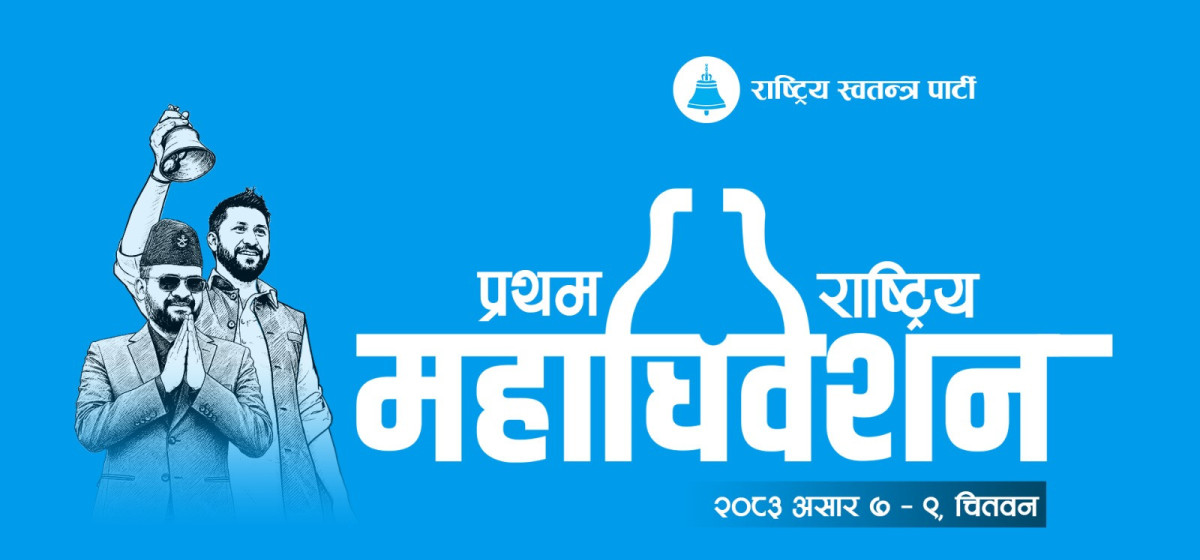
Kathmandu, June 19: The National Independent Party (RSP) is set to hold its first general convention in Chitwan from June 21, seeking to institutionalise the party, consolidate its diverse support base and chart its future policy and leadership direction.
The convention, which coincides with the party’s fourth anniversary, will endorse organisational structures from the ward level to the central committee and discuss key policy issues. Party leaders say the gathering will focus on strengthening internal democracy, unifying members from different political backgrounds and building an organisation capable of sustaining the overwhelming public mandate the party secured in the latest parliamentary elections.
While leadership positions at various levels are expected to be finalised through the convention process, party chair Ravi Lamichhane is widely expected to be endorsed without challenge. Senior leaders, including Deputy Prime Minister Balen Shah, Deputy Prime Minister DP Aryal and Finance Minister Dr Swarnim Wagle, are already holding major government responsibilities, making a contest for the top post unlikely.
Party leaders describe the convention as a milestone in turning an election-driven movement into a structured political organisation. They argue that thousands of members who joined the party from different professional, social and political backgrounds now need a common platform, ideology and organizational culture.
Political analyst Saugat Gautam says the convention could help instil democratic practices and political discipline among supporters who rallied behind the party as an alternative to traditional political forces.
The RSP emerged in June 2022 under the leadership of former television presenter Ravi Lamichhane. Within months of its formation, it contested parliamentary elections and established itself as a major political force. The party later expanded by attracting politicians, activists, professionals and leaders from various political movements.
Its rise accelerated after forging alliances with several alternative political groups. A major turning point came when Kathmandu’s then mayor, Balen Shah, agreed to join forces with Lamichhane under a political understanding that brought together a broad coalition of youth activists, reform advocates and emerging political figures.
The party also absorbed leaders and supporters associated with various movements, including the Gen Z campaign, former Nepal Electricity Authority chief Kulman Ghising’s political initiative, the Tharuhat movement, the Hamro Party Nepal group and members of the former Bibeksheel Sajha Party.
According to party leaders, a significant portion of current lawmakers and office bearers joined the party after previously being affiliated with other political organisations. The convention is expected to help forge a stronger collective identity among these groups.
Leaders say the convention will also mark the beginning of a more democratic internal structure. Until now, most senior party positions have been filled through leadership decisions and internal meetings. The convention will provide representatives from local and provincial structures an opportunity to formally endorse leaders and participate in policy discussions.
Another key objective is to formulate a long-term roadmap for safeguarding the support of more than five million voters who backed the party in the last election. Leaders say policy discussions will focus on governance, constitutional reform and preparations for upcoming local and provincial elections.
Party officials believe the convention will not only strengthen internal unity but also equip the organisation to translate its electoral success into a durable political force.
People’s News Monitoring Service

Login to add a comment