







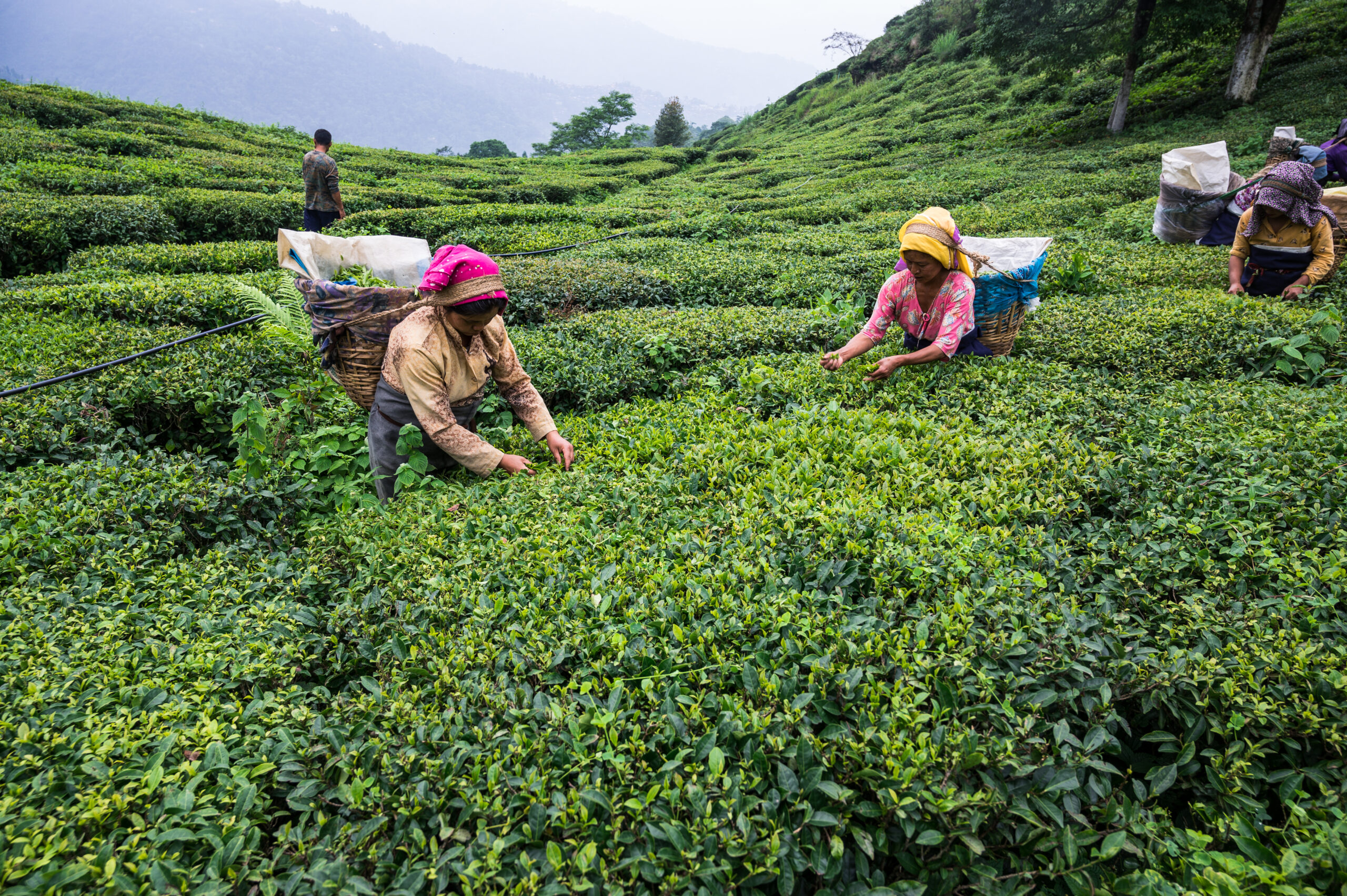
Kathmandu, June 14: India’s tightening restrictions on Nepali tea imports are set to force tea factories in the Suryodaya municipality of Ilam to shut down. The Suryodaya Orthodox Tea Producers Association Nepal, which represents 53 tea factories, has announced that all member factories will cease operations starting June 15.
According to the association, more than 300,000 kilograms of Nepali tea that has already reached the Indian market remains stranded under the pretext of quality testing, while more than 700,000 kilograms of processed tea is stockpiled in factories. Association President Dilli Shrestha said the factories can no longer operate because their storage facilities are full.
“We have processed green tea leaves purchased from farmers into finished tea, but we have not been able to sell it in the market. Even our storage space is completely full,” Shrestha said. “We cannot delay payments to farmers, so we have no option other than shutting down the factories.”
India implemented a Standard Operating Procedure (SOP) on tea imported from Nepal beginning May 1, 2026. Under the new rules, tea carried by each vehicle must undergo separate testing, laboratory reports can take more than 20 days to arrive, and the tea cannot be sold until the results are released. If a shipment fails the test, it must either be destroyed or returned.
“The route for bringing produced tea to the market has virtually been blocked,” said tea entrepreneur Gopal Kattel. “India has effectively halted Nepali tea exports through various technical hurdles, leaving factories unable to continue operations.”
Kattel stressed that Nepal’s federal government must take effective measures to resolve the export crisis.
“The government should undertake timely diplomatic initiatives to facilitate exports,” he said. “If efforts are not made to remove these obstacles, Nepal risks losing a tea market worth billions of rupees.”
The factory closures are expected to affect thousands of tea farmers. According to the association, 2,995 tea farmers are engaged in tea cultivation in Suryodaya Municipality, where tea is grown on 33,655 ropanis of land. The area produces approximately 20 million kilograms of green tea leaves annually.
“If the factories close, our income will stop completely. How will we support our families? Our livelihood is at stake,” said farmer Rajan Bhattarai. “Once the factories shut down, our green tea leaves will no longer sell. We are increasingly worried about how we will survive.”
Suryodaya Municipality, which is home to more than 65 tea factories, has urged Nepal’s Ministry of Foreign Affairs to immediately pursue high-level diplomatic efforts to remove Indian barriers to tea exports.
The municipality stated that the Indian Tea Board has begun entering importers’ warehouses in Kolkata to collect and test samples from every sack of Nepali tea consignments. Although samples have been collected from more than half a dozen truckloads, over a week has passed without laboratory reports being issued, and sales and distribution have been completely halted pending the results.
“Because of these cumbersome procedures, high-quality Nepali tea is being left idle in Indian warehouses, creating risks of quality deterioration and spoilage,” said Acting Mayor Durga Kumar Baral. “The Government of Nepal must undertake high-level diplomatic initiatives to remove these Indian restrictions.”
According to Nabin Koirala of the National Tea and Coffee Development Board, Nepal exports more than 7 million kilograms of orthodox tea annually, with over 90 percent destined for the Indian market. Nepal exports processed tea worth more than NPR 4.25 billion each year. Orthodox tea is produced mainly in the districts of Ilam, Panchthar, and Dhankuta.
People’s News Monitoring Service.

Login to add a comment