







By Our Reporter
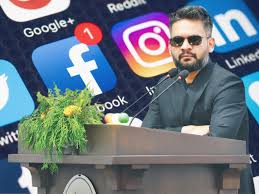
A prime minister’s social media account is no longer just a personal communication tool. It has become an extension of state power, shaping public conversations and influencing what citizens pay attention to. That is why Prime Minister Balendra Shah’s recent online activities have triggered growing criticism. The issue is not simply about a Facebook status or a joke. Critics argue that it reflects a broader communication strategy aimed at steering public attention away from uncomfortable political questions.
The latest controversy emerged from a short Facebook post in which Shah wrote that he also wanted to become an ambassador and asked if anyone had the prime minister’s phone number. The post quickly attracted playful comments from ministers, lawmakers and political allies. Supporters viewed it as harmless humor. Others saw something far more troubling.
Their concern is rooted in timing. The post appeared when the government was already facing scrutiny over several contentious issues. Questions remained over controversial ordinances, the treatment of displaced landless communities, the annual budget and concerns about governance. Instead of these issues dominating public debate, social media feeds became filled with discussions about the prime minister’s joke and the reactions it generated.
This is why critics have accused Shah of engaging in agenda diversion. In modern politics, controlling public attention can be almost as important as controlling policy. Political leaders understand that social media rewards controversy, humor and personality far more than lengthy discussions about budgets, legislation or administrative procedures.
The result is a shift in public conversation. Citizens spend days debating a Facebook status while complex policy issues receive far less attention.
The criticism gained additional momentum because it came shortly after the arrest of senior bureaucrat Krishna Hari Pushkar. The government’s decision to detain a high-ranking civil servant over a direct message to the prime minister had already sparked concerns among former bureaucrats and governance experts. Questions were being raised about administrative procedures, institutional boundaries and the role of law enforcement.
Yet those discussions were quickly overshadowed by the prime minister’s latest online post. For many observers, this was not an isolated incident. They point to a pattern that has emerged during Shah’s tenure. Whenever political pressure intensifies, a social media event often follows.
When controversy surrounded the government’s decision to bypass parliamentary scrutiny through ordinances, public attention soon shifted toward a widely circulated photograph of the prime minister. Discussions about constitutional procedure gradually gave way to debates about his image and popularity.
A similar situation unfolded when criticism mounted over the conditions faced by displaced families living in temporary shelters. Around the same period, another carefully crafted social media post generated widespread engagement and media coverage. Once again, political debate moved away from governance failures and toward online entertainment.
None of this means political leaders should avoid social media. Modern governments need direct communication channels. Citizens also appreciate leaders who appear accessible and relatable. The problem arises when communication becomes a substitute for accountability.
Governance is ultimately measured by decisions, outcomes and institutional performance. A clever post cannot answer questions about unemployment. A viral photograph cannot resolve concerns about inflation. A humorous status cannot replace explanations regarding controversial government actions.
Political strategists often describe this as the difference between narrative management and public accountability. Narrative management focuses on controlling what people discuss. Accountability focuses on answering difficult questions. The two are not always compatible.
The deeper concern is the gradual personalization of politics. When public debate revolves around the personality of a leader, institutions become secondary. Citizens begin evaluating governance through likes, shares and online engagement rather than policy performance. This weakens democratic oversight because governments become more focused on managing attention than solving problems.
Prime Minister Shah’s supporters argue that his communication style reflects a new and modern form of leadership. That may be true to some extent. Digital engagement is now a permanent feature of politics. Yet digital popularity and effective governance are not the same thing.
The prime minister clearly understands how social media works. He knows how to generate attention and dominate online conversations. The real question is whether those conversations are helping the country confront its most pressing challenges.
At a time when Nepal faces economic uncertainty, social tensions and governance challenges, citizens deserve sustained debate on policies that affect their daily lives. Social media can support that discussion. It should not distract from it. A government can shape the national conversation for a few days through a viral post. It cannot govern a country through algorithms.

Login to add a comment