







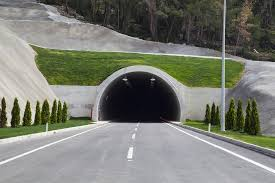
Kathmandu, June 8: Nepal’s first modern road tunnel, the Nagdhunga–Sisnekhola Tunnel, is being prepared for operation from the upcoming Nepali month of Shrawan (July).
According to Saujanya Nepal, Chief of the Nagdhunga–Sisnekhola Tunnel Project, all necessary preparations are underway to bring the tunnel into operation by the third week of Shrawan. He said that an agreement has already been signed with the company responsible for collecting toll fees from vehicles using the tunnel, and technical work, including staff training, is currently in progress.
Project Chief Saujanya Nepal stated that the tunnel is expected to be operational by the third week of Shrawan following the completion of the required preparations.
“All preparations necessary for operating the tunnel are underway. We are working to bring the project into operation within Shrawan if possible,” Nepal said. He explained that the toll collection company is making the necessary arrangements regarding emergency rescue procedures, emergency response measures, as well as the tunnel’s lighting and ventilation systems.
A total of 150 employees have been recruited to ensure round-the-clock operation of the tunnel. These employees will work in shifts.
Speaking at a meeting of the National Assembly’s Public Policy and Delegated Legislation Committee today, Project Chief Nepal informed lawmakers that the project has achieved 99.5 percent physical progress and 96 percent financial progress.
A formal agreement has already been signed between the project and the service provider, Yusin-ART JV, for the tunnel’s operation and management. The service provider has been officially entrusted with the operation and maintenance of the tunnel for the next five years. Under the agreement, the company will be responsible for the regular inspection and maintenance of the tunnel’s civil structures, mechanical and electrical systems, and safety facilities.
Once the tunnel comes into operation, passengers and freight vehicles will receive some relief from the current long and winding route. According to the project office, the main tunnel is 2,688 meters long, while the emergency tunnel is 2,557 meters long.
Nepal stated that the tunnel is expected to handle approximately 8,000 vehicles per day.
If that traffic volume is achieved, the tunnel is projected to generate around NPR 350 million (Rs 35 crore) in annual toll revenue. Of this amount, NPR 220 million (Rs 22 crore) per year will have to be paid to the service provider, amounting to NPR 1.1 billion (Rs 110 crore) over five years.
Special technological equipment has been installed for toll collection. The collected toll revenue will be deposited into the account of the Road Board Nepal, while payments to the service provider will be made by the government.
During today’s committee meeting, lawmakers Gopal Basnet, Madan Kumari Shah (Garima), Ranjit Karn, Chandra Bahadur KC, Padam Pariyar, Yubaraj Sharma, Meena Singh Rakhal, Rukmini Koirala, Sunil Thapa, Goma Devi Timilsina, Somnath Portel, and Nar Bahadur Bista expressed concern about the overall status of the tunnel project and objected to the delay in its operation.
The lawmakers stated that they were prepared to direct the government through the committee if necessary and urged authorities not to delay the operation of a project that has already been completed.
They also called for the skills acquired during the tunnel’s construction to be utilized in other infrastructure projects and urged the government to recognize and make proper use of the expertise of skilled and semi-skilled workers involved in the project.
Although the construction faced some delays due to the COVID-19 pandemic, natural disasters, and other factors, lawmakers emphasized that the tunnel has now been completed and should be brought into operation as soon as possible.
People’s News Monitoring Service.

Login to add a comment