







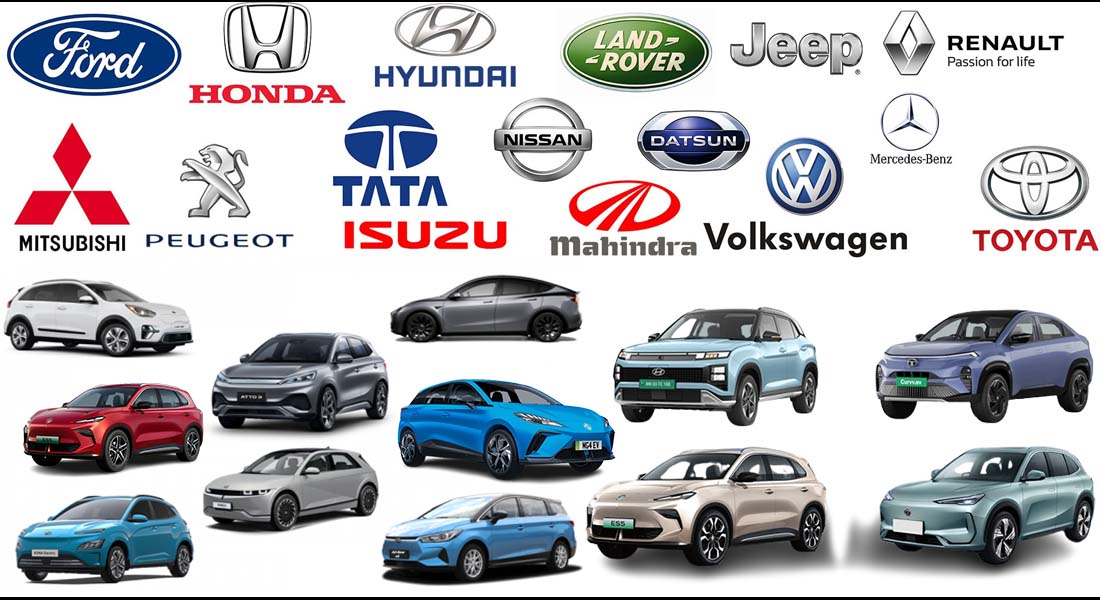
Kathmandu, June 8: Nepal’s automobile market has seen a surge of new brands in recent years. The growing popularity of electric vehicles (EVs) has encouraged dozens of little-known Chinese and other foreign brands to enter the market.
Industry stakeholders, however, warn that the lack of long-term planning and supporting infrastructure could turn Nepal into a dumping ground for vehicles.
According to Rajan Babu Shrestha, Chief Executive Officer of Sipradi Trading, many little -known brands import a limited number of vehicles, sell them, and then disappear from the market.
While a larger number of brands gives consumers more options, Shrestha says the risks are significant.
“Some importers bring in a handful of vehicles, sell them, and then vanish. When customers later need spare parts or servicing, the company is no longer around,” he said. “That can leave buyers with stranded investments and vehicles that eventually become scrap.”
He also expressed concern that some vehicles are entering the market without proper testing to determine whether they meet quality and safety standards suited to Nepal’s geography.
Lack of Import Guidelines
Experts say the problem stems from the government’s failure to establish clear vehicle import standards and guidelines. Although the Ministry of Physical Infrastructure and Transport has prepared a draft guideline, implementation has been delayed.
“Foreign currency is leaving the country without generating corresponding productivity. Allowing vehicles to become obsolete and abandoned is equivalent to wasting national resources,” Shrestha said.
He argued that, beyond the 20 to 25 major brands represented by industry associations, numerous small importers are contributing to market disorder.
Established brands continue to attract customers through new technologies and updated models. Popular choices include vehicles from Tata Motors, BYD, Mahindra, Deepal, MG Motor, Proton, Leapmotor, Omoda, Jaecoo, Kia, Hyundai Motor Company and Toyota.
Tata Maintains Strong Position
Sipradi says Tata has consistently ranked among the top two brands in Nepal’s automobile market. Models such as the Nexon EV, Tiago, Punch, Altroz and Xpres-T remain among the most popular choices.
The company attributes its success not only to vehicle features but also to customer trust and a strong after sales ecosystem.
BYD’s Growing Popularity
According to Cimex Inc., the BYD Atto 2 has become one of the market’s most sought after models.
Sales Head Sandhya Shrestha said more than 2,500 units of the Atto 2 have been sold so far. The BYD Atto 1 is the brand’s second most popular model, with annual sales exceeding 1,500 units.
Toyota Buyers Remain Loyal
According to United Traders Syndicate, the new Toyota Prado LC250 is currently the company’s most popular model in Nepal.
Marketing Head Mahendra Shrestha said around 150 units of the SUV, priced between Rs 30 million and Rs 40 million, have already been sold.
He noted that imports of some models, including the Hiace minibus, have faced delays due to Euro 6 compliance requirements. Still, Toyota customers continue to remain loyal to the brand.
Demand for hybrid vehicles has also increased, driven by concerns over fuel efficiency, while interest in off road vehicles remains strong.
Hyundai Assembly Boosts Sales
Deepak Thapaliya, General Manager of Laxmi Intercontinental, said locally assembled Hyundai vehicles have received a positive response.
Lower prices resulting from local assembly have increased demand, particularly in Lumbini Province and nearby regions.
Hyundai sells around 2,000 vehicles annually in Nepal. Roughly half are locally assembled models such as the Venue and Exter, while the remaining units consist of imported models including the Creta.
Thapaliya said intense competition has reduced vehicle prices by Rs 200,000 to Rs 300,000 and expanded consumer choice. However, he warned that smaller brands may struggle to provide spare parts and after sales service in the long run.
He also noted that despite the growing number of brands, government revenue and job creation have not increased significantly.
Established brands argue that nationwide charging networks, battery repair centers and reliable workshops give customers greater peace of mind.
Government Tightening Vehicle Imports
The government is preparing a new vehicle import policy aimed at making imports safer and more organized.
Maniram Bhusal, head of the Technical Division at the Department of Transport Management, said Nepal cannot ban specific brands in a free market economy. However, stricter technical standards will be introduced to protect public safety and consumer interests.
“We will not dictate brands, but we will not compromise on quality,” Bhusal said. “The new policy is expected to promote healthy competition and help consumers access quality vehicles at reasonable prices.”
The proposed guidelines will prioritize vehicles capable of operating safely across Nepal’s Himalayan, hill and Tarai regions. Imported vehicles will be required to submit third party certified quality assessments and laboratory test reports.
For EVs, authorities plan to require road tests, battery and motor approvals, and special testing to verify hill climbing performance under full load.
Euro 6 emission standards have already been made mandatory for fuel powered vehicles.
Bhusal also clarified that the suspension on new public transport registrations is temporary. The government is studying vehicle demand, quality requirements and scientific management measures, after which registrations will reopen.
According to industry associations NADA and NAIMA, Nepal currently has 94 four–wheeler vehicle brandsin the market.
People’s News Monitoring Service

Login to add a comment