







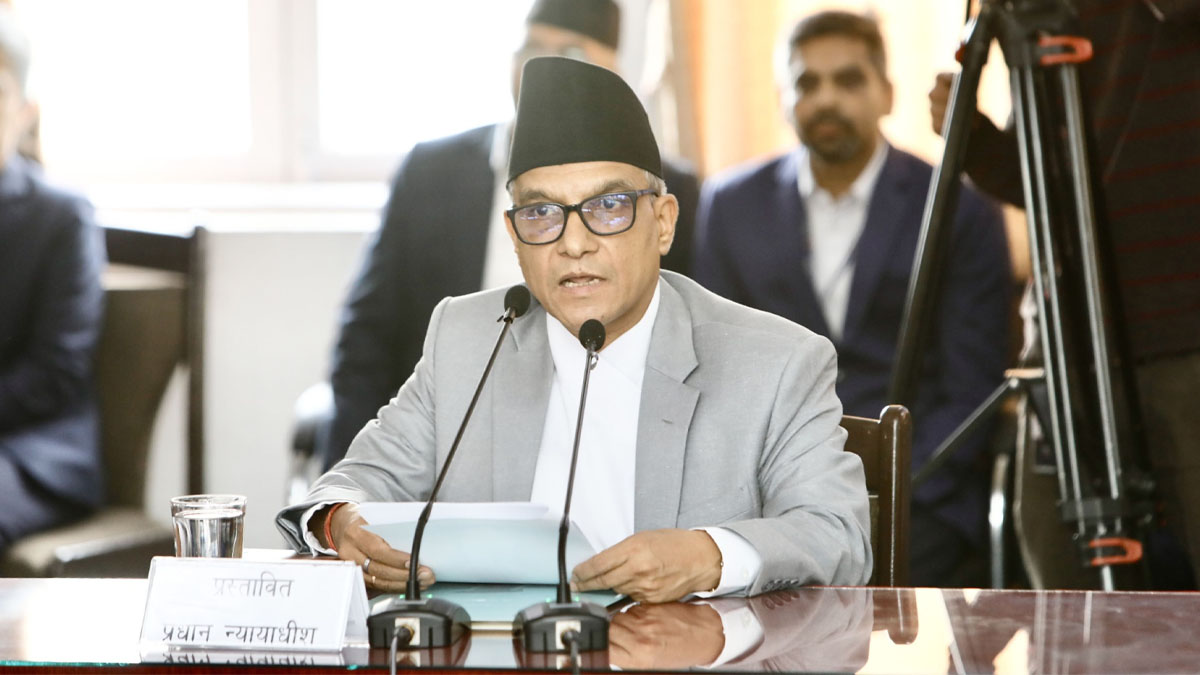
Kathmandu, June 2: Chief Justice Manoj Sharma has directed courts across the country to curb irregularities within the judiciary and ensure that no cases older than two years remain pending by the end of the current fiscal year.
Issuing a written circular to the chief judges of high courts and district court judges, Sharma instructed them to give special priority to clearing long-pending cases.
“Old cases must be handled with urgency and sensitivity. By the end of this fiscal year, all cases pending for more than two years, and by mid-January 2027, all cases older than 18 months, should be reduced to zero,” the directive states.
He also ordered courts to publish hearing schedules on time, provide reasons when delays occur, and ensure benches sit as scheduled. Sharma called for greater coordination to reduce interruptions in court hearings.
‘Prevent Irregularities’
The chief justice directed courts to prevent misconduct, administrative irregularities, and broker-related activities within the judiciary.
The circular calls for close monitoring of every stage of the judicial process, including court entry, case management, service of notices, hearings, judgement preparation, enforcement of verdicts, record keeping, and public service delivery.
He instructed court officials to closely monitor judicial and administrative functions and report any wrongdoing. If irregularities are found, officials should take immediate action within their authority and submit reports with recommendations for further measures.
Mechanism for Complaints
Sharma also ordered courts to establish systems to hear complaints from service seekers, lawyers, and other stakeholders.
He directed courts to maintain records of complaints, address them, and inform complainants about actions taken.
Courts have been asked to submit brief reports to the chief justice on complaint management, efforts to control irregularities, improvements in service delivery, and progress in clearing pending cases.
The chief justice further instructed judges and court staff to treat service seekers respectfully and help strengthen public trust in the judiciary.
Adapting to Changing Public Expectations
Stressing that meaningful reform cannot be achieved through individual efforts alone, Sharma called for collective commitment, coordination, and cooperation throughout the judicial system.
He said all state institutions must uphold good governance in line with public expectations and work to make government and court services faster and more accessible.
Referring to the post-Gen Z movement political environment, Sharma said the judiciary must maintain public confidence and trust. He expressed hope that judges and court employees would actively engage in judicial reform and improvements in the administration of justice.
People’s News Monitoring Service

Login to add a comment