








By Our Reporter
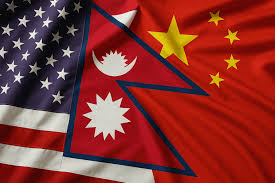
Following the Gen Z protests on September 23 and 24, the United States has been paying closer attention to Nepal’s internal politics and its external relations, particularly its ties with India and China. This attention is reflected in two recent reports by the Congressional Research Service (CRS), an independent research body that advises the US Congress.
While CRS does not set US foreign policy, its reports often influence how lawmakers and policy circles in Washington interpret regional dynamics. In its latest assessment, CRS places Nepal within a familiar geopolitical frame: a country geographically situated between India and China, with historically closer ties to India, while gradually expanding engagement with China.
One of the key terms used in the report is “buffer state.” CRS notes that some analysts describe Nepal this way due to its location and its historical links with both neighbours. However, it also acknowledges that both India and China have steadily increased diplomatic and economic engagement with Nepal, suggesting that the relationship is not static or one-dimensional.
The report reinforces Nepal’s official position of non-alignment and independent foreign policy. At the same time, it underlines a structural reality: Nepal’s relationship with India remains deeper and more entrenched, particularly in trade, transit, and security cooperation.
A major reference point is the 1950 Peace and Friendship Treaty between Nepal and India, which continues to shape bilateral relations. Through this framework, cooperation extends across defense, border management, and foreign policy coordination. India also remains Nepal’s largest trading partner and primary source of imports, while serving as a crucial transit route for third-country trade via Indian ports like Kolkata.
CRS also recalls moments of tension that have influenced Nepal’s external balancing. The 2015 unofficial blockade, following Nepal’s constitution promulgation, is highlighted as a turning point that strained trust between Kathmandu and New Delhi. In response, Nepal expanded its transit options by signing an agreement with China in 2016, allowing access to Chinese ports for international trade.
This diversification strategy, however, does not mean equal strategic weight between the two neighbours. The report suggests that while Nepal is actively seeking multiple partnerships, its economic and logistical dependence on India remains significantly higher.
Tensions resurfaced again in 2020 when Nepal issued a revised political map including Lipulekh, Kalapani, and Limpiyadhura within its territory. According to CRS, this development revived a long-standing boundary dispute and added another layer of sensitivity to Nepal–India relations.
On Nepal–China relations, the report notes a steady deepening of engagement since 2015. Key developments include the first joint military exercise in 2017 and Nepal’s participation in China’s Belt and Road Initiative (BRI). However, CRS also points out that implementation of proposed BRI projects has been slow, with limited visible progress on the ground.
Concerns over border activity in northern Nepal, particularly in Humla, are also mentioned. While these issues are noted in reports and local discussions, the Nepali government has largely avoided strong public confrontation, reflecting its cautious diplomatic approach with Beijing.
From Washington’s perspective, Nepal–US relations are described as friendly and cooperative. The United States positions itself as a partner supporting governance reform, political stability, and long-term economic development. A key policy objective, according to CRS, is to reduce Nepal’s reliance on humanitarian aid and strengthen its ability to participate in regional and global systems more independently.
US assistance has historically focused on agriculture, education, democracy, human rights, climate change, gender equality, and public health. After the 2015 earthquake, the US provided approximately $130 million in relief support, reinforcing its role as a major development partner.
A significant element of bilateral cooperation is the Millennium Challenge Corporation (MCC) Compact, signed in 2017, worth $500 million. It focuses on electricity transmission and road infrastructure, with an additional $50 million added in 2025. The project is often viewed as part of broader US efforts to strengthen connectivity and energy infrastructure in South Asia.
The CRS report also touches on the issue of Tibetan refugees in Nepal. It notes that after China’s takeover of Tibet in the 1950s, thousands of Tibetans fled to Nepal and India. Nepal currently hosts around 12,500 registered Tibetan refugees, along with an estimated 10,000 undocumented individuals. The US continues to fund support programmes for Tibetan communities outside Tibet, including in Nepal, with $13 million allocated for FY 2026.
Taken together, the US view of Nepal is shaped by geography and geopolitics, but also by strategic caution. Nepal is seen as a country balancing between two major powers while maintaining an independent foreign policy identity.
For Nepal, this external framing carries both opportunities and constraints. On one hand, it reinforces Nepal’s relevance in regional geopolitics, keeping it on the radar of global powers. On the other, the “buffer state” lens risks oversimplifying Nepal’s position and reducing its agency to geography alone.
In practical terms, this means Nepal’s diplomatic space will likely remain closely watched by major powers. Its ability to manage India and China relations while engaging the United States will continue to shape its regional standing. The challenge for Kathmandu is not just balancing relationships, but ensuring that it is not defined solely by them.

Login to add a comment