








By Shanker Man Singh
Exports of large cardamom, the number one commodity produced in Nepal, have doubled this year. Exports have doubled as demand for large cardamom has increased in the international market.
According to the Customs Department, in the first 11 months of the current Fiscal Year 2077/78, the export has increased by 93.7 percent to Rs. 84.78 million 937 kg worth Rs. 6.70 billion. In the corresponding period of the previous year, 43.9 million 503 kg worth Rs. 3.46 billion was exported.
It is cultivated in 15,400 hectares of land in Nepal. According to businessmen, the country produces 5,000 tonnes of large cardamom annually. The price of large cardamom, which has been declining in Nepal for several years, seems to have increased towards the end of the season. Large cardamom, which was sold at Rs 23,000 per quintal in April, has now reached Rs 34,000.
Nepali large cardamom has fetched good prices during the Corona epidemic. Entrepreneurs say that both the demand and price of Nepali large cardamom have increased in the world market.
According to a cursory review, large cardamom growers and local traders may have been deprived of the benefits of the current price hike as they have been buying and selling at the same price during the season as the price has been declining rather than rising for the last four to five years.
Traders estimate that the price of Large cardamom will reach Rs 40,000 in a few days. At present, Nepali products are not able to meet the demand of the international market. Traders say that the demand for Nepali large cardamom has increased and the price has gone up due to the death of the large cardamom crop in India.
In developing countries like Nepal, cash crop production potential and promotion are often done through the availability of sufficient capital, level of agricultural technology, marketing facilities, and cash crop business by governmental and non-governmental organizations (NGOs) and their involvement and active participation.
To implement the goals envisaged in the national development plans and programs, all developing countries need to increase cash crop exports to earn foreign exchange. Nepali cash crop entrepreneurs are unable to export to a large number of foreign markets due to the high cost of production, inadequate storage facilities, tariff constraints, transportation constraints, and lack of knowledge from actual production to the export market.
Agricultural commodities are a major part of Nepal’s total exports. Major agricultural exports of Nepal: Ginger, oilseeds such as sunflower, Niger seeds, tobacco, vegetable seeds, Orthodox tea, large cardamom, spices, fruits, and vegetables, etc. Internal demand for population and food is increasing on both sides, more and more agricultural commodities available for export are declining as production has not kept pace with population growth.
Large cardamom is marketed in and out of Ilam and Shankhuwasabha districts. Smaller producers usually sell their products to local collectors instead of collectors hired by wholesalers and sellers. These people are usually locals who are involved in other businesses but also in the Large cardamom business in the middle of the season.
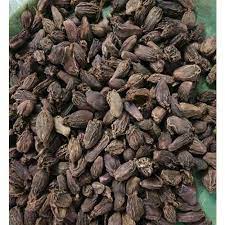 Large cardamom is exported to India and then to other countries. So there are huge possibilities and opportunities to be exploited by price related. Large Large cardamom occupies an important place in Nepal’s foreign export trade.
The eastern region of Nepal is a major Large cardamom-producing region. Sankhuwashabha, Ilam, Panchthar, Dhankutta, and Bhojpur are the major districts for large cardamom production. Ilam accounts for a significant share of the total crops produced in these areas. However, there has been a sharp decline in recent years due to some diseases.
Large cardamom production is increasing year by year and it will also increase export growth. India is the world’s leading producer and exporter of Large cardamom, followed by Guatemala, Sri Lanka, and Tanzania. Large cardamom from Nepal and Papua New Guinea has started appearing in the world market. Major suppliers of Large cardamom Nepal, India, Bhutan, Indonesia also supply wild Large cardamom which looks like Nepali Large cardamom.
At present, large cardamom from Nepal goes all over India from where it is re-exported to other countries. It would not be an exaggeration to say that the future importers of Nepali Large cardamom are Bangladesh, Pakistan, Qatar, and Saudi Arabia. International trade focuses on Large cardamom imports. Some countries such as Saudi Arabia, Kuwait, Bahrain, and other Gulf states in the Middle East and the Nordic countries in Europe have the potential to export.
Saudi Arabia is the world’s largest importer of Large cardamom. The major market for large Large cardamom is Singapore. But Singapore is not a real consumer market, it is just an import. Islamic countries are the major consumer markets for Large cardamom, with Pakistan being the largest consumer and Singapore being the major supplier of large Large cardamom to Pakistan.
Russia and West Germany have emerged as important importers of Large cardamom in recent years. The United States and West Germany could be potential markets for large Large cardamom. There are other existing and potential markets for large Large cardamom: the European Union.
Accurate world statistics, especially Large cardamom imports, are difficult to obtain as official trade data often classify Large cardamom with other unrelated prices, such as nutmeg. However, it is estimated that the average world import of this spice is increasing every year.
The market for Nepali Large cardamom is very limited. Although the Trade and Export Promotion Center has done some diversification in the last few years, the major part of this product is being exported to India.
Against this background, a special urgent need is to control the internal market price of this spice. It is also suggested that there should be a government agency to look into the Large cardamom market from production. As Nepali Large cardamom is a limited market, Nepal should also explore other potential international markets.
In addition, it is necessary to study the changing consumer behavior in Qatar, Saudi Arabia, Kuwait, and other Gulf countries on a regular basis. The potential of Large cardamom flavors in the Nordic market should be explored.
The writer is the former head of Nepse and SEZ and formers senior program manager of the Agri-Enterprise Center

Login to add a comment