








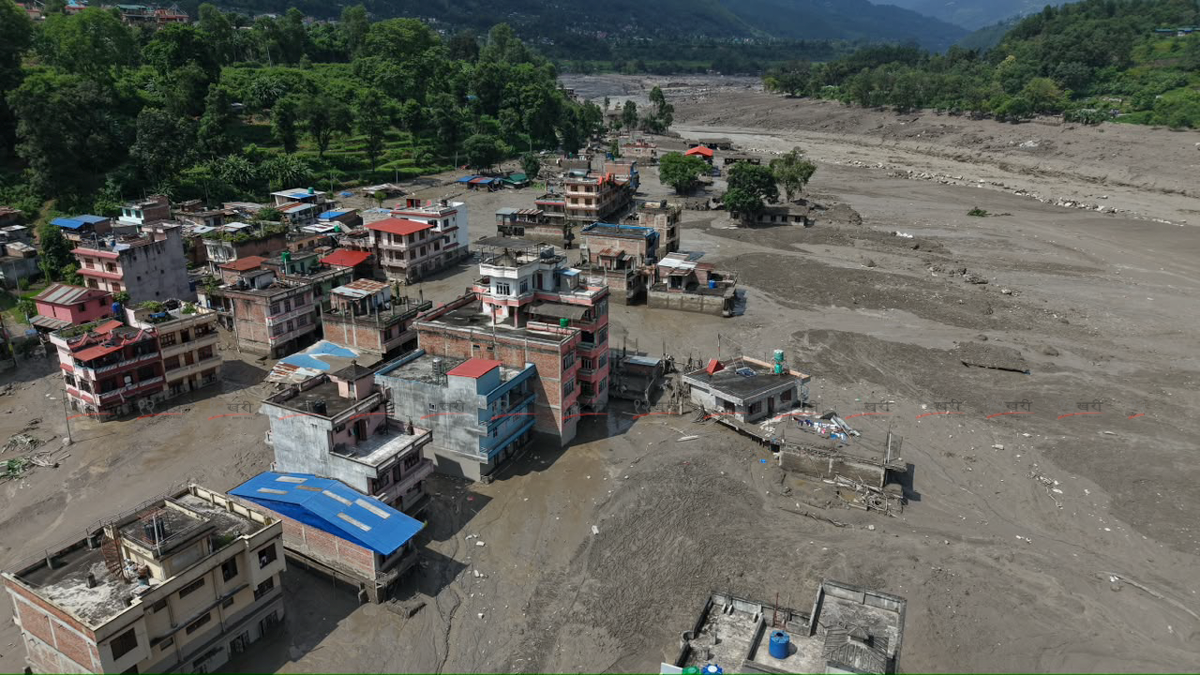
Kathmandu, August 27: Until Wednesday morning (August 26), the Bhotekoshi River was flowing as usual. People in Timure, Rasuwagadhi and Syafrubesi of Rasuwa were going about their daily routines. But at around 8:45 a.m., a sudden flood came from the north and turned everything upside down. Accompanied by a sound that shook the hills and mountains, the flood destroyed roads, bridges, police posts, customs yards and hydropower infrastructure, along with dozens of settlements, within minutes. The devastating flood caused unimaginable damage not only in Rasuwa but also as far downstream as the lower-lying areas of Dhading via Nuwakot. The water that swept through Rasuwa merged with the Trishuli River, wreaking havoc as far as Nuwakot and Dhading.
The human toll is even more alarming. At least 1,000 people are estimated to be missing. According to details available late Wednesday, more than 300 vehicles at the Rasuwagadhi Customs Office were swept away. The Department of Roads said at least 19 bridges and around 40 kilometres of roads were damaged. Dozens of houses, commercial structures and basic security facilities were swept away by the raging river. Damage to 12 hydropower and solar projects resulted in more than 431 megawatts of electricity being disconnected from the national grid. Preliminary estimates suggest that the flood may have been caused by the sudden bursting of a dam formed after the river was blocked on the Tibetan side, a glacial lake outburst, or the sudden release of water after an avalanche blocked the river. The actual cause is still under investigation.
Nepal Army helicopters and drones have been deployed for rescue operations. Some injured people have been rescued and brought to Kathmandu, and emergency beds have been set aside at hospitals. However, rescue routes have also been blocked after the flood washed away roads and bridges. The sudden flood that entered the Bhotekoshi at around 9 a.m. spread rapidly southward. After the flood’s impact travelled from the Bhotekoshi into the Trishuli River, it caused damage in downstream areas including Nuwakot, Dhading, Gorkha and Chitwan. The sudden entry of a large volume of water from the Tibetan side within a short period, the abrupt rise in the water level and the high-velocity flow in the river have raised suspicions that water may have been suddenly released from a glacial lake or other glacier-related water source in the high Himalayan region. However, the actual source and cause of the flood have yet to be formally confirmed.

Login to add a comment