







View from America

By M.R. Josse
GAITHERSBURG, MD: President Joe Biden unveiled the broad contours of his foreign/security policy vision, 4 February 2021, at the U.S. State Department, attempting a reset following four-years of the disruption, disarray and turbulence of the Trump era.
Tellingly, while the State Department was the first governmental setup that the spanking-new president visited, former president Donald Trump, one is informed, had bestowed such an honor on the CIA. It was over a year into his presidency before Trump stepped through the portals of the State Department.
A WORK IN PROGRESS
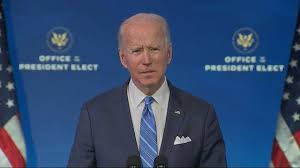
US President Joe Biden
Importantly, Biden promised to work with allies on the pandemic and climate change and announced a freeze on Trump’s planned troop deployments from Germany. Biden said he wanted “to send a clear message to the world: America is back.” Also, he vowed he would “rebuild the muscle of democratic alliances that have atrophied over the past few years of neglect and, I would argue, abuse.”
Aside from touting a firm line towards Russia, the American president argued that strong alliances were the key to deterring Moscow, along with the “growing ambitions of China to rival the United States.” He did however also stress that he would cooperate with both nations when it served U.S. interest, citing his new agreement with Moscow to extend the New Start deal, which limits the size of the two countries’ strategic nuclear armaments for five years.
In keeping with the thrust of his recent phone call to Russian President Vladimir Putin – his very first official conversation with a foreign leader as American president – Biden in his speech pledged to hold Russia accountable on cyberattacks and election meddling, and called for the release of Russian opposition leader, Alexei Navalny.
Biden’s ‘new look’ foreign policy is by no means a finished product, at this time. For instance, while there was intriguingly no mention of Iran in Biden’s Foggy Bottom screed – though CNN has reported that his team is currently working to break the nuclear impasse – Biden in a CBS interview 7 February firmly asserted that the United States wouldn’t lift sanctions against Iran until the latter returned to commitments made in the nuclear deal of 2015 from which Trump walked away.
That was apparently in response to an earlier declaration by Iran’s supreme leader Ayatollah Ali Khamenei that all U.S. sanctions must first be removed before Tehran returned to her commitments under the 2015 nuclear deal.
Iran’s Foreign Minister Javad Zarif, interviewed by CNN’s Fareed Zakaria, 7 February, argued that since it was the U.S. that had turned her back to the negotiated commitments, it was only logical that Washington must first lift sanctions against Iran and come back to negotiations.
Zarif, responding to a question about Iran’s missile programme, averred that it paled in comparison to the massive amounts of weaponry, including missiles, the U.S. supplies to Saudi Arabia and the U.A.E. – countries with just a tiny fraction of Iran’s population. He added that it was with such weaponry that Saudi Arabia had been fueling the five-year plus long civil war in Yemen.
Biden, hinting at the thrust of his future trade policies, declared: “Every action we take in our conduct abroad, we must take with American working families in mind,” before returning to a vision of the United States as an immigrant nation willing to accept more refugees.
In Biden’s foreign policy exegesis, he announced an end to American support to Saudi Arabia’s military campaign in Yemen. He also disclosed his intention to initiate a review of major arms sales to Saudi Arabia.
Intriguingly, there was nothing in Biden’s exposition on how he proposed to handle the issue of North Korea’s nuclear programme – once again, suggesting that much work, and thought, still needs to be expended by the White House/State Department et al on producing a more finessed or complete foreign/security policy product.
Revealingly, Biden acknowledged the damaged state of American democracy today, but then attempted to put a positive spin on recent violence at the U.S. Capitol and election fraud alleged by his predecessor, claiming that the U.S. will be “a much more credible partner in the global effort to defend democracies from threats of authoritarianism and disinformation.”
While such an assertion, I believe, will be largely disputed abroad, an interesting insight was provided in a CNN commentary, thus: the most significant line in Biden’s speech was not about the rest of the world – it was about America. That, it then concluded, “more or less confirms the view of foreign experts who doubt the U.S.’s appetite to resume a leadership role in global affairs.”
CHINA, INDIA AND AMERICA
The projection of a tough tone in America’s China policy was, of course, audible much before Biden’s 4 February State Department exposition. Thus, Antony Blinken, presently U.S. Secretary of State, during his confirmation hearings, declared that he agreed with the basic thrust of former Secretary of State Mike Pompeo’s transparent, even blatant, anti-China policy.
On Saturday, 6 February, according to Yahoo! News, Blinken and China’s top diplomat, state counselor Yang Jiechi, had a phone conversation on ‘tension points’ in Sino-American relations – quoting hard-hitting statements by the duo, put out respectively by the U.S. State Department and China’s Xinhua News Agency.
Blinken affirmed that the U.S. would work with allies to hold China “accountable for its efforts to threaten stability in the Indo-Pacific, including the Taiwan Strait” and support human rights and democratic values in Xinjiang, Tibet, and Hong Kong.
Yang, conceding that Sino-American relations were presently at a critical decline, strongly urged Washington “to correct its mistakes made over a period of time” – especially calling for her not to interfere in China’s internal affairs be it in Xinjiang, Tibet, Hong Kong or Taiwan.
Not surprisingly, Beijing’s position, as articulated by Cui Tianki Chinese ambassador in Washington in an interview to CNN’s Fareed Zakaria 7 February, echoed Yang’s sentiments, making the following key additional points, among others: diplomacy requires mutual respect; China does not have a new foreign policy; and that China will, obviously, continue to safeguard her sovereignty and the cause of peace.
Apart from the above rhetorical developments on the Sino-American relations front, there is this ground reality: the dispatch of an American destroyer through the Taiwan Strait. Mercifully, thus far, there have not been any reports (at least to my knowledge) of physical clashes on the land, on sea or in the air between American and Chinese armed forces or personnel. Thus far, too, one has not learnt of any direct conversation between President Biden and Chinese President Xi Jinping.
Though Blinken reportedly told Yang about America working with allies to thwart China’s alleged threats to the stability of the Indo-Pacific, I am unaware of any concrete manifestation of such politico-diplomatic activity. In any case, what was most conspicuously absent in the Biden address was any reference to India, or to the Indo-Pacific, per se.
Though strictly speaking ‘Indo-Pacific’ is a geographic term, it has since the past few years virtually been transformed into a code for a U.S.-led strategy to ‘contain’ China: a pipe-dream that could well ignite World War Three. Foreign policy wizards in Kathmandu should, among others, take serious note.
Although only time will tell what the reason(s) is/are to explain the enigma of India’s absence of any reference in the Biden speech, most know how Indian Prime Minister Narendra Modi pandered to Trump’s whims and gargantuan ego, during what ultimately became a full-blown Modi-Trump bromance. Whatever the reasons, Modi’s blind attachment to Trump, and failure to forecast his political demise, proves that he’s not the Messiah that some back home, and in India, still believe him to be.
Besides such considerations, there is the fact that post-Trump America’s prestige has taken a pounding both at home and abroad: that’s hardly a credible basis for America to entertain global ambitions, especially when the world is no longer uni-polar. True, America might still be numero uno in the international pecking order; it is fast evolving into a multi-polar one, with China clearly the second most puissant power.
The above contention has, incidentally, been underscored in a Chatham House write-up entitled, ‘EU and China seal a deal behind Biden’s back’. Drafted by Rosa Balflour and Lizza Bomassi, it says, inter alia:
“To the dismay of many in the incoming U.S. administration, the EU unexpectedly announced a high-level accord with China, the Comprehensive Agreement on Investment. Just days before the deal was announced Jake Sullivan, Biden’s national security adviser, asked for ‘early consultation with our European partners on our current concerns about China’s economic practices’ but his plea was not heard.
“Hurriedly negotiated in the final sprint of Germany’s presidency of the EU, it will face opposition from several quarters in Europe. Member states are dependent on China to different degrees, with many prioritizing the transatlantic relationship, while there are significant political forces keen to challenge the EU’s paper-thin commitments on human and labour rights when it comes to China.
“The dilemma Europe faces is its attempt to define a more assertive international role for itself and the challenge of rebuilding America’s alliances, fragmented by four years of the Donald Trump presidency and the Brexit drama.”
WISHFUL THINKING?
Changing gears and returning for a while to Kathmandu: what is one to make of the humungous recent demonstration of support for Prime Minister K.P. Sharma Oli, dramatized by a mass of humans – to hell with facial masks and social distancing – packed like sardines from Army H/Q to right in front of the main gate of the former Narayanhiti Royal Palace?
The answer to that query, I will tell you, lies in its venue – or, more specifically – to the fact that the stage prepared for the political high-jinks by assorted speakers of the day was set right against the arresting backdrop of the former Palace.
As per a news report 6 February 2021 by Yuba Raj Ghimire published in the Indian Express, while there was no dearth of vitriol directed against Oli’s political rivals and critics – and these days there are many of this breed here, there and everywhere – the really newsy part of that day’s fun and games was Oli’s ridiculing the possibility of a restoration of the deposed monarchy.
As reported, Oli declared bluntly “there is no chance of a return of the monarchy” in apparent response to a bunch of rallies that have been held in myriad locales across the nation in past months seeking the restoration of Nepal’s status as a Hindu kingdom.
“Along with these protests, certain political leaders, activists and retired Army officials have demanded that the Army should intervene to prevent the situation from drifting towards chaos”, triggering all manner of speculation about the political future of the country.
To my simple mind, Oli’s stab at political clairvoyance is no more credible than those at the very opposite pole: from dyed-in-the-wool monarchists to Hindu fundamentalists, from RPP types to disillusioned NC wallahs who swear that, ere long, the monarchy will once again be a going concern, buttressed by the age-old bonds between Nepal’s hoary Hindu traditions and the monarchy.
The Army, as I said before, is an unknown quantity, at this time. Who knows what the future holds on that score, especially against the backdrop of the recent military coup in Myanmar? It may be pointed out among other singularities that while India has made a very mild statement expressing concern, China has chosen not to play the role of an interfering outsider.
With the overall political picture in Nepal ‘as clear as mud’, I choose not to play the part of an all-knowing pundit. In conclusion, I express unmitigated joy that journalists back home are now lining up to get their Covid-19 vaccine shots. I am doubly happy because, a few days ago, I received my first dose of the Moderna Covid-19 vaccine in Baltimore, not on account of being a journalist but because of my advanced age!

Login to add a comment