








By Nirmal P. Acharya
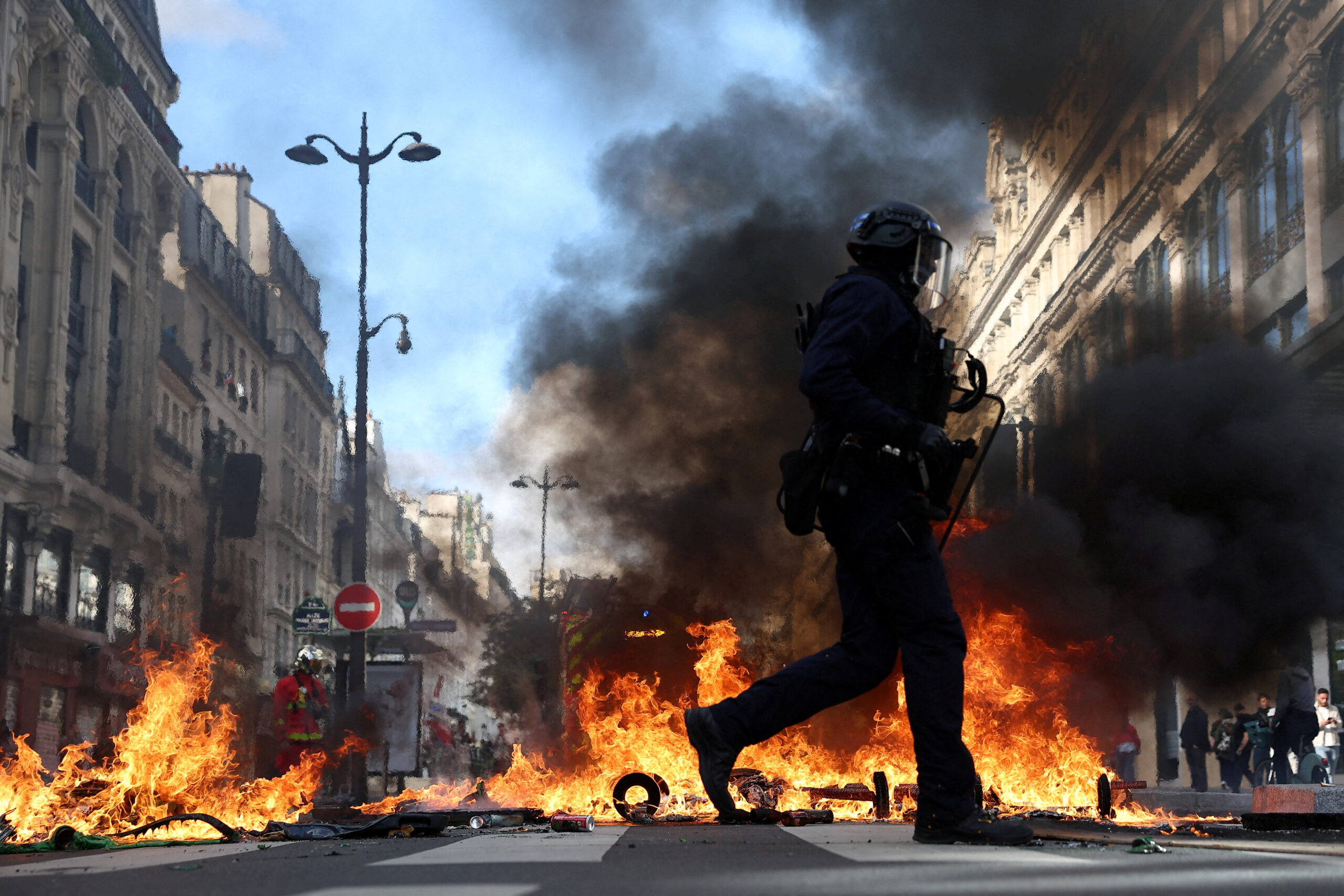
France is in turmoil. As of October 26, 2026, the current wave of large-scale social unrest remains tense and far from resolved, despite strong government crackdowns. The core conflicts remain unresolved, and political risks continue to accumulate.
According to the French Ministry of the Interior, approximately 410,000 people took part nationwide, including around 110,000 in Paris; labor unions, however, claim participation reached 800,000.
Around 4,000 people have been arrested; 1,546 shops were looted; 2,100 fires occurred; and 1,197 police officers were injured.
France, a major Western developed country, is in such a state of chaos that it has caused people to seriously doubt the so-called superiority of Western civilization.
In response to the severe riots in France, an online comment has emerged: only socialism can save France.
This critique is powerful in its analysis—it accurately points out that France’s predicament cannot be resolved simply by changing governments or adjusting policies. Yet it is hollow in its constructive implications: the comment fails to address what kind of socialism exactly is being proposed, who would implement it, through what institutional pathways, or how the knotty issues of debt, welfare incentives, and political fragmentation would be resolved. What France truly lacks may not be a grand alternative label, but rather a viable solution capable of rebuilding social cohesion and intergenerational fairness under the triple constraints of stagnant growth, fiscal deadlock, and political polarization.
My understanding is that France has lost its way and it is difficult for it to find a solution. The likelihood of it falling into chaos is quite high.
Think about it, does Nepal have a clear direction? If so, where is that direction? If not, chaos is waiting for us just a short distance ahead.

Login to add a comment