








By P.R. Pradhan
Swarnim Wagle, senior vice-chairman of the Rastriya Swatantra Party (RSP) and Nepal’s Finance Minister, said at the NDTV World Summit 2026 in India last week that the era of Nepalis expressing their patriotism by opposing India was over. Making the remark in the presence of Indian External Affairs Minister S. Jaishankar, Wagle appeared to be signalling a desire to reassure New Delhi of Nepal’s willingness to pursue closer relations with India. However, such a message must not come at the expense of Nepal’s national interests.
Earlier, according to media reports, Mukul Dhakal, the RSP’s former general secretary, had alleged that Wagle told him, after returning from a meeting with an Indian diplomat at the Hotel Marriott in Kathmandu, that the party could secure a bright future by pursuing a policy that would lead Nepal towards a Bhutan-like status.
In a July 2024 interview, Dhakal made allegations about Wagle’s views on aligning Nepal’s geopolitical and strategic orientation with India in a manner comparable to Bhutan. Rather than conducting a transparent investigation into these allegations, the RSP took disciplinary action against Dhakal and eventually expelled him from the party. The allegations, however, warrant scrutiny in view of their implications for Nepal’s sovereignty and foreign policy.
In another context, Wagle has also argued that the size of the Nepal Army should be reduced to avoid unnecessary government expenditure. Any proposal to reduce the army’s size must be assessed in the context of Nepal’s security requirements and strategic position.
Wagle is also a strong advocate of limiting government investment in commercial enterprises and transferring state-owned businesses to the private sector. His approach reflects a market-oriented economic philosophy imposed by the West. Privatisation without adequate safeguards can weaken domestic productive capacity and increase dependence on imports, which came true in the Nepali context.
Since Nepal began privatising state-owned enterprises following the restoration of multiparty democracy in 1990, the country has become increasingly dependent on imports. The private sector has often found importing goods more profitable than investing in domestic manufacturing. Unemployed Nepali youths are compelled to travel abroad for dirty and risky jobs. India is Nepal’s largest trading partner and a major source of imports. This dependence raises questions about whether an economic model driven primarily by private profit can adequately serve Nepal’s long-term national interests.
In his effort to promote better relations with India, Wagle did not clarify what he meant by the historical tendency to equate Nepali patriotism with opposition to India. He may have been referring to the era of the monarchy, particularly King Mahendra, whose rule saw significant state-led initiatives to modernise Nepal and diversify its international relations. After all, patriotism should be measured by a commitment to Nepal’s sovereignty, independence and national interests.
The Indian Attitude
In 1989, India imposed an economic blockade. The blockade caused severe economic hardship in Nepal and continued until introduction of a multiparty system in 1990.
Nepal’s political establishment had faced a strong Indian pressure for Bhutanization of Nepal. India had sent a proposal, reportedly conveyed to King Birendra by then Indian Foreign Secretary S. K. Singh, that would have given India substantial influence over Nepal’s defence, foreign policy, industry, commerce and water resources. According to these accounts, the proposal was rejected by the King because it threatened Nepal’s independence and sovereignty.
The episode remains a powerful reminder of the risks of excessive dependence on a single neighbour. Nepal suffered a prolonged economic blockade, while the 1990 People’s Movement brought an end to the Panchayat system and restored multiparty democracy. The entire movement was solely sponsored by India as a reaction to King Birendra’s denial to the Indian proposal.
In the years that followed, Nepal experienced a decade-long Maoist insurgency and, in 2006, the mass movement that led to the end of the monarchy. The 12-point agreement between the Maoists and the seven-party alliance was reached in November 2005 in India. Questions about the role of Indian political and intelligence circles in facilitating Nepal’s political transition remain part of the wider debate over foreign influence in Nepali affairs. The reality that the Maoist insurgency in Nepal was also sponsored by India with the goal of removal of the institution of monarchy from Nepal.
From a nationalist perspective, the recurring concern is that after removal of the institution of monarchy, Nepal’s political leaders have too often sought the approval of powerful external actors instead of building a foreign policy grounded firmly in national consensus. Wagle’s latest remarks have revived this concern because they came from a senior ruling-party leader who also holds one of the country’s most important ministerial positions.
The Monroe Doctrine
Wagle was previously been associated in public debate with references to the Monroe Doctrine. The doctrine, originally articulated by US President James Monroe in 1823, opposed further European colonisation and interference in the Americas. Over time, it became associated with claims of US predominance in the Western Hemisphere.
In the Nepali context, references to the doctrine have raised concerns about whether Nepal should accept a dominant neighbour’s claim to a privileged sphere of influence. If Wagle’s remarks are intended to suggest that Nepal should accommodate India’s strategic preferences as a matter of course, he owes the public a clear explanation.
Nepal occupies a sensitive geopolitical position between India and China, two major powers with competing strategic interests. It must also navigate its relationships with the United States and other international partners. The country cannot afford to ignore the wider balance of power or the implications of external initiatives for its sovereignty.
Wagle’s remarks appeared to suggest that Nepal should accept India’s sphere of influence. Wagle seems naïve about Nepal’s geopolitical position, as the country lies between two giant neighbours, India and China. Moreover, the United States is seeking to develop Nepal as a launching pad through initiatives such as the MCC, SPP and its Tibet-related policies. Wagle also seems naïve about the global power struggle unfolding in Nepal.
Wagle’s approach appears insufficiently attentive to the complexities of Nepal’s geopolitical environment. A policy that prioritises accommodation with one neighbour at the expense of balanced relations with others could leave Nepal vulnerable to external pressure. Nepal needs a foreign policy based on independent judgement, strategic balance and the protection of its national interests.
Nepal has traditionally pursued a policy of non-alignment and sought friendly and also equidistance relations with all countries. Kathmandu should not allow its foreign policy to become subordinate to the strategic preferences of any of the foreign powers.
Bilateral Issues That Cannot Be Ignored
While praising Indian support for Nepal, Wagle did not publicly address several longstanding bilateral disputes. These include the boundary issues involving Kalapani, Lipulekh and Limpiyadhura, as well as Susta and other disputed areas along the Nepal-India border.
India has also yet to receive the report of the Eminent Persons Group (EPG), jointly established by Nepal and India to review bilateral relations and recommend ways to bring them into line with contemporary realities. The report was intended to provide a basis for addressing longstanding concerns, including the 1950 Treaty of Peace and Friendship.
Another unresolved issue concerns air connectivity. Nepal has invested heavily in international airports in Pokhara and Bhairahawa, but international flight operations have not reached the levels anticipated. Restrictions on access to additional air routes through Indian airspace have been among the concerns raised by Nepal. Nevertheless, the operational challenges facing both airports also involve other factors, including airline commercial decisions, demand, infrastructure and regulatory arrangements.
Closer economic cooperation between Nepal and India could benefit both countries. Nepal has considerable potential in hydropower, tourism, manufacturing and cross-border trade. India could also benefit from stronger economic integration with Nepal. Yet such opportunities cannot be fully realised unless both sides address longstanding disputes and ensure that their relationship is based on mutual respect and reciprocal benefits.
There are numerous unresolved issues between Nepal and India. A senior Nepali minister seeking closer bilateral relations should explain how these issues can be resolved rather than merely offering reassuring words to Indian leaders.
Conclusion
Wagle’s remarks at the NDTV World Summit have raised legitimate questions about the foreign-policy outlook of the RSP-led government. Seeking constructive relations with India is neither wrong nor unpatriotic. But friendship with a neighbour must not be confused with silence on matters affecting national sovereignty, territorial integrity and strategic autonomy.
Some academics and political leaders have called on Wagle, RSP Chairman Rabi Lamichhane and Prime Minister Balen Shah to clarify the government’s foreign-policy position. Others have demanded Wagle’s resignation, arguing that his remarks were irresponsible.
The government should respond by explaining its approach to Nepal’s relations with India and China, its position on outstanding bilateral disputes, and its commitment to an independent and balanced foreign policy. Wagle, in particular, must clarify whether his remarks represent a personal assessment or the considered position of the government.
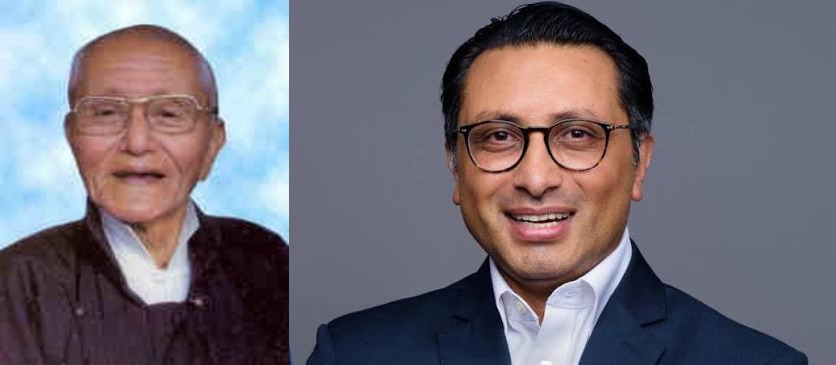
The comparison with Lhendup Dorji, who served the Indian interests in annexation of Sikkim, a sovereign Himalayan nation, is a pointed political metaphor. It is whether Nepal’s leaders will place the country’s sovereignty and long-term interests above short-term political expediency.
Nepal needs cordial cooperation with India and China and constructive relations with the wider international community. What it cannot afford is a foreign policy that sacrifices independent judgement in the pursuit of approval from any external power.

Login to add a comment