







By Nirmal P. Acharya
This year’s APEC summit pushed Shenzhen—a Chinese city that started out as a small fishing village 40 years ago—squarely into the center of the world stage. In just 48 hours, it overturned Western prejudices that had been entrenched for years.
After the summit, Trump made a shocking public remark upon returning home: the development and governance of some American cities “puts us to shame.” Trump said, “Look at us—our cities are filthy. I have to say, many of them are ‘blue states.’ The roads are dirty, full of potholes, the rail lines are broken down, everything is rusted, it’s disgusting, and crime rates are high too. I see our cities and it makes me sad. Some cities are not bad, but some truly put us to shame.” By contrast, Shenzhen: “The city is very clean, everything is perfect.” The whole city is clean and tidy, brimming with boundless vitality, with urban governance that is nearly flawless—from a small fishing village to a metropolis in 40 years”.
He stated plainly: Congratulations to President Xi on successfully hosting this APEC meeting. Very successful, a huge success! Look at them, and then look at us.
It is worth noting that on his way back to the United States from China, Trump posted: “This was a great and far-reaching visit”.
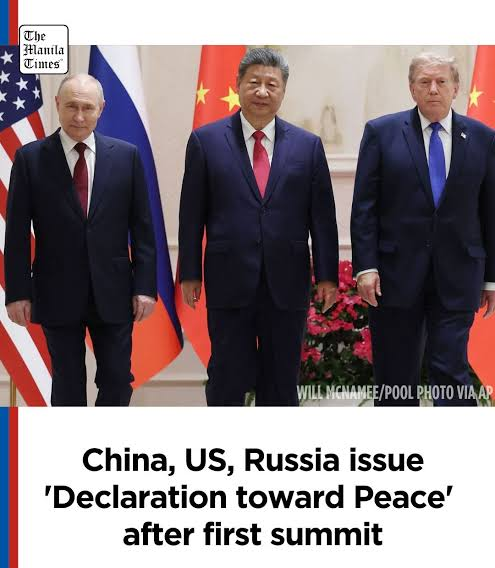
It wasn’t just Trump—the leaders of China, the United States, and Russia, as well as dignitaries from across the Asia-Pacific who gathered in Shenzhen, all praised the city.
Putin publicly expressed the hope of learning from Shenzhen’s development model; leaders from Southeast Asian and Central Asian countries commented that Shenzhen is the world’s most successful model of a modern city and the best example for developing countries to learn from.
Yes, in just 48 hours, Shenzhen delivered a stunning global debut, completely changing the way the world looks at China.
For a long time, Western public opinion looked down on China from a position of superiority, denying China’s speed, questioning the Chinese model, and smearing China’s urban development with prejudice.
But these 48 hours of close-up observation shattered all stereotypes.
Developed countries saw that Chinese cities have not only many high-rises, but also strong technology, strong industries, strong governance, and strong vitality.
Developing countries saw that modernization is not a one-way path to the West; Chinese modernization is efficient, pragmatic, actionable, and capable of catching up and surpassing.
Today, leaders of various countries are proactively learning from Shenzhen, benchmarking themselves against China, and actively endorsing China’s approach. From Trump’s heartfelt exclamation, to Putin’s proactive adoption of its lessons, to the strong endorsement by leaders of many countries, this is enough to prove that the world’s stance toward China has been completely reversed.
In fact, Nepal should have adjusted its attitude towards China much earlier. During a considerable period in the last century, there was a powerful political force in Nepal that attempted to lead the country along the socialist path (the Chinese path). However, this force lost out to the one advocating the Western approach. Now that even the United States has completely reversed its attitude towards China, how should Nepal view China?

Login to add a comment