







By Our Political Observer
Prime Minister Balendra Shah’s first state visit to India produced agreements on economic and infrastructure cooperation. Border questions, unfinished projects and a history of commitments left undelivered remain.
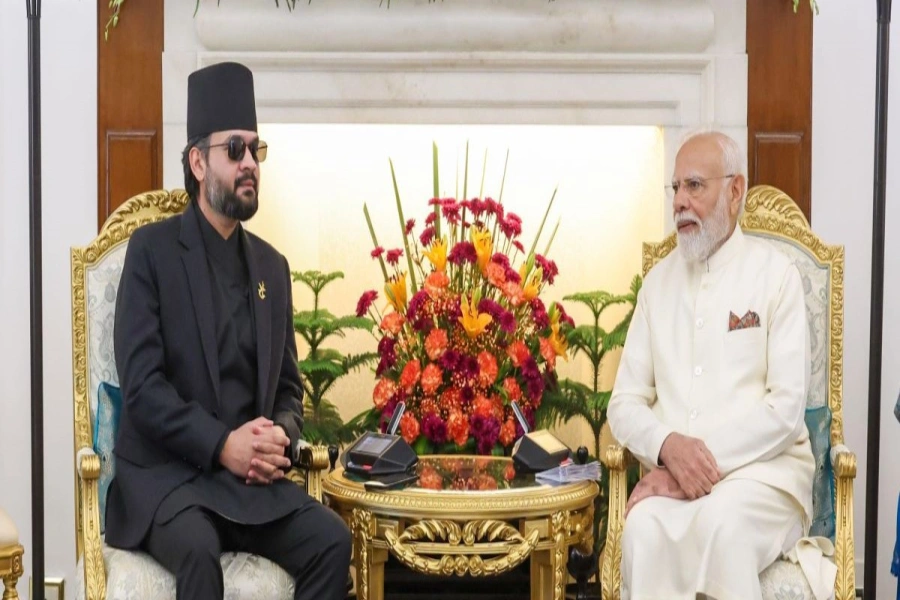
Shah returned from New Delhi with a package of agreements that could expand Nepal’s economic and infrastructure links with India. His two-day visit, from November 22 to 23, produced commitments on development assistance, energy, transport, trade and technology. It also reopened discussions on some longstanding bilateral issues.
India announced Rs 240 billion in development assistance, comprising Rs 56 billion in grants and Rs 184 billion in concessional loans for energy projects. For Nepal, still dealing with the damage caused by the August floods, the grants offer support for reconstruction and infrastructure. The loans will add financial obligations, so Kathmandu must ensure that borrowed money goes into productive projects with clear economic returns.
Access to Deendayal Port in Gujarat is also useful. Nepal’s dependence on a limited number of transit points has long increased the cost and complexity of overseas trade, and another Indian port could provide an alternative. Its actual value will depend on transport costs, customs procedures and the time required to move goods.
The agreement to make the Kathmandu-Bhairahawa-Lucknow air route bidirectional is also welcome. It could improve international access for Gautam Buddha International Airport and support tourism and business. Nepal’s wider demand for additional international entry routes remains unresolved, and technical consultations will determine how much practical change the agreement brings.
The launch of the Ayodhya-Janakpur express service strengthens cross-border connectivity and religious tourism. India has also completed the field location survey for the proposed Raxaul-Kathmandu railway and agreed to support Nepal’s East-West Railway. But the Jayanagar-Bardibas and Jogbani-Biratnagar railway sections remain unfinished, which shows why new announcements must be matched by completion of existing commitments.
Energy is the most promising area of cooperation. The foundation stone for the 669 MW Lower Arun project and the renewed push for the Pancheshwar, Saptakoshi and Sunkoshi projects could expand electricity generation and improve flood management. However, Pancheshwar has remained stalled for decades over water sharing and cost distribution. A fresh instruction to finalise its detailed project report will mean little unless both sides settle these disagreements.
The visit’s more modest agreements cover education, technology, agriculture, healthcare and administrative training. An Indian Institute of Technology campus in Nepal could strengthen technical education, and agricultural industrial parks could support domestic production. Their success will depend on funding, institutional arrangements and access for Nepali students, farmers and businesses.
Unresolved political questions
The biggest limitation of the visit was the lack of visible progress on sensitive political disputes. The two leaders agreed that the 1950 Treaty of Peace and Friendship could be reviewed through mutual consent. That creates a diplomatic opening, but no timetable or concrete review process has been announced.
The border dispute involving Kalapani, Lipulekh and Limpiyadhura also remains unresolved. The joint statement referred to maintaining border pillars and directed foreign secretaries to address outstanding boundary issues. Such language has appeared in previous agreements. Without direct political engagement and a clear negotiating process, another round of official discussions may produce little change.
The Eminent Persons Group report, which was expected to provide recommendations for improving bilateral relations, also has no clear path to implementation. Economic cooperation cannot entirely substitute for addressing questions of sovereignty and mutual trust.
Shah’s visit has nevertheless created opportunities to reset parts of the relationship. Modi’s emphasis on a modern partnership and Shah’s call for cooperation that benefits ordinary citizens offer a useful framework, but the test will be implementation.
The government should now publish clear timelines, identify responsible agencies and report progress on each agreement. It must also ensure that grants and loans serve Nepal’s priorities rather than becoming a collection of projects driven by diplomatic convenience.
Previous prime ministers have returned from India with ambitious commitments, and many remained unfinished. Shah’s visit has produced openings in several sectors. Whether Nepal converts them into completed infrastructure, lower trade costs, better employment opportunities and progress on unresolved disputes is now up to the government.

Login to add a comment