







By Our Reporter
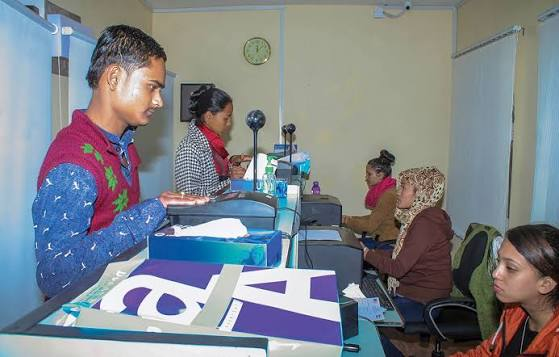
For thousands of Nepali workers seeking jobs in Malaysia, the journey begins with a series of payments. Medical examinations, biometric screening and administrative charges drain their savings before they board a plane. Many borrow money to meet these costs, hoping to repay their debts through months of hard work abroad. A network of private operators, government officials and political officeholders has allegedly made a lucrative business out of those payments.
The Central Investigation Bureau’s (CIB) probe into the Rs 1.69 billion medical fee scam shows how deep the exploitation runs in Nepal’s foreign employment sector. Investigators allege that additional medical charges were collected from workers and US$8.37 million and £3.72 million transferred to Malaysia in violation of the Nepal Malaysia labour agreement and existing laws.
The arrest of former labour ministers Sher Bahadur Kunwar and Rameshwar Ray Yadav, a former labour secretary and other senior bureaucrats has brought the scandal into the open. The question now is how such an arrangement survived for more than a decade despite complaints, parliamentary intervention and repeated changes of government.
The system traces its origins to 2013, when Malaysia introduced the Foreign Workers Centralised Management System (FWCMS) through Bestinet. An agreement between Bestinet representative Mohamed Amin and Nepali medical entrepreneur Kailash Khadka laid the groundwork for a private arrangement that later secured government backing.
In January 2015, a parliamentary committee ordered the suspension of biometric examinations and an investigation into the selection of medical institutions. The government nonetheless allowed Bestinet to operate the system on a six-month trial basis. By July, biometric examinations had become mandatory through a limited number of medical institutions. That created a monopoly that successive governments failed to dismantle.
In 2018, then Labour Minister Gokarna Bista scrapped biometric screening and associated services, citing their financial burden on workers. The suspension lasted about 15 months. He also signed a labour agreement with Malaysia on October 29, 2018, stipulating that employers would bear recruitment related costs, including medical examinations.
The arrangement nevertheless returned under subsequent ministers. From July 2019, workers were charged an additional 100 Malaysian ringgit for biomedical services. According to the CIB, 90 percent of the collection went to Malaysia, with the local operator retaining the remainder. More than 750,000 workers were allegedly overcharged, resulting in transfers worth Rs 1.69 billion.
How could a private company collect money from hundreds of thousands of workers for years and repeatedly transfer it abroad despite an agreement requiring employers to cover medical costs?
The transfers required dealings with government institutions. According to the CIB, the operator repeatedly sought permission from Nepal Rastra Bank. The central bank sought the Labour Ministry’s opinion before processing the requests. The Kathmandu Post reported on November 21 that investigators found 17 applications seeking permission for transfers. They are also examining the role of central bank officials and correspondence involving the Malaysian Embassy.
A syndicate operating on this scale cannot survive without regulatory failures and administrative cooperation. Whether through direct decisions or deliberate inaction, successive governments allowed the arrangement to continue.
Sixteen ministers have led the Labour Ministry since biometric screening became mandatory. Some challenged the system, while others allowed it to continue. In March 2025, the government increased medical examination fees from Rs 6,500 to Rs 9,500. The increase was reversed in December. An investigation committee subsequently reported organised fraud and tax evasion involving 36 medical institutions. Its report reportedly went missing from the ministry before the CIB investigation gained momentum.
The record shows a failure of foreign employment governance. Workers bear the financial risks of migration, while those responsible for protecting them have repeatedly failed to enforce the rules. Some officials are now accused of facilitating the very practices they were supposed to prevent.
The arrests must lead to a wider investigation. Police must follow the money, examine every approval and establish the responsibility of political leaders, bureaucrats and financial regulators. The government must also make the missing investigation report public and dismantle the monopoly in medical testing. Unless those who enabled this exploitation are held accountable, the foreign employment sector will remain open to the same abuse under a new company.

Login to add a comment