







By Our Reporter
China is growing uneasy with the Balen government over the Belt and Road Initiative (BRI). The friction points to a problem Nepal have not resolved for years: how to turn diplomatic commitments into infrastructure projects without giving up economic interests or strategic independence.
Eight months after Prime Minister Balendra Shah took office, Chinese officials appear increasingly frustrated with Kathmandu’s reluctance to discuss the BRI. According to a report, Beijing believes the government is willing to pursue selected projects but hesitant to acknowledge agreements reached with previous administrations. The concern has surfaced just as Shah prepares for his first official visit to India.
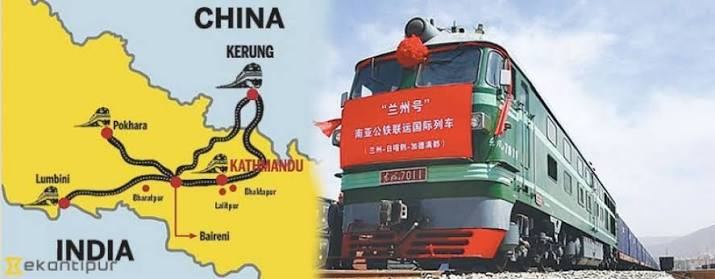
China sees the BRI as a long-term framework for connectivity and economic cooperation with neighbouring countries, so Nepal’s silence is read politically. Nepal signed the initial BRI memorandum in May 2017 and a more detailed cooperation framework in December 2024. The latter identified potential projects for joint implementation, including the Tokha Chhahare tunnel, the China Nepal cross border railway, the Hilsa Simikot road and the Kimathanka road and bridge project.
Progress has been slow. Chinese officials say the Balen government appears reluctant even to mention the initiative. Prime Minister Shah reportedly instructed Rastriya Swatantra Party lawmakers visiting China not to comment on the BRI, describing it as controversial. Beijing may interpret this caution as a sign that Nepal is reconsidering its earlier commitments, or is unwilling to move forward for fear of domestic political criticism.
China has reasons to be impatient. It has invested diplomatic capital in securing Nepal’s participation in the initiative. Repeated changes of government, shifting political positions and bureaucratic delays have made implementation difficult. The Pokhara International Airport, whose construction was financed through a Chinese loan, has also become politically contentious following allegations of corruption during its construction. The airport’s problems have further complicated China’s efforts to present its infrastructure engagement in Nepal as a success.
Nepal’s hesitation, however, has some justification. The BRI has become politically contentious because of concerns over debt, financing terms, transparency and the country’s ability to repay large infrastructure loans. Nepal should not enter projects just to satisfy the diplomatic expectations of a powerful neighbour. Its experience with expensive infrastructure and weak project preparation calls for greater scrutiny.
The December 2024 framework itself leaves room for caution. It states that the document is not an international treaty and that financing arrangements and development modalities for individual projects must be negotiated separately. Signing it therefore does not commit Nepal to every proposed project or to borrowing money for all of them. Each project requires a separate assessment and agreement.
The Balen government should work from that distinction. Avoiding the term BRI altogether creates suspicion in Beijing and leaves Nepal without a clear explanation of which projects it wants, what financing it can accept and why certain proposals need revision. A government confident about its national interests should be able to discuss these matters openly.
Nepal should separate political symbolism from economic substance and review each proposed project on its economic viability, financing costs, environmental impact and contribution to national connectivity. Projects that offer clear benefits should move forward through transparent negotiations. Those that impose unsustainable financial obligations should be revised, delayed or rejected.
China, for its part, should stop treating hesitation as a diplomatic slight. Respecting Nepal’s concerns over financing and implementation would strengthen confidence in the partnership. Beijing could improve its standing by offering concessional loans, grants where feasible, transparent procurement and realistic repayment arrangements. It should also recognise that Nepal must remain free to pursue infrastructure cooperation with India and other development partners.
The timing of Shah’s India visit has brought Nepal’s balancing act back into focus. Kathmandu has legitimate interests in maintaining close relations with both neighbours. Cooperation with India does not require distancing itself from China, and engagement with Beijing should not undermine Nepal’s relationship with New Delhi.
Nepal needs a consistent foreign policy based on economic returns rather than the political preferences of successive governments. China deserves clarity on commitments made under the BRI framework, and Nepal deserves financing terms that protect its long-term interests. Kathmandu should tell Beijing that the BRI will be judged project by project, not as a test of loyalty to China, and Beijing should be prepared to accept that.

Login to add a comment