







By P.R. Pradhan
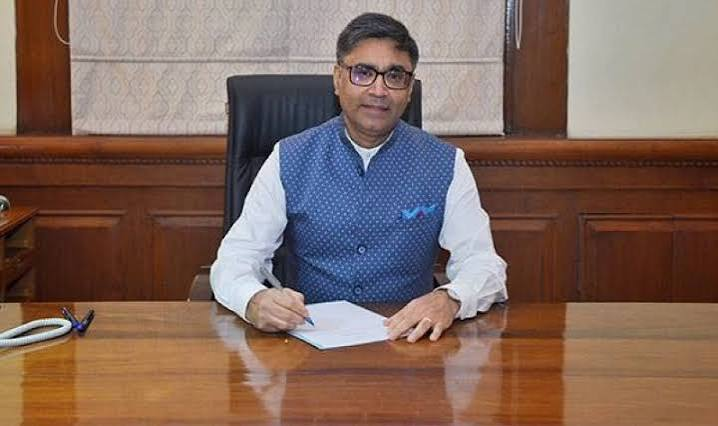
Immediately following Prime Minister Balendra Shah’s visit to India, Indian Foreign Secretary Vikram Misri declared that the report prepared by the Eminent Persons’ Group (EPG), comprising members from both countries, had become irrelevant.
Speaking at a press conference in New Delhi on Monday, Misri said, “I consider this a matter of the past. We are moving forward with a forward-looking perspective. We are not looking back. So, in my view, the report you (media persons) mentioned is no longer relevant. It is something that belongs to the past.”
The joint report, prepared by experts from both countries, sought to reset bilateral relations by reviewing longstanding issues, including the 1950 Treaty of Peace and Friendship, border disputes, trade and security concerns.
The EPG was formed in 2016 with the consent of the prime ministers of both countries, following an agreement reached at the third meeting of the Nepal-India Joint Commission in Kathmandu in 2014. The group comprised four experts from each country and was mandated to review bilateral treaties, agreements and understandings and recommend measures to strengthen mutual trust and establish a new institutional framework for bilateral relations.
Former Foreign Minister Bhekh Bahadur Thapa coordinated Nepal’s team, which included Nilambar Acharya, Suryanath Upadhyay and Dr Rajan Bhattarai. India’s team was coordinated by Bhagat Singh Koshyari and included Jayant Prasad, Professor Mahendra P. Lama and B.C. Upreti.
It appears that Misri announced India’s decision after securing the consent of the visiting Nepali prime minister.
Several individuals involved in preparing the EPG report on the Nepali side have described the decision as “unfortunate.” Former Nepali Foreign Minister Kamal Thapa has also termed it an unfortunate decision.
Although India has effectively announced the demise of the EPG report, we urge the Nepali members of the group to make the report public. The Nepali people have the right to know what their experts proposed and what issues were addressed in the joint exercise, particularly when India appears unwilling to act on its recommendations.
Meanwhile, some Indian television networks are circulating reports that Nepal has agreed to lease 150 kilometres of its territory along the Indian Chicken’s Neck corridor to India for 99 years to facilitate the widening of the corridor. The Nepal government has remained silent on these reports.
Given the sensitivity of the issue, the government must clarify whether any such proposal or agreement exists. Silence on a matter involving Nepal’s territorial sovereignty could fuel unnecessary speculation and public concern.

Login to add a comment